


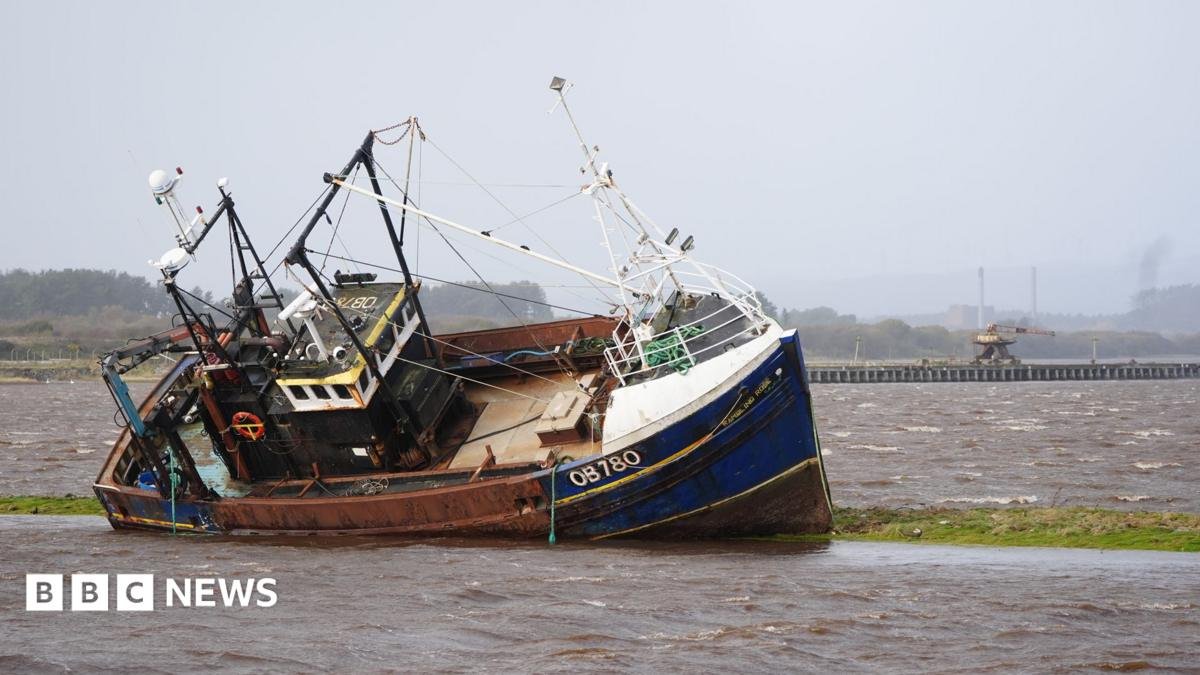

Strong winds are expected to continue across Scotland and parts of Northern Ireland on Tuesday, after Storm Boelo brought flooding and power cuts to thousands over the weekend.
While conditions are set to improve for much of the UK after a wet and windy morning, clean-up efforts could be hampered elsewhere – including in Scotland, where a third of a month’s rain fell during the storm.
The Energy Networks Association (ENA) said almost 8,000 people were still without power after more than 800,000 experienced cuts.
Two men were killed by falling trees during the storm on Sunday – a man in his 20s whose car was hit in north London and a 60-year-old man in Dumfries and Galloway identified as Richard Baines, the long-serving curator of Logan Botanic Garden.
A deep area of low pressure, while not severe enough to be a named storm, still brought strong winds with gusts of 65-80mph to parts of western England and Wales in the early hours of Tuesday morning.
Through the rest of Tuesday, the strongest winds will be across Scotland and the northern coast of Northern Ireland, where a Met Office yellow warning is due to be in place until 21:00 GMT.
Gusts will continue to reach 50-60mph, possibly up to 70mph in the most exposed parts of northwest and northern Scotland.
That is is likely to bring further travel disruption and more power cuts in places.
Elsewhere across the UK, Tuesday will be a blustery day, but the wind is not likely to cause any major impacts.
Strong winds and heavy rain will ease off later on Tuesday, with the rest of the week looking much calmer across the UK.
Boelo is the second storm to have hit parts of the UK in recent days, following Storm Austen.
Leo Slade, CEO of the ENA said it had been “a tough weekend” and that efforts to reconnect some properties were being hampered by the weather, with sustained winds of 50-85mph across parts of Scotland and northern England.
“Until that weather system passes, we can’t safely get engineers out to replace poles, to get wires back up, so today is going to be a hive of activity in getting engineers out into the field,” he told the BBC.
He stressed that the UK’s power network was very resilient and money was spent to prepare for these sorts of scenarios, but said a debate was needed over how much more investment was required to mitigate for further storms brought by climate change.
The Met Office has warned about the possibility of further power cuts and people should make sure they have essentials prepared, including torches and batteries.

