


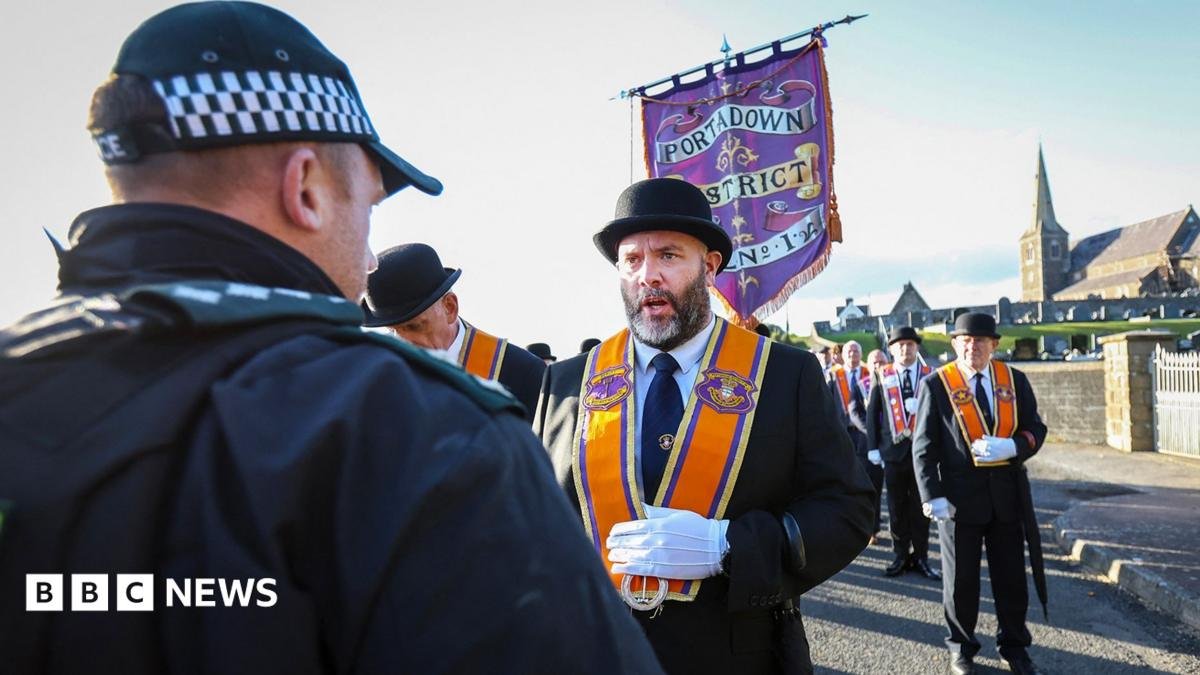

The Orange Order, the most prominent of the loyal orders associated with Protestants in Northern Ireland, holds thousands of parades every year and the vast majority pass off without incident.
However, many Catholics see the marches as sectarian and object to them passing through, or close to, Catholic or nationalist areas.
The Garvaghy Road had been part of the Drumcree route, but by the mid 1990s nationalist residents protested against the parade. The row sparked some of the most serious public disorder in Northern Ireland’s history and was linked to several murders.
The row reemerged after a court case in which a ruling by the Parades Commission – the organisation formed during the Drumcree dispute to decide on contentious marches during Northern Ireland’s parading season – was overturned.
On Friday, following 28 years of unsuccessful applications, the commission decided the march could go ahead with restrictions in place.
Rather than start at 13:00 on Sunday as intended, the commission said it could begin no later than 08:00 and with 35 participants rather than the 60 the Orange Order requested.
However that decision was challenged in several Belfast courts on Saturday, before finally being given the go ahead just hours before it was due to take place.
The Drumcree dispute was one of Northern Ireland’s most serious parading disputes during the 1990s, when stand-offs over attempts by the Orange Order to march along the Garvaghy Road were accompanied by riots, roadblocks and killings.
When the Orange Order was prevented by police from walking down the route in July 1995, there was a tense stand-off. It was the same for the next three years.
Violence related to the dispute resulted in riots, roadblocks and murders across Northern Ireland.
In 1998, the newly-established Parades Commission ruled that the Orange Order should not march down the road – a decision upheld until Friday.

