


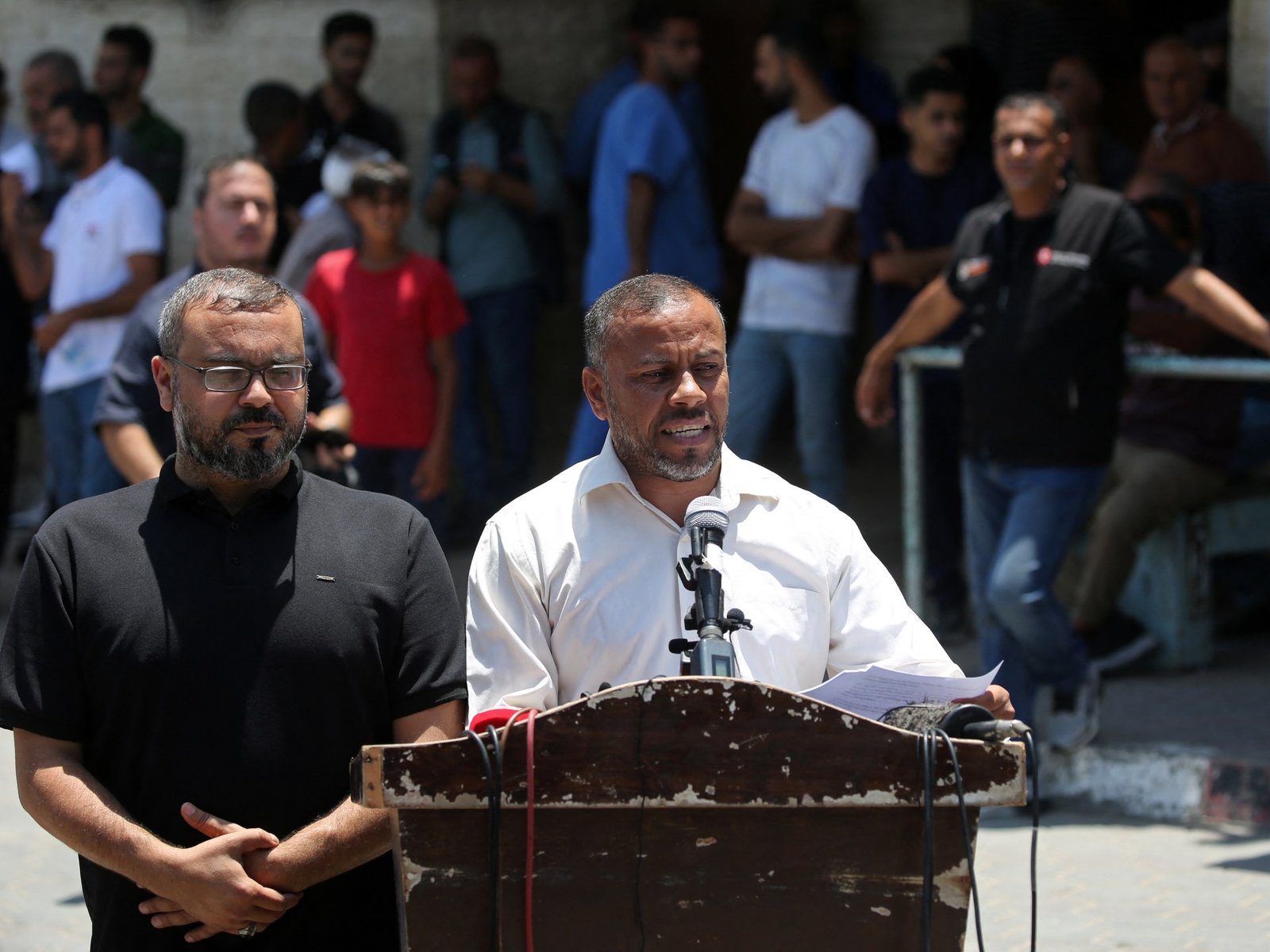

For nearly three years, Israel and its Western allies have claimed that Hamas’s rule over Gaza was one of the principal obstacles to peace between Israel and Palestine. The genocidal war on Gaza could not end, they argued, while Hamas remained in power. Gaza’s future, they said, depended on replacing Hamas with an alternative administration.
Now, Hamas has announced the dissolution of its Gaza governing body and says it is ready to transfer civilian administration to the National Committee for the Administration of Gaza (NCAG), a Palestinian body proposed within the Board of Peace framework backed by the United States.
Whether that arrangement ultimately materialises remains uncertain. The negotiations are complex, and many details remain unresolved. But the announcement shifts the terms of the debate. If Hamas’s civilian rule was the stated obstacle to Gaza’s political future, then a non-Hamas, Palestinian body should test the sincerity of that claim.
The proposed “technocratic government” appears to address many of the objections repeatedly raised by Israel and its allies. It would reportedly consist of Palestinian professionals rather than party politicians: engineers, economists, lawyers and administrators tasked with running schools, hospitals, public services and reconstruction. Its members would not be Hamas officials. They would not be elected on a partisan platform. Their role would be to manage civilian life while broader political questions remained unresolved.
Yet, almost immediately, new objections have emerged. The unresolved question of disarmament is now being treated as the next test of acceptability, alongside questions about security arrangements, oversight and who would ultimately approve such an administration. Those questions are politically consequential. But they also reveal something more fundamental: every time Palestinians approach one political formula, another condition seems to emerge before that formula becomes acceptable.
The pattern is familiar.
When Palestinians participated in democratic elections in 2006, the outcome proved unacceptable to much of the international community after Hamas won a parliamentary majority. That victory was followed by political isolation, aid suspensions and Israeli restrictions, rather than an attempt to incorporate the elected Palestinian leadership into a political process. Since then, Palestinians have repeatedly been encouraged to produce alternative leadership while simultaneously finding that each alternative is judged against ever-changing political tests.
The question therefore becomes larger than Hamas itself: who is actually permitted to represent Palestinians?
If elected representatives are unacceptable, if reconciliation or national unity governments are treated as threats, if technocratic administrations remain subject to external approval, then where exactly does Palestinian political legitimacy come from?
Every nation debates its own politics. Governments rise and fall. Elections produce winners and losers. Political parties gain and lose support. Palestinians are no different. They disagree over leadership, governance and strategy like any other people.
What distinguishes the Palestinian case is that those debates rarely remain internal. Instead, the legitimacy of Palestinian political institutions has repeatedly been shaped by external actors. Successive Israeli governments have consistently resisted forms of Palestinian political agency that could lead to meaningful sovereignty. Whether through rejecting the outcome of Palestinian elections, expanding settlements across the occupied West Bank, opposing Palestinian statehood, or insisting on retaining long-term security control over Gaza, the pattern has been one of limiting Palestinian self-government rather than enabling it.
No one should pretend that this question is easy. Hamas remains an armed movement. Israel continues to cite security concerns as justification for maintaining extensive military control over Gaza. Palestinians themselves remain divided over questions of leadership and governance. None of these realities disappears simply because Hamas proposes stepping away from civilian administration. But neither do they answer the more fundamental question: who gets to decide Gaza’s political future?
That question is not only about representation. It is also about power.
Much of the international discussion assumes that changing who administers Gaza will fundamentally alter Israel’s conduct. Recent experience offers little basis for such confidence. Even during periods of negotiations and declared ceasefires, Israeli military operations have continued in Gaza while violence in the occupied West Bank has intensified. Palestinians continue to be killed, their homes continue to be demolished, and displacement continues. The humanitarian catastrophe has never been solely a consequence of who governed Gaza. It has also been shaped by the overwhelming military, political and economic control Israel exercises over Palestinian life.
This is not a theoretical concern. Israeli forces continue to occupy large parts of Gaza, maintain military zones inside the enclave and carry out attacks despite the declared ceasefire. A Palestinian technocratic administration would therefore be entering a territory where the most decisive forms of power remain outside Palestinian hands.
In that scenario, a technocratic administration could find itself responsible for distributing aid, rebuilding hospitals, restoring electricity and managing civilian affairs while possessing almost no authority over the conditions that continue to produce the humanitarian crisis. Israel could continue to control Gaza’s borders, airspace and coastline. The movement of people and goods could remain subject to Israeli approval. Reconstruction materials could continue to face restrictions. Military incursions could continue whenever Israel deemed them necessary.
Palestinians would have a governing body, but not genuine self-government. They would manage the consequences of destruction without possessing the political authority to prevent its recurrence.
The danger is that Gaza’s future becomes one of administration without sovereignty, responsibility without power and governance without freedom.
This distinction matters because there is a profound difference between self-government and managed autonomy. One allows a people to determine its own future. The other asks them to administer their own dependency. A technocratic government may efficiently distribute aid, coordinate reconstruction and restore essential public services. But if it operates under permanent external control, without meaningful authority over borders, security, reconstruction or political life, it will not represent Palestinian agency. It will represent the management of Palestinian dependency.
For decades, Palestinians have been told that peace requires different leaders, different institutions or different political structures. Perhaps, on this occasion, those structures are beginning to change. If so, the international community faces a test of its own consistency.
If the obstacle was genuinely Hamas’s governance, then a credible Palestinian technocratic administration should create space for reconstruction, political renewal and, ultimately, Palestinian elections. It should allow Palestinians to begin rebuilding not only their homes but also their political institutions.
If, however, new conditions simply replace old ones, military operations continue, reconstruction remains obstructed, and every Palestinian administration remains subordinate to external control, then it will become increasingly difficult to argue that Hamas was ever the central issue.
The future of Gaza should not ultimately be determined by whether one faction governs instead of another. It should be determined by whether Palestinians are finally afforded what people everywhere else take for granted: the right to decide who governs them.
Until that right is recognised, changing the names on the doors of government offices may alter the administration of Gaza, but it will not resolve the political conflict at its heart.
The views expressed in this article are the author’s own and do not necessarily reflect Al Jazeera’s editorial policy.

