



In April, I accompanied a friend on a visit to villages in Daikundi province, central Afghanistan. The purpose of the trip was to speak to farmer beneficiaries of a project that an NGO operating in the agriculture sector had carried out and to follow up on its impact. The week I spent travelling with him was quite eye-opening regarding the state of the non-profit sector in the country.
The project in question provided zero-energy storage houses to preserve harvests, such as fruit and vegetables, in rural areas. On the surface, the idea was promising: provide farmers with storage space so they could sell their produce over a few months.
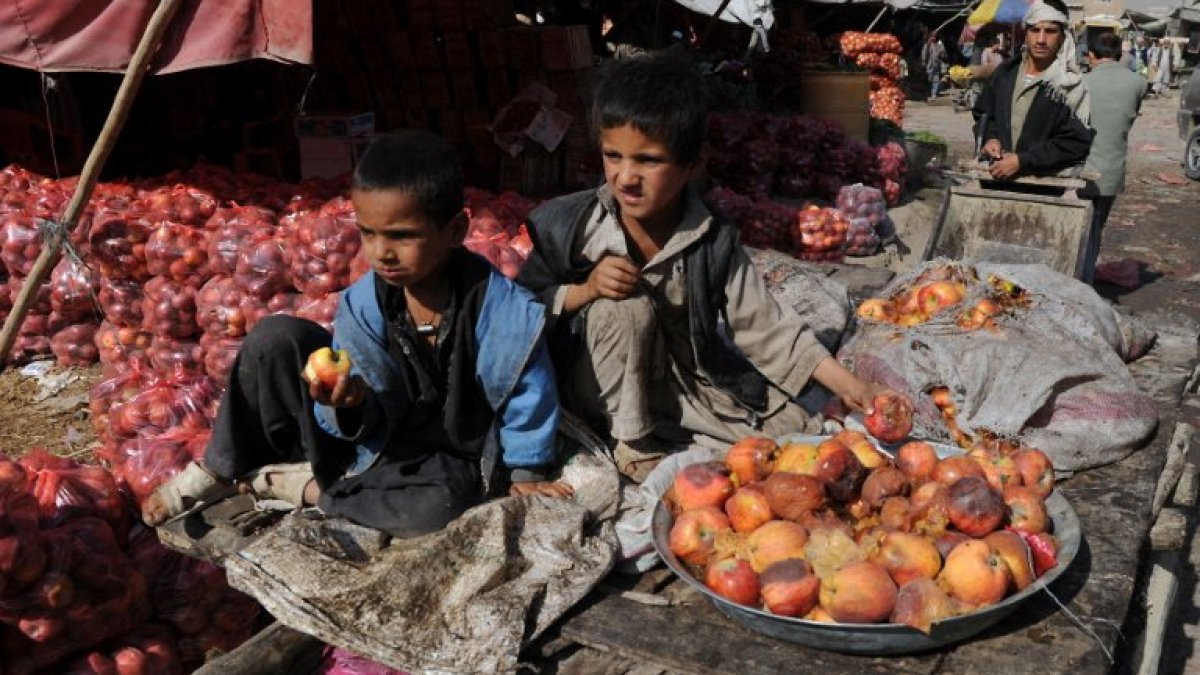
However, the farmers we spoke to in several villages showed us heaps of apples decaying beneath the trees. They complained that the storage houses had space for the apples of only two to three families in the entire village.
In another village, we saw frustration with another project from a different NGO. That organisation had bought imported seeds for various vegetables and distributed them among farmers. Staff members provided training, conducted weeks of workshops on cultivation methods and techniques, and regularly monitored the crops.
The local participants invested significant time, energy, land, and water in the project. But the harvest they got from these imported seeds was very little and of poor quality. Despite the enormous amount of money spent by the NGO on surveying, training, logistics, transportation, and staff salaries, the vegetables for each family amounted to about 450 Afghans (roughly $7). There was no accountability for the farmers’ losses.
Such stories are common across rural communities in Afghanistan. While aid organisations publish reports of their achievements, many beneficiaries gain little from poorly designed projects that fail to address the real challenges they face. The cost of these projects is extremely high, but the output is often too little.
Since the Taliban took over Kabul and the US-led coalition withdrew from the country, humanitarian aid and funding in Afghanistan have dramatically collapsed. The struggle to secure funds, however, has not led to better efficiency, accountability, and transparency among the NGOs still operating in Afghanistan.
This is not a recent phenomenon. Between 2001 and 2021, Afghanistan became the poster child for corruption, embezzlement, and waste of foreign aid. One US journalist described it as “the $148 bn failure”.
According to the Special Inspector General for Afghanistan Reconstruction (SIGAR), set up by the United States to investigate fraud with US funds, between $26bn and $29bn was lost due to embezzlement or wasteful spending. This was just funding provided by the US government; there is no estimate for how much was wasted from other donors.
While much of the foreign funds went to the security sector, a significant amount went to the non-profit sphere, where waste was also widespread. Millions, if not billions, worth of projects became a missed opportunity to improve the lives of Afghans, especially in rural areas. This is a legacy that persists to this day.
This situation is not unique to Afghanistan. The development sector across the world is known for waste and inefficiency. In the Afghan context, that is exacerbated by the lack of control and difficulty of ground work.
Many foreign NGOs do not directly implement their projects; instead, they work through implementing partners (IPs), which themselves outsource implementation to subcontractors. This extended chain of actors means that often there is a lack of proper quality control and supervision, and there is motivation to carry out lower-quality work in order to increase profit.
Furthermore, the primary concern of IPs is securing funding. So they often present project proposals that look great on paper but do not necessarily have a substantial impact on the circumstances of the local population or address their most urgent needs.
Finally, there is a lot of waste in remuneration, especially when it comes to international staff. Foreign employees often have salaries as high as $10,000–20,000 for doing work that a local hire can do for much less.
It is clear that amid global cuts to donor funding, the development sector is struggling. This should be a moment of change. In Afghanistan, where the need of the local population is enormous while available financing is shrinking, NGOs can take this change into their own hands.
The simplest first step NGOs can take is to employ qualified locals to plan and lead projects. They would know the local culture, realities, and actual needs of communities, as well as market prices and field conditions. They can help not only optimise project costs but also ensure that they actually have a real, measurable impact.
In addition, NGOs should avoid having an extended chain of IPs and subcontractors. They should also regularly collect feedback from local communities and field workers directly in order to evaluate project effectiveness during implementation in order to avoid repeating the same mistakes.
Projects are more likely to produce sustainable results if NGOs invest in addressing pressing nationwide challenges, such as unemployment, infrastructure, and market access.
Improving efficiency and effectiveness would not only ensure Afghan beneficiaries get better services and help, but it would also make organisations more competitive for the dwindling pool of funding. This is the only way to salvage the NGO sector not only in Afghanistan but in the rest of the world.
The views expressed in this article are the author’s own and do not necessarily reflect Al Jazeera’s editorial stance.

