


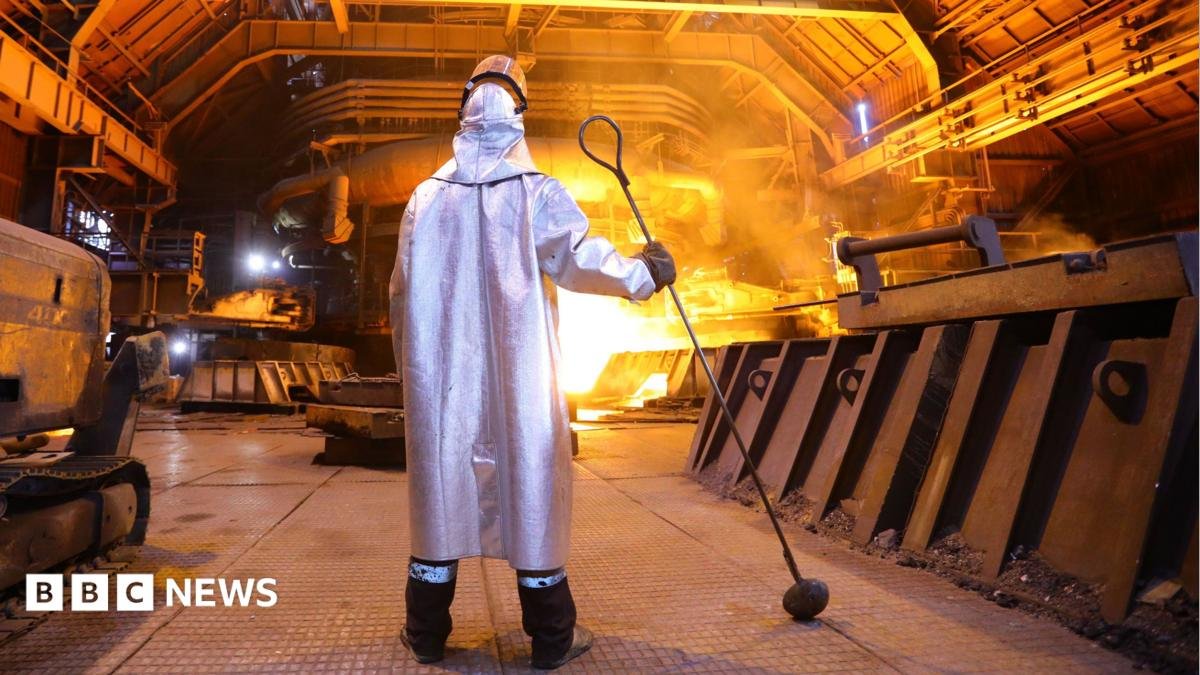

If the steelworks remain shut, hundreds of thousands of people may lose their jobs, and the resulting waves of migration will reach far beyond Ukraine, Zinchenko warned. “A humanitarian catastrophe is looming.”
The end of steelmaking in Ukraine would also have severe consequences for its defence capabilities and reconstruction.
Steel is vital for producing military equipment, as well as for making shelters and repairing countless buildings damaged by Russia.
Russia has justified its attacks on the steel plants for that reason, alleging that the plants in Zaporizhzhia and Kryvyi Rih were all producing military hardware.
“We attempted relaunching Zaporizhstal. We restarted a furnace, and it worked for 10 hours before there was another air strike,” Oleksandr Vodoviz of Metinvest told a conference in Kyiv.
There was no point yet on spending money on recovery as the situation was unclear, he added.
Even if production were to resume, it would not be business as usual for Ukrainian steelmakers any time soon.
Russian attacks on railways have made transporting their products within Ukraine difficult and dangerous, and strikes against ports have turned exports into a lethal lottery.
“Ports have essentially been blocked,” said Oleksandr Myronenko. “Every ship is at risk of being attacked, and their chances are 50-50 – either you make it, or you don’t.”
EU quotas on steel imports introduced on 1 July may compound the problems faced by Ukraine.
But Denys Maksyshko, the Zaporizhstal worker, remains upbeat.
His colleagues are doing their bit to revive the factory, clearing away rubble and fixing whatever can be fixed.
“This is similar to what the military do in the trenches. Ordinary people are fighting to keep the factory alive like soldiers.”

