


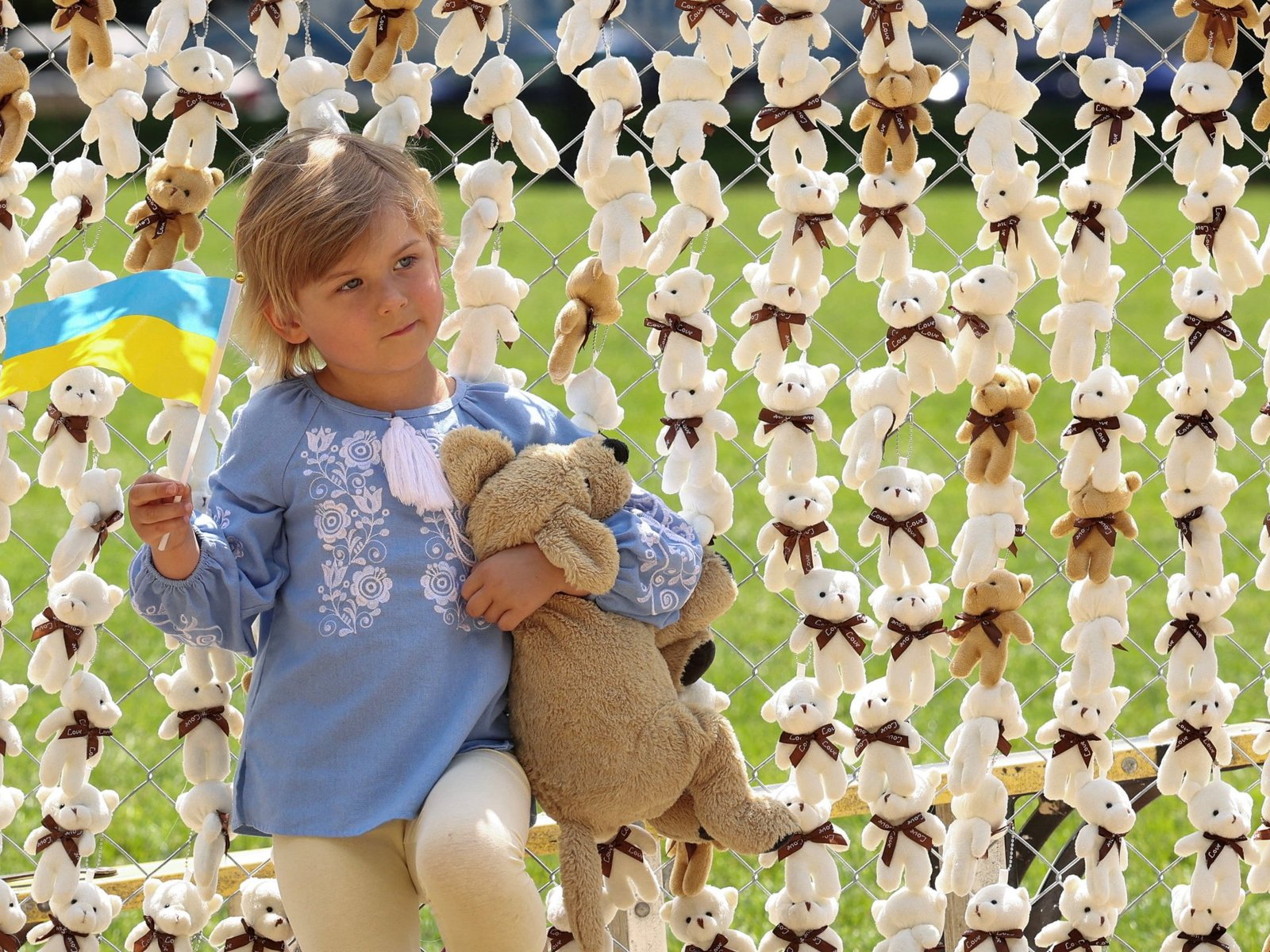

It has been more than four years since Russia launched a full-scale invasion of Ukraine, expanding its occupation of Ukrainian lands, which started in 2014. In the chaos and violence of the first months of the invasion, families were separated, and childcare institutions were cut off from the control of the central authorities in Kyiv. As a result, the occupation forces forcibly transferred more than 20,000 Ukrainian children to Russia.
Russian officials claimed that they did not abduct Ukrainian children, but “saved” them through humanitarian evacuations. However, international investigations have since found that many such transfers were unlawful under international humanitarian law. In many documented cases, transfers were carried out without the consent of the living parent or legal guardians of the child.
International humanitarian law prohibits all forcible transfers and deportations of protected people from occupied territory, except for evacuations strictly required to ensure the population’s safety. Even then, evacuation must happen within occupied territory, be temporary, preserve family unity and return evacuees home as soon as hostilities cease.
Today, the lives of thousands of Ukrainian children are devastated by this forcible transfer. Instead of abiding by international legal obligations and returning them to their homeland, Russia has transformed the issue into yet another bargaining chip against the Ukrainian people.
But Ukraine refuses to abandon its children. For the past four years, there have been intense efforts from families, NGOs and the Ukrainian government to bring them back.
Take the case of Lesya (the name has been changed to protect her identity), whose testimony was recorded by The Reckoning Project— a global team of journalists and lawyers documenting and publicising atrocities committed in the war. Lesya was 15 years old when Russian forces occupied her village in the Kherson region in 2022. When the occupation authorities imposed a mandatory evacuation, she was put on a truck with more than 30 other children and was sent to a rehabilitation centre in Feodosia, Crimea. A woman accompanying the children told her that her mother would join her shortly.
At the facility, Lesya and other Ukrainian children were subjected to a strict routine, forced to do chores and study in Russian, using Russian textbooks. They were kept under surveillance indoors most of the time in a building with windows that could not be opened. Two days a week, the children underwent military training.
Eventually, a relative located her, and with the help of Save Ukraine, a Ukrainian NGO facilitating children’s return, her mother managed to bring her back.
But Lesya’s case is the exception rather than the rule. More than 2,000 Ukrainian children have been brought back thanks to efforts by NGOs, the government and foreign mediators.
Pressure through international institutions has also been pursued, but that has not accelerated the process of return.
In March 2023, the International Criminal Court issued warrants of arrest for Russian President Vladimir Putin and Commissioner for Children’s Rights Maria Lvova-Belova for the unlawful deportation and transfer of Ukrainian children.
In July 2025, the European Court of Human Rights, in Ukraine and the Netherlands v Russia, found Russia responsible for a number of human rights violations, including the organised removal of children. The court also required Russia to cooperate in establishing a mechanism to find and safely return children.
In March this year, the United Nations Independent International Commission of Inquiry on Ukraine concluded that Russia’s deportation and forcible transfer of Ukrainian children amount to crimes against humanity. The report identifies the removal of Ukrainian children as a part of a well-planned and systematically executed policy, conceived at the highest level.
On May 11, the European Union sanctioned 16 individuals and seven entities, while the United Kingdom sanctioned 29 individuals and entities responsible for the deportation, forced transfer, forced assimilation, indoctrination, militarisation and unlawful adoption of Ukrainian children. Overall, the EU has sanctioned more than 130 people and organisations for these actions. The United States, Canada, Australia, Japan, Switzerland and several other countries have introduced similar measures.
The lack of progress on this issue has driven families to desperation. Some have tried to bring their children back on their own or through often-daring missions by Save Ukraine and five other Ukrainian NGOs.
There should be no need for these risky missions. Under international humanitarian law, Russia is obligated to identify and register Ukrainian children in their care, facilitate family reunification, and permit access to neutral actors assisting Ukrainian children.
As negotiations for the end of the war have stalled and other global events have displaced Ukraine from global headlines, we urgently need to put the issue of the abducted Ukrainian children back in the spotlight.
There are several areas in which existing efforts can expand.
First, a comprehensive tracing mechanism needs to be established and financed to track abducted Ukrainian children and prevent their disappearance into dispersed care and adoption systems.
Second, ongoing legal efforts to hold to account Russian officials involved in the abduction should be intensified. This means coordinated prosecutions in states where the universal jurisdiction principle can be applied, as well as joint investigation strategies supported by Eurojust, the EU’s judicial hub. Ukraine’s partners should support its judicial processes launched against Russian officials and cooperate where needed, including through extraditions where legally applicable and other lawful transfer mechanisms. While justice may be slow, the prospect of accountability can have a deterrent effect.
Third, states can and should fully implement sanctions, trade restrictions and other obligations they assumed but did not consistently observe in practice. The sanctions regime on Russia has severely hurt its economy, but it has also seen continuous evasion. A strict implementation can help put more pressure on the regime in Moscow.
While stories of family reunions are heartening, they are just a drop in a bucket compared with the number of children who continue to be separated from their families and absorbed into a system of indoctrination and militarisation.
We must not allow the issue of returning Ukrainian children to be yet another negotiating chip for Moscow. It cannot be put on hold because negotiations have stalled or because other priorities have captured the world’s attention.
Four years is a long time in a child’s life. Each passing day further erodes their national identity and deepens the pain of separation, as they grow up in a hostile environment. There is no principle more universal than the belief that children belong with their parents and loved ones, and Ukrainian children deserve this basic human right today, not at some point in the future.
The views expressed in this article are the author’s own and do not necessarily reflect Al Jazeera’s editorial stance.

