


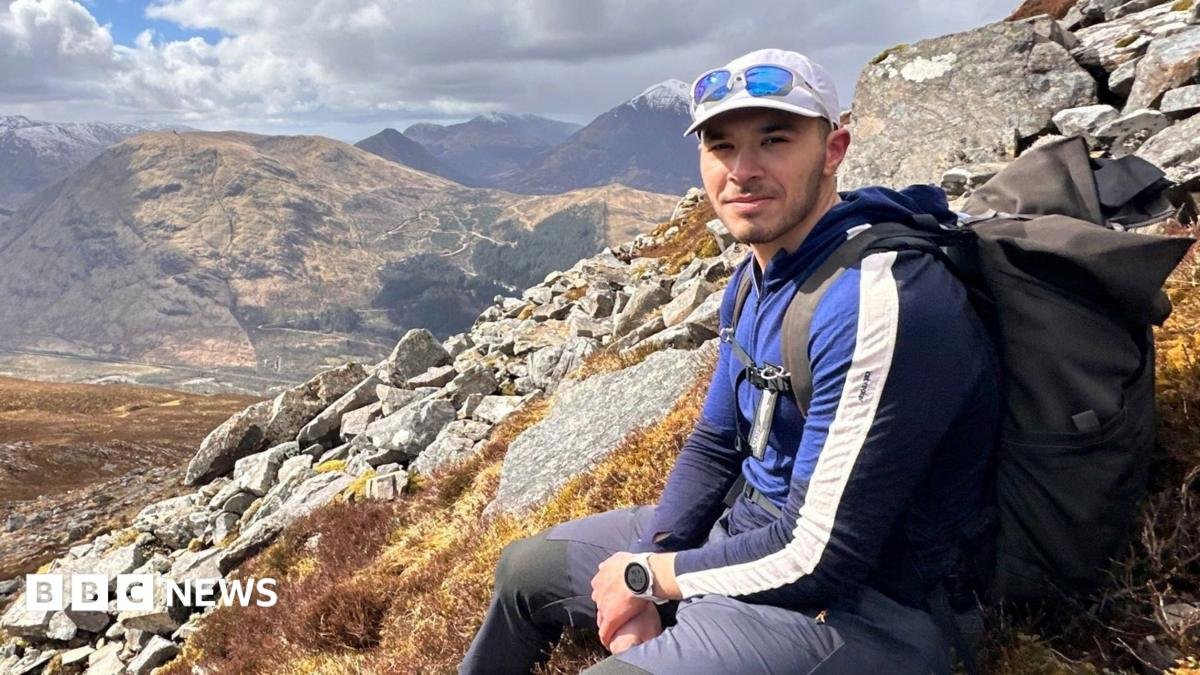

Many young walkers’ groups from Inverness to Nottinghamshire have seen their membership rise over the past two years, according to the Ramblers walking charity.
Demand has nearly doubled for a course it offers teaching map and compass skills to 18-25 year-olds.
Many who sign up want to ditch their phones and no longer rely on a blue dot to navigate, says Alistair Cooper, who leads the Out There Award programme.
“There’s a cohort that missed out on outdoorsy, fun stuff during Covid. They want to get out and explore – but often don’t know where to start.”
Some 83% of people in the UK live in towns and cities, according to the UN, where research suggests noise, traffic, stress and information overload put huge demands on our brains, affecting our mental health.
“Nature is the environment we are adapted to, and being close to it brings benefits such as improved wellbeing, brain function and physical performance,” says Dr Danny Longman, lecturer in human evolutionary physiology from Loughborough University.
“There is a theory that simply paying attention to trees and leaves allows our brains to recover,” he says.

