


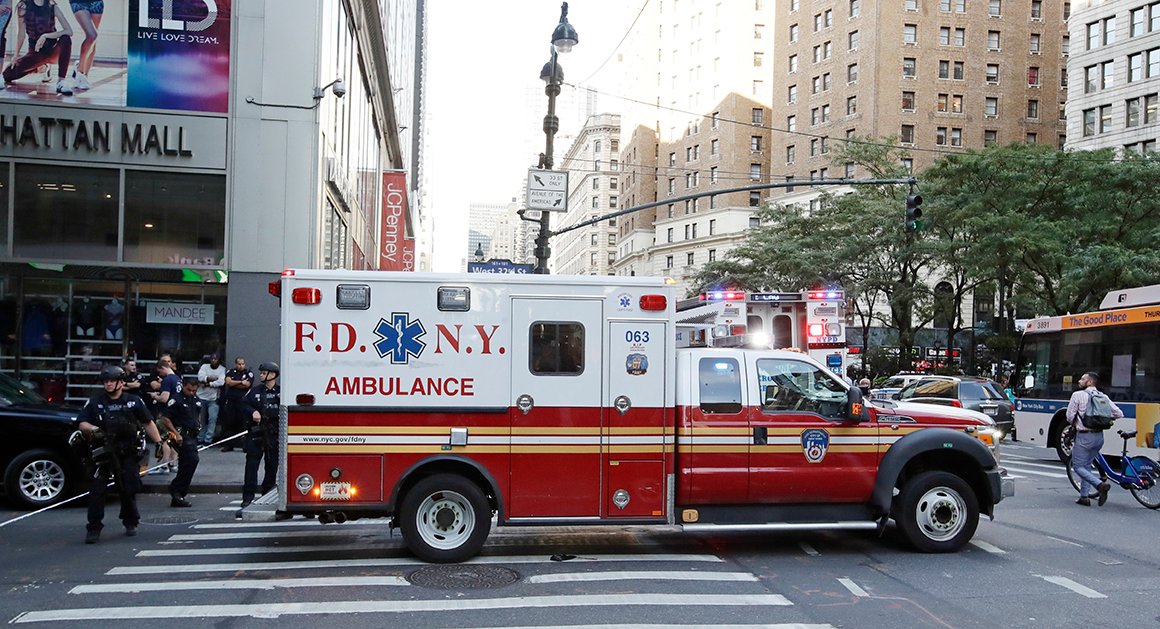


911 EMERGENCY: An ambulance in New York City now takes an average of 13 minutes to reach someone in life-threatening distress.
That response time has risen five years straight and is up 41.2% from a decade ago, a city comptroller’s report revealed earlier this month. According to this year’s Mayor’s Management Report, which came out in September, ambulance response times to life-threatening emergencies shot up by almost 16% between fiscal year 2025 and fiscal year 2026 — the sharpest increase this decade.
A core part of the issue is that calling 911 does not necessarily mean an ambulance will be immediately dispatched. Callers are put in dispatch queues. If a higher-priority call comes through, the ambulance might be rerouted. And all of this happens behind the scenes — which means those experiencing medical emergencies have no idea when help will actually arrive.
Council member Joann Ariola, chair of the Fire and Emergency Management Committee, proposed a bill in August that would require the city to send New Yorkers broad notifications when the emergency response system is overloaded.
Now, the Queens Republican is pushing for these notifications to be completely personalized.
“The idea is that I would be able to track my ambulance in real time, just like you’re able to do for your bus, or your train, or your rideshare car,” she told Playbook.
If patients know how far away help is, they can make an informed decision to forgo an ambulance and instead pursue other means of transportation to a hospital, she said. That would also alleviate pressure on the already overloaded EMS system and potentially get callers the care they need faster.
The idea has support from a council member across the political aisle.
“We get live texts about everything under the sun, but for some reason, in our current system, we don’t get alerts about this,” Democratic Council member Harvey Epstein said. “If I’m waiting for an ambulance because my kid broke their leg, and I learn that it’s going to be half an hour, it’s smarter for me to just hop in a cab anyway.”
Ariola said she met with top FDNY officials — including Commissioner Lillian Bonsignore, Chief of Department John Esposito and Chief of EMS Paul Miano — ahead of Tuesday’s hearing to discuss the idea. All of them, she said, appeared more receptive to specific text alerts than to the broad notification system proposed in her initial bill.
Amanda Farinacci, an FDNY spokesperson, said the department is “considering and exploring all options that will help us respond to emergency medical calls quickly and keep New Yorkers informed.”
“We are exploring all our options, this included,” she said, referring to the live text-update model.
Ariola said she’s submitted the new version of the bill and is waiting to hear back from the legislative affairs committee.
The solution proposed by she and Epstein would address the public-facing side of the problem, offering relief to callers in emergency situations.
The root cause of the issue, though, is retaining EMS employees — a challenge officials and union leaders say stems from low pay for a high-stress job.
“This is not fixing the broken system,” Ariola said. “We are in a state of emergency right now. It’s a systemic problem with EMS because they cannot retain their members, because it’s not a career.”
Entry-level pay for emergency medical technicians is less than that of sanitation workers, firefighters, correction officers and police officers. Since 2019, about 4,300 EMTs and paramedics have left their titles, many for better-paying jobs elsewhere in the department. Last fiscal year, 58% of departing EMTs became firefighters.
The union representing emergency medical workers is negotiating a contract that lapsed in 2022, and it’s seeking pay parity with firefighters. But the comptroller’s report found that parity alone would raise EMS salary-related expenses by $184 million a year, a 66% jump.
“The City can reverse this dangerous trend by ensuring members of EMS are treated as equals to members of fire operations, and by providing EMS personnel with pay and benefit parity comparable to their firefighter counterparts,” Local 3621 President Vincent Variale and Local 2507 President Michael Greco said in a joint statement. “These actions would not only treat our EMS workforce respectfully and properly; they would save the lives of New Yorkers in peril.”
Response times to life-threatening emergencies saw the sharpest year-to-year increase of the decade between the last two fiscal years, a timeframe that straddles the Mamdani administration and the administration of former Mayor Eric Adams.
“This is something that each mayor inherited, but the new administration, it is now absolutely their issue,” Ariola said. “I’m hoping this is the administration that finally solves the retention problem. And the only way to solve that problem is to pay EMTs their worth and also recognize them as uniformed workers.”
The mayor’s office declined to comment on Ariola’s new proposal and referred to a comment from the fire department.
“The Department is currently engaged in a challenging period of increasing response times. We know this is unacceptable and we are working tirelessly to reverse this trend,” Farinacci said. “We will continue to take steps to improve response times and keep New Yorkers safe, including improving coordination with hospitals, enhancing efficiency in high-volume areas, and increased operational visibility to help return units to service quickly.” — Molly Reinmann
FROM THE CAMPAIGN TRAIL
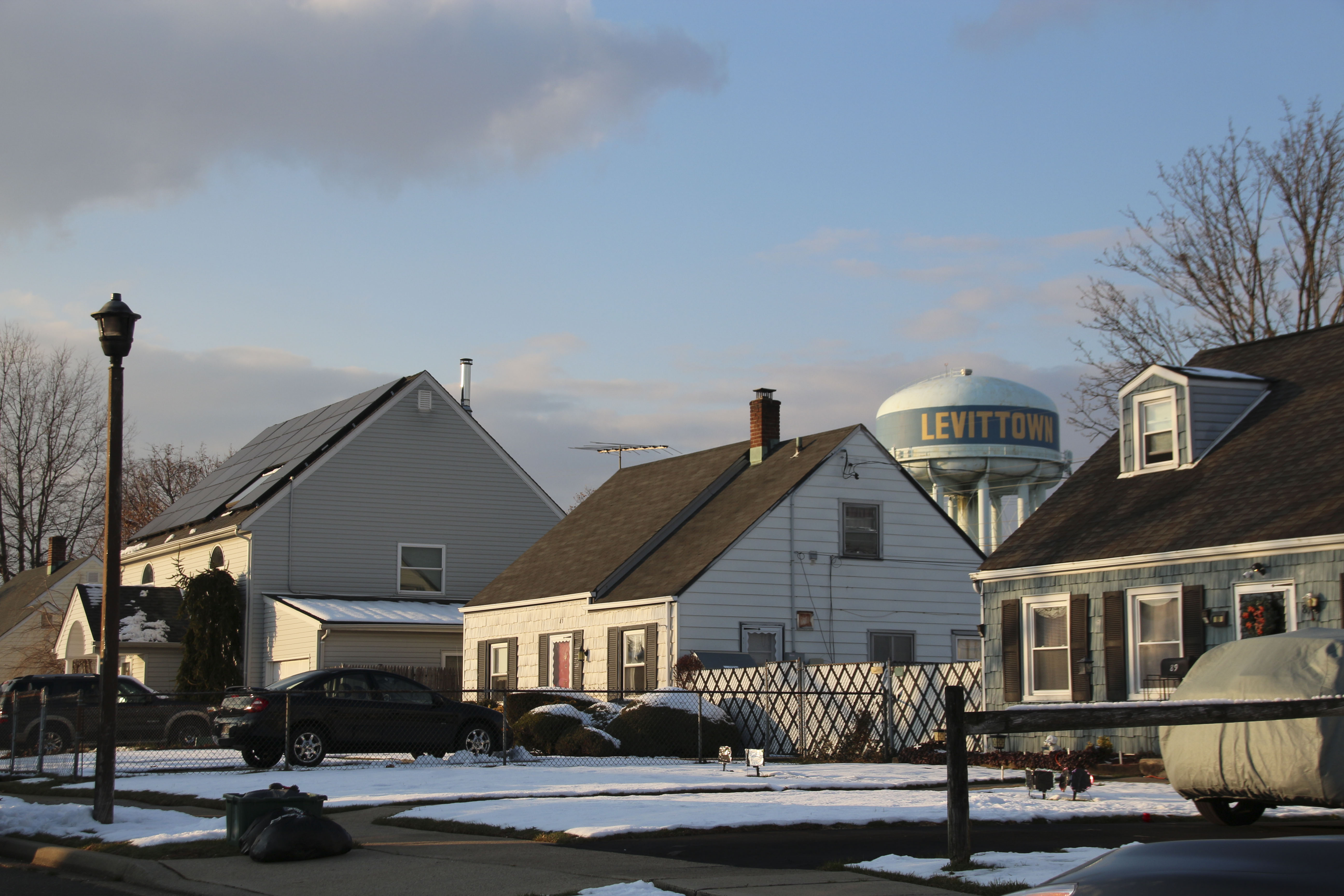
A SUBURBAN ALARM: Suburban voters across the country are turning against President Donald Trump, according to a poll that amounts to a major warning sign for the GOP this election season.
The results of the National Suburban Poll by the National Center for Suburban Studies at Hofstra University paint a bleak picture for Trump and his party.
“Numbers that are concerning Republicans throughout the country become even more so when they show up in suburbs, which for years have been the ‘swing’ voting bloc that determines national and many statewide elections,” said Larry Levy, the center’s dean. “When a party’s or candidate’s numbers are weak in the suburbs, as we’ve found in many instances for Republicans, the situation goes from concerning to alarming.”
The survey found 33% of suburban voters approve of the president’s job performance. His approval rating in swing suburban House seats isn’t much better: 35%.
Just over a quarter of suburban voters nationally — 26% — are satisfied with the direction of the country.
Suburban voters by a margin of 50% to 42% prefer Democrats over Republicans in the generic Congressional ballot question. The GOP, though, is in a statistical tie with Democrats in suburban swing seats. In those districts, Democrats lead Republicans 47% to 44%.
Taken together, the numbers highlight the challenge Republicans face this year, especially in deep blue New York, home to several swing House districts in the New York City suburbs.
The most competitive race is in the Hudson Valley, where GOP Rep. Mike Lawler is fending off a challenge from Democratic opponent Cait Conley.
The survey included 1,500 people nationwide and was conducted in late September. It oversampled suburban residents who live in swing House districts. — Nick Reisman
SARATOGA FRESH: To get an idea of how much national headwinds might apply to the New York State Senate, look to Saratoga County.
Plenty of indicators suggest two factors will heavily influence the outcome: Voters are angry at Republicans and willing to oppose well-tenured incumbents.
That could be a double-barreled problem for Sen. Jim Tedisco, who’s running in a district where Donald Trump lost by 8 points two years ago. The Republican is now the dean of the state Legislature by a large margin: Tedisco came to Albany in 1983, the first year of Mario Cuomo’s time as governor. Only four other members who might be in office next year served in 1999.
“Jim Tedisco’s been in office for over 40 years, almost as long as I’ve been alive,” said Sarah Rogerson, Tedisco’s Democratic challenger. “People are ready for some fresh voices.”
Even if current assumptions about the electorate’s mood prove true, Republicans remain optimistic they won’t apply to New York. The GOP believes 2026 will be a repeat of 2022, when a lack of enthusiasm for the top of the ticket meant a good year for Democrats nationwide bypassed the Empire State.
“If there’s going to be a blue wave across the country, it’s probably going to miss New York, and it’s largely because of how deeply unpopular Kathy Hochul is,” Senate Republican Campaign Committee Chair George Borrello said.
Nobody’s predicting Republicans will retake the majority in a chamber where Democrats had a 41-22 edge this year. The main question now is whether Democrats can pull off a two-thirds supermajority of 42 or more members, a feat accomplished in 2020 and 2022 but not 2024.
READ MORE in POLITICO Pro from Bill Mahoney.
FROM CITY HALL

BILL SIGNING TIME: Mayor Zohran Mamdani will sign two bills passed by the City Council that come with significant transit and housing policy ramifications, his office confirmed today.
The first measure Mamdani plans to put his John Hancock on will abolish New York City’s horse carriage industry. The second will give nonprofit groups and local land trusts first dibs on buying distressed residential properties in their communities, with the idea that those regulations will protect affordable housing stock.
Mamdani had already voiced support for both pieces of legislation before the Council passed them yesterday. But his office hadn’t until today confirmed he would sign the bills, as opposed to letting them lapse into law.
Mamdani’s office did not immediately provide a date for when he plans to sign the bills.
The issue of signing bills came to the fore this week when the New York Post noted that Mamdani has only inked one bill since taking office. Ultimately, as long as the mayor doesn’t veto a bill, there’s no practical difference between whether he signs it or lets it lapse, as it becomes law regardless. — Chris Sommerfeldt
IN OTHER NEWS
— IN THE SCHOOLS: New York City is considering closing a Harlem high school due to underenrollment, the first in what could be a growing number of school mergers and closures amid public school enrollment declines. (Chalkbeat)
— HOCHUL: The governor’s vision for New York is largely shaped by her upbringing in a small Rust Belt city in western New York and her family’s slow climb up the socioeconomic ladder. (New York Times)
— CORNELL 7: Attorney General Letitia James is asking a court to dismiss a request to remove her from the investigation into the alleged sexual assault at Cornell University due to impartiality concerns. (Times Union)
Missed this morning’s New York Playbook? We forgive you. Read it here.

