



The £72m heading towards Reform UK’s coffers from two British billionaires is transforming the debate at Westminster about politics and money.
In short, how should political parties be paid for, and by who?
And, what is a legitimate donation and what isn’t?
It is worth setting out the law, in broad terms, now and how the government hopes to change it.
Right now, there is no limit on how much anyone, living in the UK or abroad, can give to a British political party as long as the individual is registered to vote in the UK.
But the government has been planning a change in the law for months, which would limit donations from Brits abroad to £100,000 each per year, backdated to 25 March this year.
But, crucially, the law hasn’t changed yet and some of the key details in that proposed new law – such as what residency requirements would need to be passed to be classified as no longer being abroad – haven’t been decided yet.
The reason for that date, 25 March, ministers argue, is that is the day a review by the retired civil servant Philip Rycroft was published,, external the first recommendation of which was that there should be “an annual cap on political donations from British voters living abroad”.
On that same day, the then-cabinet minister Steve Reed told the Commons, external that cap would be £100,000 per year. He also added that it would “apply retrospectively” from that date onwards, even though the law at the time, and indeed now, has not yet changed.
Two big questions arise from this plan: is it proportionate to limit what British folk abroad can donate to UK political parties, given they are arguably less invested in the country than people living here?
And is it unfair, even morally questionable, to pass a law, but then backdate when its impact begins?
Fast forward to the last few days and along come these colossal donations from Ben Delo and Christopher Harborne, two cryptocurrency billionaires who until recently lived in Hong Kong and Thailand respectively.
They have both now returned to the UK.
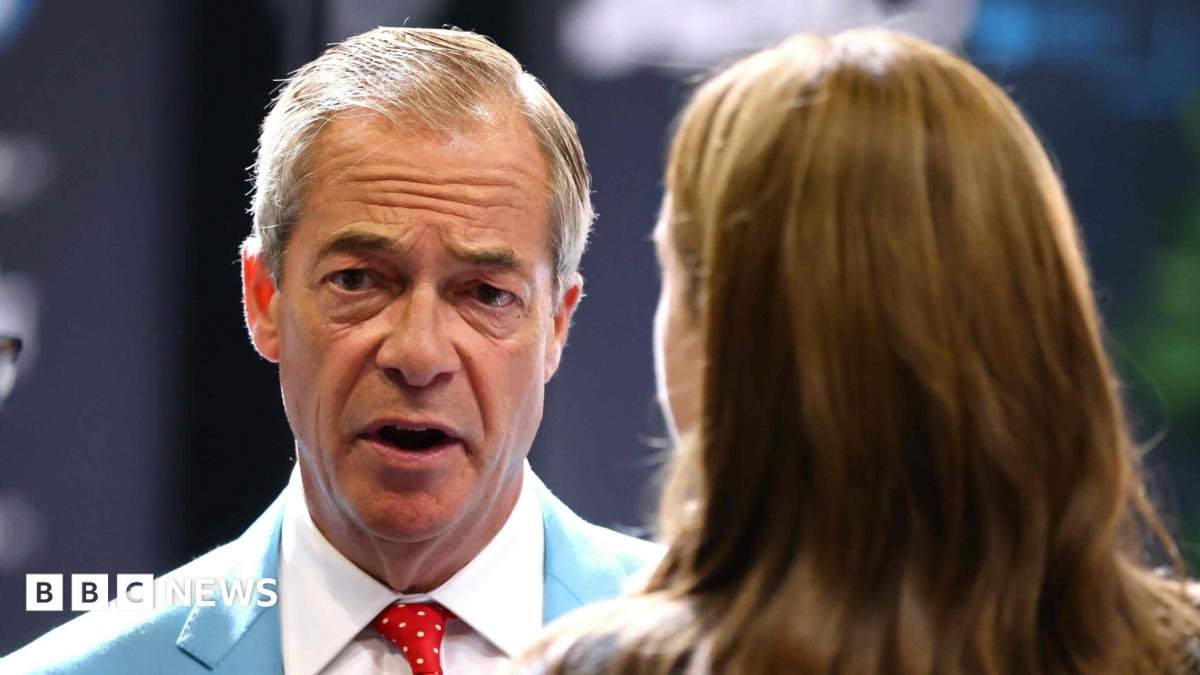
In his first interview since these donations became public, Nigel Farage told me unequivocally that the money from both men was legal under the law as it stands now.
But he was equivocal when I asked him if they would legal under the law the government hopes to pass shortly.
“Both these donations are 100% compliant with the law today, of that there is no question whatsoever,” Farage told me.
Ah, today, I pointed out.
“Retrospectively declaring donations illegal – that simply cannot be,” he pressed on, adding “you cannot confiscate money that has been given legally within the law as it stands.”
That is a political, perhaps moral argument, but not a legal one – if the government changes the law, the law of the land will have changed, possibly with consequences for whether those donations are legal.

