



The “close personal relationship” has been the downfall of a number of chief executives over the years.
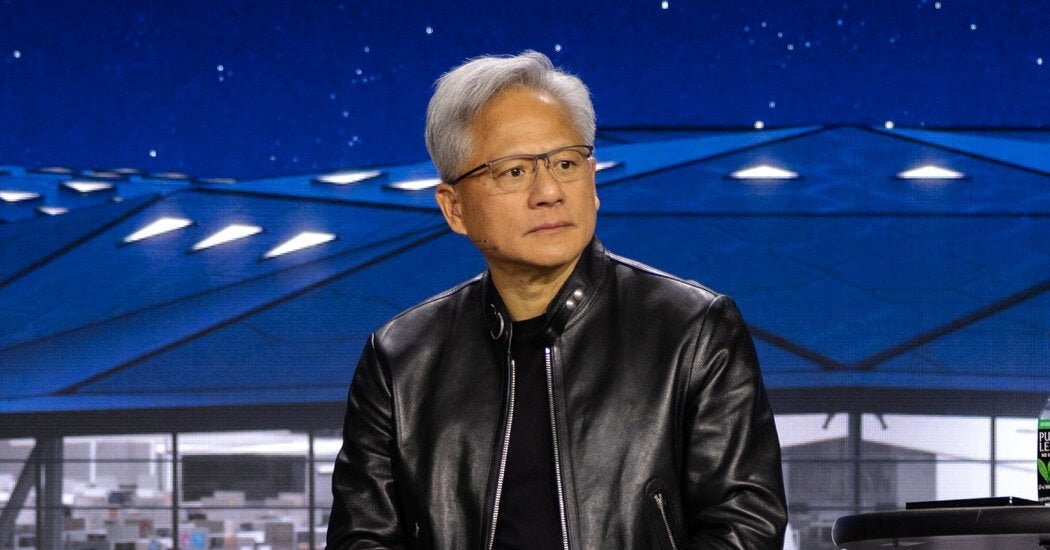
Now it has felled Jensen Huang, the founder and chief executive of Nvidia. Mr. Huang resigned on Thursday following revelations that he had an affair with an executive at the company as well as with a woman whom U.S. intelligence agencies concluded was an intelligence asset for China.
Posing a risk to national security is not the usual reason for ousting a chief executive. More often, it is that a relationship was in violation of company policy.
Large companies generally have had policies that prohibit managers and direct reports from having romantic relationships. Nvidia’s code of conduct tells employees to “avoid situations where our actions create conflict” including “personal relationships.”
“When it comes to direct reports, companies have had hard policies and have had for ages,” said Charles G. Tharp, executive vice president of the CHRO Association, a group for human resources officers.
Mr. Tharp added that companies likely tightened enforcement on these policies in the wake of the Me Too era.
Mark Hurd, who had helped build HP into a powerhouse tech company, was fired in 2010 after its board found that he’d failed to disclose use of company funds, and that he’d had a “close personal relationship” with a contractor. In 2018, Brian Krzanich resigned from Intel after the chip company learned of a “past consensual relationship” the chief executive had with an employee.
Tech is not the only industry to be hit by scandal. Last year, Ashley Buchanan was fired as chief executive of Kohl’s, the department store chain, after the company learned that he was trying to direct business to a vendor who turned out to be his romantic partner. Mr. Buchanan was in the role for just a few months. Rodney McMullen, the chief executive of the grocery chain Kroger, resigned last year after an investigation by its board found that his personal conduct was inconsistent with the company’s policies.
McDonald’s went through an unusually public yearslong battle starting in 2019. That year, the company fired Steve Easterbrook, its chief executive, after its board learned he had engaged in a consensual relationship with a subordinate that violated company policy. Eight months later, another McDonald’s employee reported a previous sexual relationship with Mr. Easterbrook. McDonald’s then sued Mr. Easterbrook, accusing him of lying and concealing multiple relationships with McDonald’s employees. The case was settled, and Mr. Easterbrook apologized and gave back more than $105 million in cash and stock to the company.
In 2018, Leslie Moonves, the longtime chief executive of the CBS Corporation, was one of the most high-profile entertainment figures to be ousted from his position during the #MeToo era. He stepped down after several women accused him of sexual harassment. Mr. Moonves received no severance package.
In the wake of Mr. Moonves’s ouster, the board of CBS also named six new members.
Boards of directors are responsible for monitoring the conduct of their chief executives and ultimately decide if a chief executive needs to step down.
Founders of very successful companies — like Mr. Huang — are often treated with deference by their boards. “They are in awe of their founder for very good reasons,” said Jeffrey Sonnenfeld, a professor of leadership studies at the Yale School of Management and the author of “The Hero’s Farewell.”
In Nvidia’s case, he said, “the board has done the right thing, but it has taken too long,”
“There were lots of indicators for any board paying attention,” he added.
Other founders have been fired because of their temperament or management style and later ended up returning to the companies they built. In 1985, Steve Jobs was forced out of Apple after an internal power struggle and a disastrous rollout of new technology. In 2000, he returned and had a legendary run as Apple’s chief executive. Sam Altman, the chief executive of OpenAI, had a shorter time away from his artificial-intelligence empire. He was pushed out by the board of directors on a Friday afternoon in 2023. Five days later, he was reinstated as the company’s leader after allies, including fellow Silicon Valley executives, employees and investors, urged his return.

