



The Federal Reserve on Wednesday kept interest rates unchanged despite growing pressure to more directly tackle inflation after five years of overshooting the central bank’s 2 percent target.
The Fed voted 9-3 to maintain rates at 3.5 percent to 3.75 percent, a level that has been in place since January. Beth M. Hammack of the Federal Reserve Bank of Cleveland, Neel Kashkari of the Minneapolis Fed and Lorie K. Logan of the Dallas Fed dissented in favor of a quarter-point increase.
The divisions underscore the tough spot the Fed finds itself in as it grapples with new sources of price pressures that are threatening to compound an already complicated inflation problem. Oil prices have whipped around in recent days with the Iran war in a delicate limbo. Fighting has paused for now, but a deal to end the conflict and reopen the Strait of Hormuz, a crucial shipping path for global energy markets, remains distant.
The war is not the only supply shock the Fed is having to navigate. President Trump is still actively adding new tariffs, and the labor market is still digesting sweeping immigration restrictions he has put in place. Officials are also dealing with booming demand for products tied to the sharp rise in artificial intelligence investment. Supply has yet to catch up, leading to higher prices on items such as semiconductors, computer chips and servers.
The debate at the Fed centers on how quickly inflation will ease from here as some of these temporary factors fade, and whether rate increases will ultimately be necessary to get back to target.
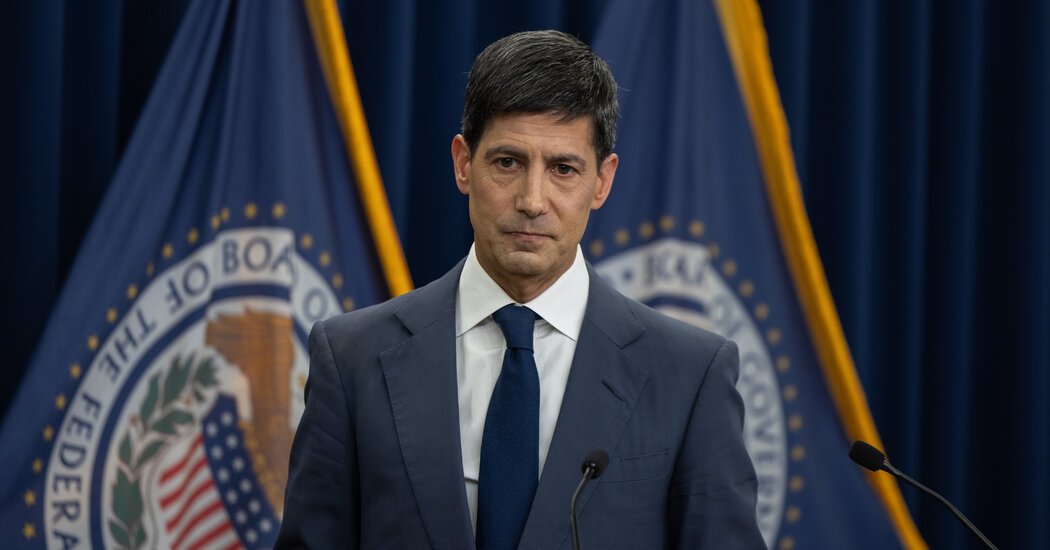
Kevin M. Warsh, who this week presided over his second meeting as chairman of the central bank, owns the outcome.
Since taking the reins from Jerome H. Powell, who is now a Fed governor, Mr. Warsh has staked his reputation on vanquishing inflation. He has been explicit that officials have “no tolerance” for elevated inflation, and that recent evidence of cooling conditions in the latest Consumer Price Index report from June does not amount to “mission accomplished.”
In a policy statement on Wednesday, the Fed reiterated that it would deliver price stability, describing inflation as “elevated.” It noted that economic activity was “expanding at a solid pace,” and that productivity growth and capital investment were “strong.” It also conveyed that the labor market was stable.
Up until this point, however, Mr. Warsh has not specified how exactly he will make good on his inflation pledge. When asked at congressional hearings earlier this month how the Fed would tame inflation, he stipulated that the central bank would assert its commitment to getting it down, take responsibility for any failure in doing so and study the policy tools at its disposal.
The case for leaving rates unchanged hinges on an assumption that the Fed can afford to be patient before making a move. Many policymakers see scope for inflation to decelerate in the second half of the year, and by the next meeting in September, they will have two more months of data in hand. Moreover, the public has not yet lost confidence in the Fed’s ability to eventually reach its goal, as evidenced by a range of metrics tracking inflation expectations.
But the longer inflation stays above target, the more likely that this confidence is rattled. As such, officials have made clear that if inflation does not soon retreat, they would stand ready to raise rates.
What has made the trajectory for rates especially hard to discern is Mr. Warsh’s preference to keep quiet about how he views the outlook. He has not publicly provided details about how the Fed might react to changes in the economic backdrop, nor has he made clear whether he thinks higher rates are an effective tool the Fed should utilize. That has left markets guessing what the Fed will do next, with expectations now coalescing around a quarter-point increase in September.

