


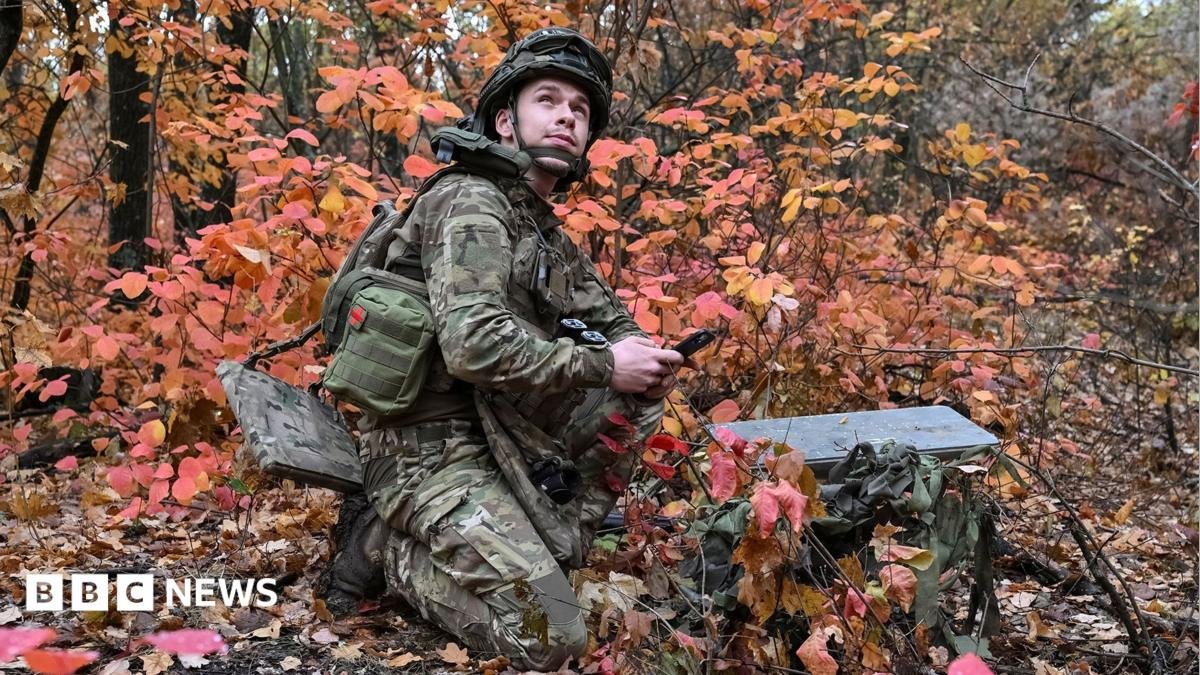

He is fixed on the live stream as a Ukrainian snare swoops in, hovers for a few seconds and drops a net on to the drone, dragging it from the sky. This Russian drone was for reconnaissance, but if it had locked on to the soldiers, another drone carrying explosives would have followed.
This moment of peril illustrates the layers making up the modern battlefield. The command bunker receives live pictures from a hovering camera, while below a Ukrainian attack drone attacks another enemy spotter which would have called in more flying firepower.
Integrated in all of this is Starshield, the military version of Elon Musk’s Starlink satellite communications network, providing broadband connectivity across the battlefield.
Ukraine said this week, as Operation Vivaldi concluded, that the system had restrictions imposed without warning, limiting their capability.
Musk and media reports suggest the order may have come from the White House. While Ukraine is not wholly reliant on Starshield, it is a key tool in their arsenal, vital for interceptor and mid-range strike drones. And knowing this tool can be restricted without any warning or consultation has sparked major concern in Ukraine.
Beneath the battle for aerial superiority, unmanned ground vehicles scurry back and forth delivering supplies, evacuating the wounded or, increasingly, leading the charge against the enemy.
Everything here relies on digital connectivity – to see, to move, to fly, to communicate, to fire. But at the bottom of this stack, it is still human beings in trenches who are holding the ground.
The weary soldiers have made it safely to the command post. After 95 days pushing forward on the front line there is an emotional reunion.

