


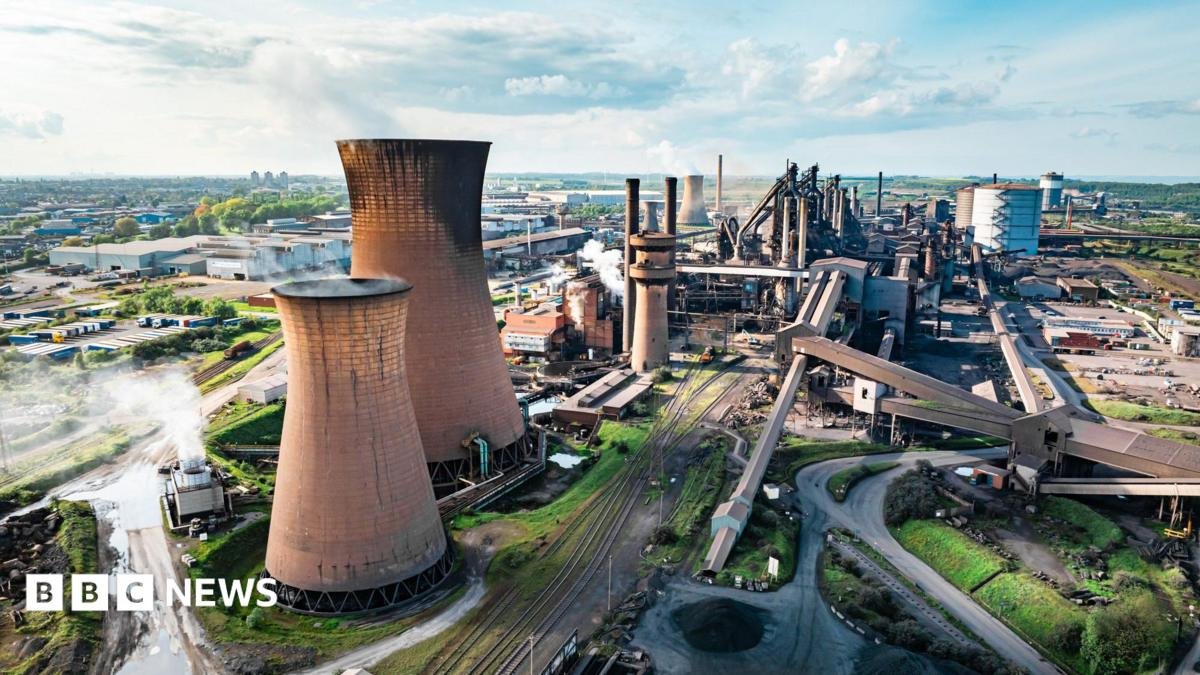

The government has no credible plan for the future of British Steel, MPs have claimed.
A report by the Public Accounts Committee (PAC) said the Department for Business, Innovation, Science and Trade (DBIST) had not set out how British Steel, which runs its main plant in Scunthorpe and has operations in Teeside, would become profitable.
MPs warned steel tariffs could drive firms out of business or to move abroad.
A spokesperson for DBIST said it welcomed the report and would review the recommendations, adding securing the long-term future of the UK steel sector “was in the national interest”.
A 26-page report, external, published on Friday, said the government was unable to provide clear estimates of how much the overall nationalisation could cost.
It had projected costs to reach £642m by 30 June this year, but the government later said it had only been £555m.
In April last year, the government passed an emergency bill to take control of British Steel amid reports the then-owner Jingye was planning to switch off two blast furnaces in Scunthorpe.
The Steel Industry (Nationalisation) Bill became law in July, taking the company into public ownership.
The government then published its steel strategy in March this year, which included an ambition for 50% of steel used in the UK to be made in Britain.
The strategy confirmed electric arc furnaces as the future of British steelmaking, replacing traditional blast furnaces, which resulted in job losses at steelworks including Port Talbot.
It also highlighted concerns that British Steel’s 4,052 workers face uncertainty and the steel strategy is still vague about when the 50% target would be achieved.
The report said: “Without a credible long-term plan, uncertainty and costs for workers, industry and taxpayers will continue to increase.”

