


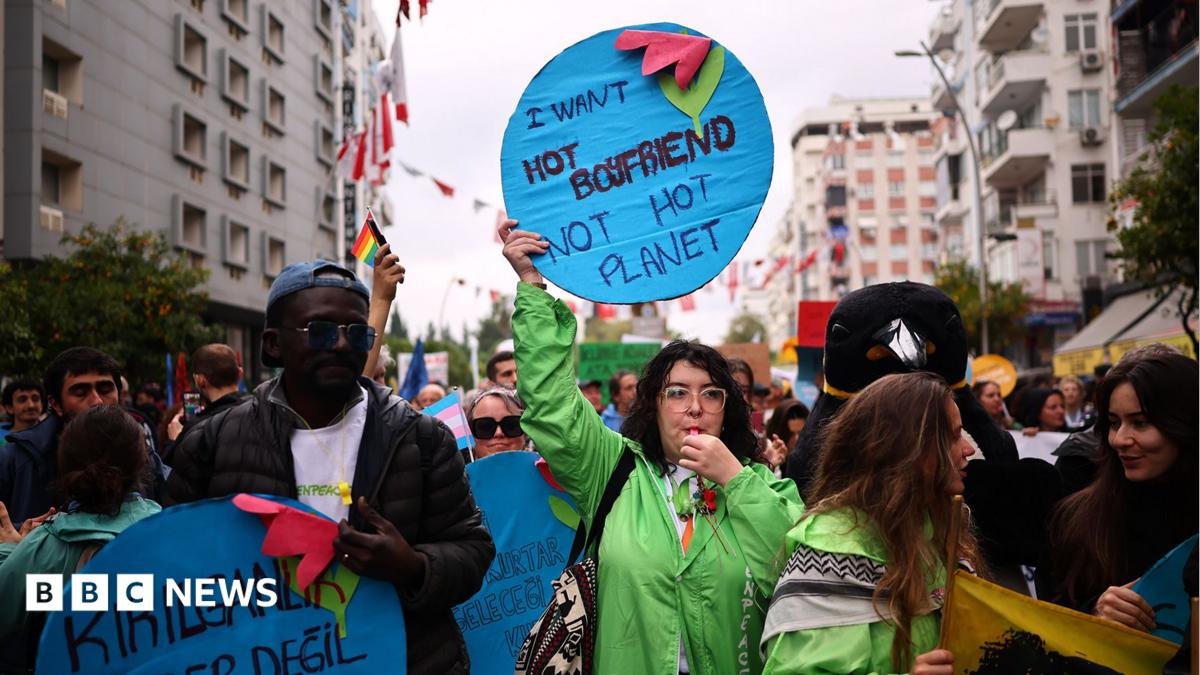

Yet, perhaps, the picture is more optimistic than it first appears. About 130 governments backed a demand for explicit language on moving away from fossil fuels – roughly two-thirds of the countries represented in Antalya.
Christiana Figueres, who led the UN negotiations that delivered the Paris Agreement, argued that countries were right to walk away rather than endorse a weaker political commitment that might undermine the progress already made.
Looked at this way, the collapse is not evidence that the world has lost its appetite for climate action. Quite the opposite – a substantial majority of governments were demanding more ambitious action.
So why not simply find a way for them to move ahead without waiting for the countries determined to block them?
The difficulty becomes clearer when you look beyond the dispute over fossil fuels.
Kononuchenko had another target in his sights: climate finance. Much of the money wealthy countries provide to poorer nations, he complained, comes as loans rather than grants. He said that developing countries ended up repaying more than they received.
“This is an old colonial distribution of labour under a new banner,” he declared.
Then, in a striking moment, he leaned towards the microphone and switched from Russian into English to address his criticism directly to the Europeans: “First of all distinguished representatives of the EU.”
Russia has its own reasons for attacking Europe, but the complaint about finance is one that many developing countries share. They argue that they are being asked to pay for damage they did little to cause while receiving too little help to adapt to climate change or build cleaner economies.
The EU had ruled out significant new funding before the negotiations began. Mohamed Adow, the Kenyan campaigner who heads Power Shift Africa, accused Europe of rejecting a flawed deal while refusing to acknowledge its own responsibility for the failure on finance.

