


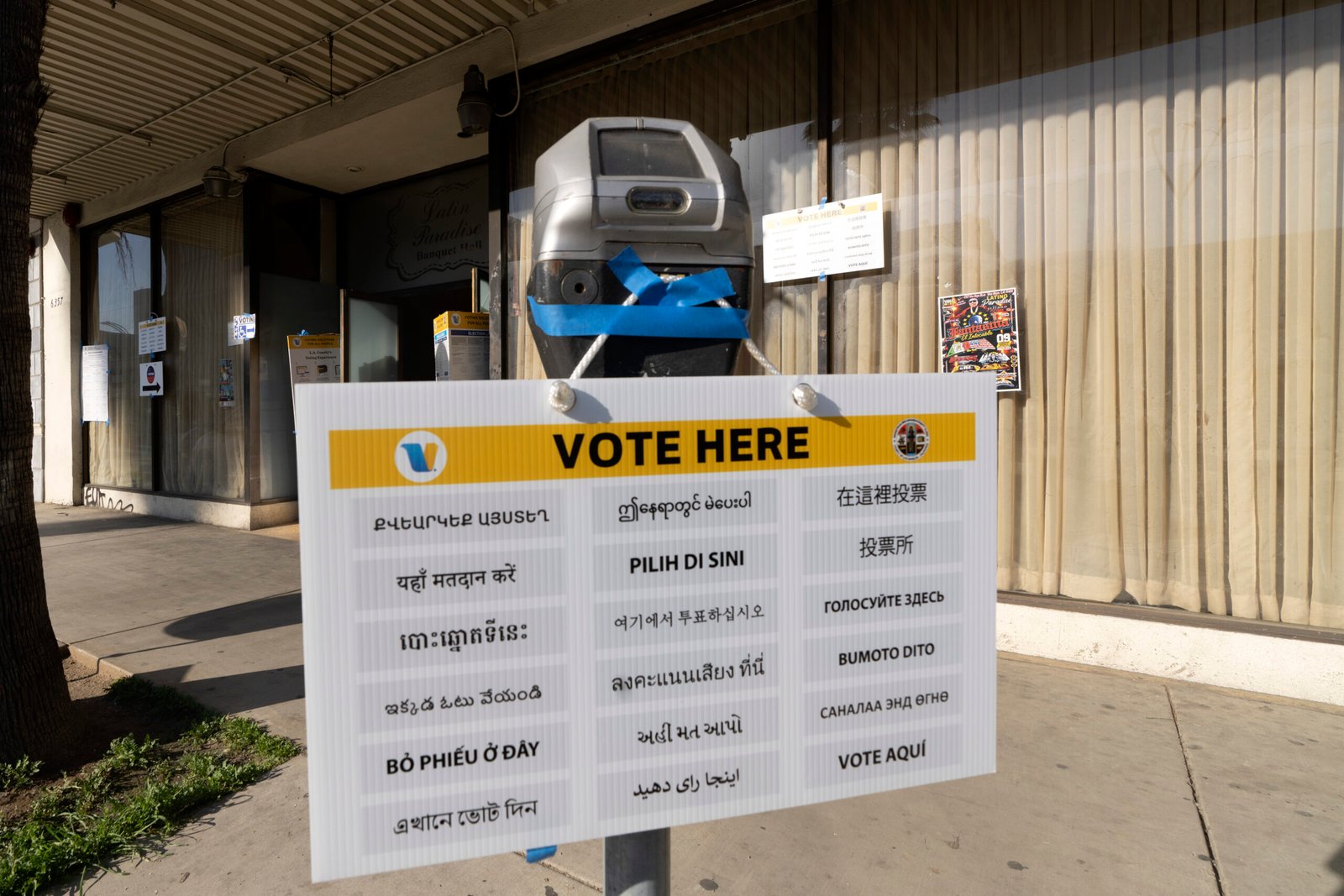

AI chatbots are feeding non-native English speakers inaccurate information about the election, community activists and researchers warn, creating a barrier for some voters ahead of the midterms.
The challenge — which leading AI companies say they’re working to address — is distinct from intentional disinformation campaigns that have plagued the internet for decades. Instead, some researchers and community leaders warn that voters prompting chatbots in non-English languages are unintentionally being fed inaccurate and ambiguous information — like whether they can vote by mail in their state — or overly literal translations that confuse electoral terms and lack context in various languages’ unique dialects.
But the end result, the activists said, could still be the same: Voters whose native language is not English are more vulnerable to incorrect information and excluded from the most reliable answers ahead of the midterms.
“Latino communities cannot afford to be left behind as artificial intelligence transforms how people work, learn, communicate and access information,” said Héctor Sánchez Barba, the president and CEO of Mi Familia Vota. “The history of the immigrant community and the Latino community has been one where we have been historically and structurally excluded from the best technology and access to information.”
This digital divide has arisen, the activists and researchers say, in large part because AI models are trained in English, and fail to capture the nuances of other languages. Experts and grassroots organizations say this discrepancy in accuracy unintentionally disenfranchises non-English speaking voters across the country, where more than 20% of Americans speak a language other than English at home.
National voter organizations that work in Latino and Asian American communities are grappling with how to bridge the gap and keep up with the rapidly developing technology to ensure that their communities don’t get left behind.
Mi Familia Vota, which oversees some of the largest Latino voter mobilization efforts in the country, has built its own AI assistant dubbed “Nubi,” which comes from la nube or cloud in Spanish, for Spanish speakers seeking information on voting, voter registration and citizenship. The model is trained on government and nonpartisan datasets — as well as community data collected over 30 years of canvassing, town halls and citizenship workshops, said Denise Cook, chief innovation officer of Mi Familia Vota.
She said it includes dialects of Mexican, Central American, South American and Caribbean Spanish, which have different words for election-related terminology. Polling place, for example, can be referred to as casilla, recinto or colegio electoral depending on the dialect, she said.
Christine Choi, director of strategic communications at APIAVote, a civic engagement group for Asian Americans and Pacific Islanders, added that if AI fails to capture cultural and political nuances, “you can alienate a whole community or turn them off if you use the wrong interpretation.”

A study by the Institute of Strategic Dialogue released in September found that accuracy of AI chatbots declined 16% when prompted in Spanish about voter information. Spanish prompts were more likely to produce incomplete or ambiguous answers, omitting relevant details and relying on overly literal translations, said Valeria de la Fuente Suárez, the lead author of the ISD study.
“When voters are asking about registration deadlines or ID requirements, missing details can have real consequences,” she said. “Spanish-speaking voters deserve the same standards of clear, reliable and properly sourced information as English-speaking voters.”
The study tested six frontier models through their respective APIs, or application programming interfaces, which are available for other developers to use. OpenAI, Anthropic and Google said in separate statements that they were working to refine their models for non-English languages, but APIs are not appropriate representations of how consumers interact with the actual chatbot interfaces, because they often include other fail-safes like popups or banners linking to external sources of information on voting.
“Gemini is designed to respond with accurate and timely information and performed well in this analysis,” David Thompson, a spokesperson for Google, said in a statement. “However, this report accessed Gemini through our developer API, not the Gemini App, which has different protections and is how most people use our AI.”
Still, the leading AI companies say they are working to better provide election-related information to a wider swath of voters. To improve election information ahead of the midterms, OpenAI and Anthropic both said they are integrating information from Democracy Works, a nonprofit that collects official election information from the government, in its answers.
“OpenAI’s goal is to support people’s ability to participate freely in elections and make their own decisions with reliable information, transparency, and effective safeguards,” Nate Evans, a spokesperson for OpenAI, said in a statement.
Some groups like Asian Texans for Justice, a nonprofit that works to increase voter engagement in Asian American communities in the battleground state, have opted to steer clear of the technology ahead of the midterms.
“I do know that AI is being used more and more by AAPI communities, and we have made an organizational decision not to use AI for our in-language outreach due to inaccuracies,” said Nabila Mansoor, executive director of the organization.
Spanish, Chinese and Vietnamese are among the most widely spoken languages in the U.S. besides English, but there are more than 500 other languages and language groups spoken across the country, according to the U.S. Census Bureau. The vast majority are considered low-resource languages with limited digitized data to train AI models, including Arabic, which has 1.3 million speakers in the U.S., and Swahili, which has about 150,000 speakers.
And leading tech companies say they will try to address language-related access to AI systems more broadly.
The Gates Foundation announced in September a coalition of 60 companies including OpenAI, Anthropic and Google dedicated to improving AI tools for an estimated 3.4 billion people around the world who speak languages underrepresented in AI models over the next five years. The joint commitment said, “The barrier is no longer the technology, which will only continue to improve. It requires a decision — to treat the world’s languages as a shared foundation worth building, together, for everyone.”
Community organizers say that while they welcome industry efforts to improve, the changes need to happen as soon as possible so immigrant communities can be equipped with the most reliable information for not only the midterms but the presidential election in 2028.
“The way people get information has fundamentally changed and civic engagement has to change with it,” said Mi Familia Vota’s Barba.

