


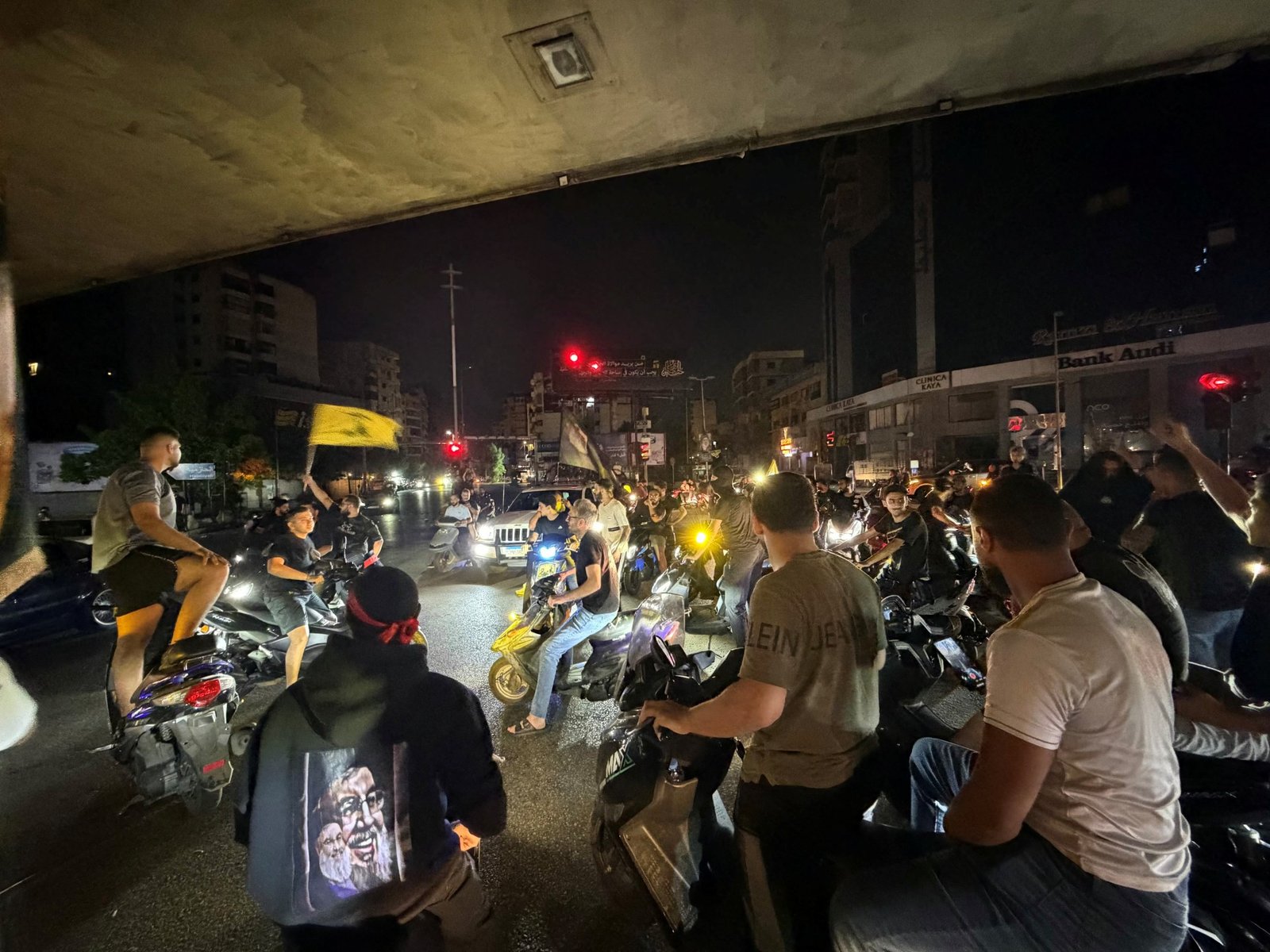

Beirut, Lebanon – Last week, Hezbollah announced it would provide financial support to families in Lebanon who had lost their homes in the latest war with Israel.
Hezbollah has a long history of providing financial and other support for constituents and compensating those who have lost their homes to Israeli bombing. And while the group has historically received Iranian funding, it also has independent funding pathways allowing it to support members of its base, who are predominantly Lebanese Shia.
Recommended Stories
list of 3 itemsend of list
But analysts said Hezbollah’s latest distribution drive, announced on October 13, is increasing pressure on the Lebanese government, which has sought to counter the group’s influence in the country.
Last week, the government seized hundreds of kilogrammes of explosives linked to Hezbollah. Hezbollah MP Hassan Fadlallah said the stockpile belongs to the axis of resistance against Israel and demanded that it be handed back and those arrested be released.
Meanwhile, Ali Damoush, the group’s executive council chairman, said on Tuesday Hezbollah would continue to support its constituents who have been on the front lines of the war with Israel.
“At Hezbollah, and out of our religious and moral responsibility, we will continue to serve our people and make every possible effort to preserve their dignity and honour,” he said.
Damoush said the payments were aimed at “displaced people and those whose homes had been destroyed or severely damaged to the point of becoming uninhabitable”.
This follows a report by the Reuters news agency claiming that Iran had provided Hezbollah with $200m in an effort to ease the burden on Lebanon’s Shia population, after three years of devastating war with Israel.
At the height of the war, which began on October 8, 2023, there were as many as 1.2 million people displaced, with about 9,000 Lebanese killed.
A United States Department of State official denied that Iran, under stringent economic pressure, was able to transfer the funds to its Lebanese ally.
Nicholas Blanford, a nonresident senior fellow at the Atlantic Council and author of a book about Hezbollah, told Al Jazeera that the funds would be a huge boon to the group.
“In general, this will help. Hezbollah is very sensitive towards the needs of their support base, the Shia community, and I think that’s one of the reasons why they haven’t gone back to fighting the Israelis,” he said. “The Iranians call the shots ultimately, but for Hezbollah I think there’s an awareness that they need to let their people breathe a little bit.”

Hezbollah paying out for the displaced
Israel intensified its war on Lebanon on March 2 this year, the second such escalation in less than two years.
Hours earlier, Hezbollah had attacked Israel for the first time in more than a year after joint US-Israeli strikes on Tehran killed Iran’s Supreme Leader Ayatollah Ali Khamenei, an ally of the group. It also said Israel’s repeated violations of a 2024 ceasefire in southern Lebanon, where Hezbollah has traditionally had a strong presence, were another factor in opening up the war.
In the following days, Israel reinvaded southern Lebanon, displacing more than a million people from their homes and killing about 4,300 since then. Israeli forces began their widespread aerial attacks on Lebanese villages and towns, which they claimed contained Hezbollah positions, with growing intensity.
In June, a US-brokered trilateral framework was agreed between Israel and Lebanon. The goal was to have Israel withdraw from parts of southern Lebanon and have the Lebanese army deployed to disarm Hezbollah. Israel is yet to enter two of the first three pilot zone areas, where this programme was set to be unveiled.
Since then, Israel has largely not withdrawn from the Lebanese territory but has entrenched what analysts believe is likely to become a long-term occupation, with more than 50 front-line villages and towns completely eradicated. Israel continues to demolish houses south of the so-called “Yellow Line”, in a tactic that has mirrored Israeli genocidal actions in Gaza.
Tens of thousands of people remain displaced, staying with relatives, renting apartments, or staying in hotels. Many had their livelihoods disrupted. In this context, Hezbollah has tried to step in and provide support for the displaced, most of whom are Shia Muslims and make up Hezbollah’s support base.

Continued funding
This is where the money from Iran reportedly comes in. However, analysts point out that Hezbollah has its own funding schemes, including financial support from the diaspora. Despite being heavily sanctioned, it is able to access money via domestic financial institutions or cryptocurrency.
“It has access to funds from the state, wealthy individuals, various entities, companies and hospitals,” Marcel Baloukji, a Lebanese political analyst, told Al Jazeera.
Hezbollah says its members have conducted surveys in Beirut’s southern suburbs and in southern Lebanon to assess the damage caused by the war. Families in Beirut and its suburbs whose homes were destroyed in the war will get $14,000 each; those outside the capital will receive $12,000. Financing will also be provided for furniture.
The group said “everyone who has suffered harm in our country, regardless of their political position” will receive support. This suggests that even families who openly criticised the group for plunging the country into a disastrous war with Israel will also be eligible for payments.
“Anyone who owns another home should, in solidarity with us, forgo the housing allowance, but will still receive the furniture allowance,” the group added.
Hezbollah is widely acknowledged as Lebanon’s strongest political and military actor, but the group grew overconfident in the run-up to the October 7, 2023 attacks by Palestinian groups on Israel, analysts say.
The political reality in Lebanon from that point changed, particularly after the 2024 Israeli intensification of its campaign against Hezbollah, which saw much of the group’s military leadership killed, including General Secretary Hassan Nasrallah.
Such a blow has been difficult for the group and its constituents, who have borne much of the brunt of Israel’s assault on Lebanon.
“It’s been a rough three years for them,” Atlantic Council’s Blanford said. “[The funding] will alleviate, to an extent, some people’s suffering.”
Hezbollah’s announcement of support for those affected in the war is viewed by many as an attempt to maintain support on the ground.
“Hezbollah knows that providing financial support and compensation to its on-the-ground population is one way to maintain its mass support,” Dania Arayssi, assistant director at New Lines Institute for Strategy and Policy, told Al Jazeera. “This is especially important because Hezbollah has seen a decline in mass support for it and a rise in mass frustration against this ongoing war.”
Challenge for Beirut
But the group’s efforts to pay off those who have suffered do not guarantee loyalty. Many in the Shia community have praised Hezbollah for the support they have received, but most say it is not enough to cover their expenses.
“I’ve been hearing that there may be a problem between those that get compensation for destroyed homes and those with badly damaged homes who are going to get nothing,” Blanford said.
Arayssi said Hezbollah’s latest move will also be a challenge for the Lebanese government, which has come under increasing Israeli and US pressure to take action against Hezbollah’s influence.
Last Thursday, US Secretary of State Marco Rubio phoned Lebanon’s President Joseph Aoun to press him on the issue of the Hezbollah explosives Lebanese forces had confiscated.
“The Lebanese government is facing a real test and challenge to build and win the trust of the international community, and particularly the United States, against Hezbollah’s signalling attempts of rebuilding itself,” Arayssi said.
“This funding and support for Hezbollah will likely make it harder to negotiate with Israel on the verification plan and even on the withdrawal from remaining territories, claiming that the government is failing to control its financial system.”

