



The United Arab Emirates said it is halting all trade and financial transactions with Iran, increasing economic pressure on the Islamic Republic, soon after accusing Iran of launching ballistic missiles toward the Emirates.
The decision was made “in light of regional escalations that undermine regional and international peace and security,” Afra Al Hameli, a spokeswoman for the Emirati Foreign Ministry, said in a statement late on Tuesday. She added that the Emirates was “firmly committed to safeguarding the integrity of the international financial system.”
The Emirates, located just 50 miles from Iran across the Persian Gulf, has nurtured close economic and cultural ties with the Islamic Republic for decades, despite political tensions between the two countries.
Dubai, the Emirates’ largest city, has long been a major trade hub for Iran, and analysts say it has been key to Iranian efforts to evade sanctions, which has elicited complaints and pressure from American authorities. Emirati officials say that they crack down on any sanctions violations when they find them.
Trade between the two countries was worth roughly $28 billion in 2024, when the Emirates was Iran’s largest source of imports — ferrying electronics, precious metals and other goods to the Islamic Republic — according to World Trade Organization data.
It is unclear if the United States played a role in Emirates’ decision to halt trade with Iran. The announcement came hours after a call from President Trump to the Emirati ruler, Sheikh Mohammed bin Zayed.
The Trump administration has been keen to increase economic pressure on Iran, with Treasury Secretary Scott Bessent threatening last week to “apply measures like have never been seen in the history of the economic isolation” of a country.
The Emirati foreign ministry did not respond to a request for comment about the motivation and timing of the decision.
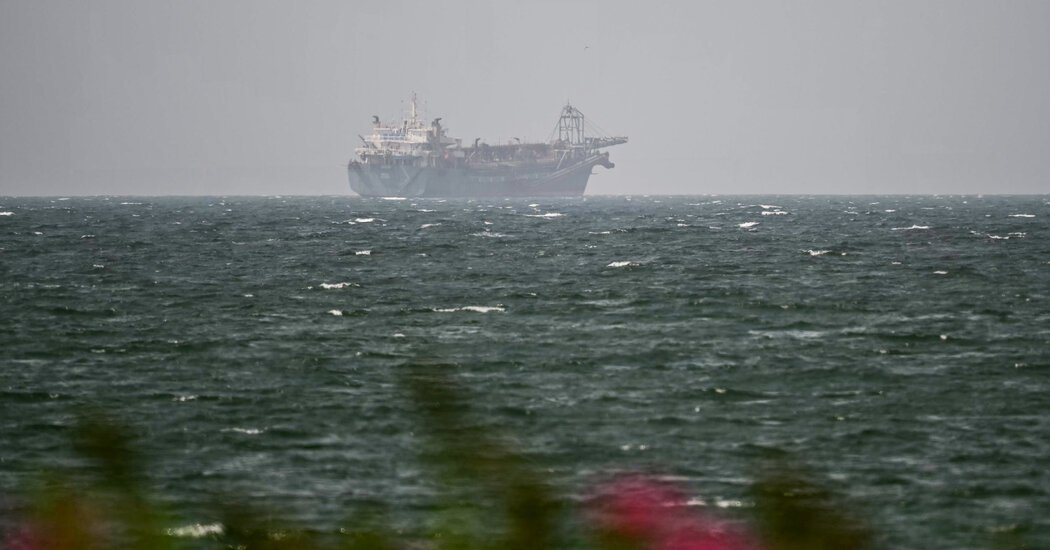
The Emirati government statement did not specify what prompted its announcement, nor did it make it clear when the decision to halt trade was implemented. But over the past week, the Emirates has accused Iran of attacking Emirati oil tankers traveling through the Strait of Hormuz, the narrow waterway on Iran’s southern coast that is a key transit route for oil and gas shipping.
And on Tuesday, the Emirati Defense Ministry issued warnings of an incoming missile attack, later saying that two ballistic missiles launched from Iran had targeted maritime navigation. Iran denied carrying out those attacks, and has neither denied nor claimed responsibility for the recent tanker strikes.
After the United States and Israel attacked Iran in February, setting off a regional conflagration, the Emirates bore the initial brunt of Iran’s retaliation. The Emirates, which hosts a major American military base, reported more than 2,700 ballistic missile and drone attacks from Iran.
After the United States and Iran reached an initial cease-fire agreement in April, tensions between the Emirates and Iran had eased significantly, with direct contact between senior officials and the resumption of flights between the two countries.
As the truce has frayed in the months since, Iran largely focused its attacks on Bahrain and Kuwait, sparing the Emirates.
The recent attacks on Emirati oil tankers have elicited a strong condemnation from the Emirati government, and on Saturday, the Emirati Foreign Ministry accused Iran of targeting shipping in the Strait of Hormuz as “a tool of economic coercion or blackmail” that constituted a “direct threat to the stability of the region.”
In a call on Tuesday, Secretary of State Marco Rubio and the Emirates’ national security adviser, Sheikh Tahnoon bin Zayed, discussed “U.S.-UAE coordination to hold Iran and its terrorist proxies accountable for ongoing attacks,” according to a state department spokesman, Tommy Pigott.
Sanam Mahoozi contributed reporting from London.

