




Studios renowned for tighter, more linear experiences in their games have taken a stab at the open world formula in recent years, with mostly successful results; FromSoftware broadened their Dark Souls formula to the decaying vastness The Lands Between in Elden Ring; Metal Gear Solid V: The Phantom Pain saw Snake deployed to boundaryless sandbox interpretations of Afghanistan and Zaire; even platforming trailblazer Sonic the Hedgehog found space to stretch his legs in Sonic Frontiers’ open zones.
Immersion, freedom to explore, opportunity to ‘self-create’ adventure (or at least provide a sensation of ‘self-creation’); these are qualities in which open world games excel. For a basic definition we can say open world games must provide vast spaces with little to no predefined trajectory. Rather, any waypoint – for lack of a better term – is more akin to coordinates players are free to travel via heeding the path which most takes their fancy. Linear games in contrast centre on pre-determined routes. More than one way from getting to point B from point A can exist, sure, but there’s an ever-present notion of distinct start and end points. There are games with worlds that sit between these two ends of the spectrum too, less constrained but not-quite-open non-linear games, or those so called ‘semi-open’ world games, but this feature isn’t overly concerned with those. No, what we’re hoping to get at here is that if the excellent, immersive, freedom-granting qualities open world games provide are known, then why do so many feel flat, drab, uninspiring, bland, or boring?
Perhaps we need to look at the essential design considerations developers must take to foster this unrivalled immersion. For instance, numerous landmarks must be visible in the vicinity, or on the horizon. Points of interest leading to areas with different experiences and tests of a player’s specific skillset. However, the challenge when designing an open world is to not over-stuff the landscape with points of interest, and as there’s no definitive order players will choose to experience these events designers are best avoiding placing too many similar types of experience in the same vicinity. Too many points of interest can equate to an overabundance of mini-map markers and on-screen icons; elements regarded as immersion shattering for many players. To go even more granular, the time taken to travel between points is also an important consideration. Too many seconds between events and the world might feel too vast and empty, too short a time and it’ll feel congested, like there’s a constant interruption to exploring.

It’s all a matter of balance, and whilst balance is deeply subjective developers can skew these design considerations one way or another to communicate to the player what they’re trying to achieve with their open world experience. Large and empty doesn’t necessarily equal bad, just look at the acres of contemplative space in Shadow of the Colossus. An excessive smattering of map and on-screen icons won’t always ruin immersion and we can take Cyberpunk 2077’s densely packed Night City metropolis as an example. And opposed to large and empty, small and condensed isn’t always a bad thing either. Just look at the Japanese city districts Kamurochō, Sotenbori, and Isezaki Ijincho that have featured in Yakuza games over the years.
If we’re to assume that there’s the right balance of distinct points of interest dotted throughout an open world, we can then look at player mechanics, and perhaps more specifically means of traversal. Insomniac Games’ Spider-Man series is stuffed with points of interest, sure, but the ways in which Spidey freely web slings between skyrises is so satisfying, and so well implemented by the studio, that boredom is hard to come by when travelling. It’s clear that movement mechanics came first in the equation for Insomniac Games when they were designing the Spider-Man’s open world Manhattan. Infamous Second Son is another example which nails traversal. In both these superhero-centric titles the cityscape is a playground to freewheel through. For all its praise, Batman: Arkham Knight and its introduction of the Batmobile felt like a downgrade on the Caped Crusader’s exceptional traversal up to the final entry in Rocksteady’s excellent Arkham series. Worse still is much of Arkham Knight’s combat was built around using the Batmobile as a tank, using it to solve puzzles, and to race through Gotham’s streets. A core facet in what made the series’ two prior games so compelling was eroded.
For all their greatness, Marvel’s Spider-Man and its subsequent sequels do befall a trope of open world games that has risen out of perceived consumer demand for more value in their playtime. Developers have been artificially inflating the runtime of their open world games for some time now, and it’s been coming in the form of tiresome, repetitive side content; same-old fetch quests, over-numerous camps to clear out, rinse, repeat. Marvel’s Spider-Man isn’t especially reliant on these artificial inflations, but it does harbour numerous collectibles dotted in their abundance. Backpacks and the tokens within are used to craft gadgets, suits, and mods, but their inclusion for what boils down to RPG mechanics substitute player freedom in exploration for humdrum routine. They’re a step up from Grand Theft Auto IV’s pigeons – of which there’s no motivation to complete the task of shooting them all – but the perceived reward of Backpack Tokens will vary between players. Also, RPG mechanics in open world games aren’t necessarily bad. They’re a clear sign of progression for a player, but they’re shoehorned into numerous open world titles when they really don’t need to be, and the result is the wealth of boring content just described.
Ubisoft are one of the worst offenders and are often notorious for these tropes over the years. Otherwise decent games like Watch_Dogs, Far Cry 4, and countless Assassin’s Creeds are bogged down by unrewarding, paint-by-numbers quest design. Maps become chores to clean icons off. Items squashed into every nook of map space provide little if any narrative weight. Towers become tasks to unlock more tasks. It’s filler, ad infinitum. The world exists as a checklist, with “things to do”, rather than being something that lives and breathes in and of itself. Even open world games highly regarded for their stories or combat are oftentimes held back by derivative side content: both Horizon games, Final Fantasy XV, Fallout 4, et cetera. Outside of the main quest, activity can feel vacuous.
Elden Ring challenges this notion by being a world that’s already dead. Destruction happened a long time ago; a husk of landscape is all that remains to wander through. The Lands Between is beyond saving, yet this world provides freedom Ubisoft games simply cannot fathom. Many other games like Red Dead Redemption 2 offer veritable sandboxes to foster player creativity. Outer Wilds with its pocketsize galaxy reveals more of itself as the player explores and discovers.
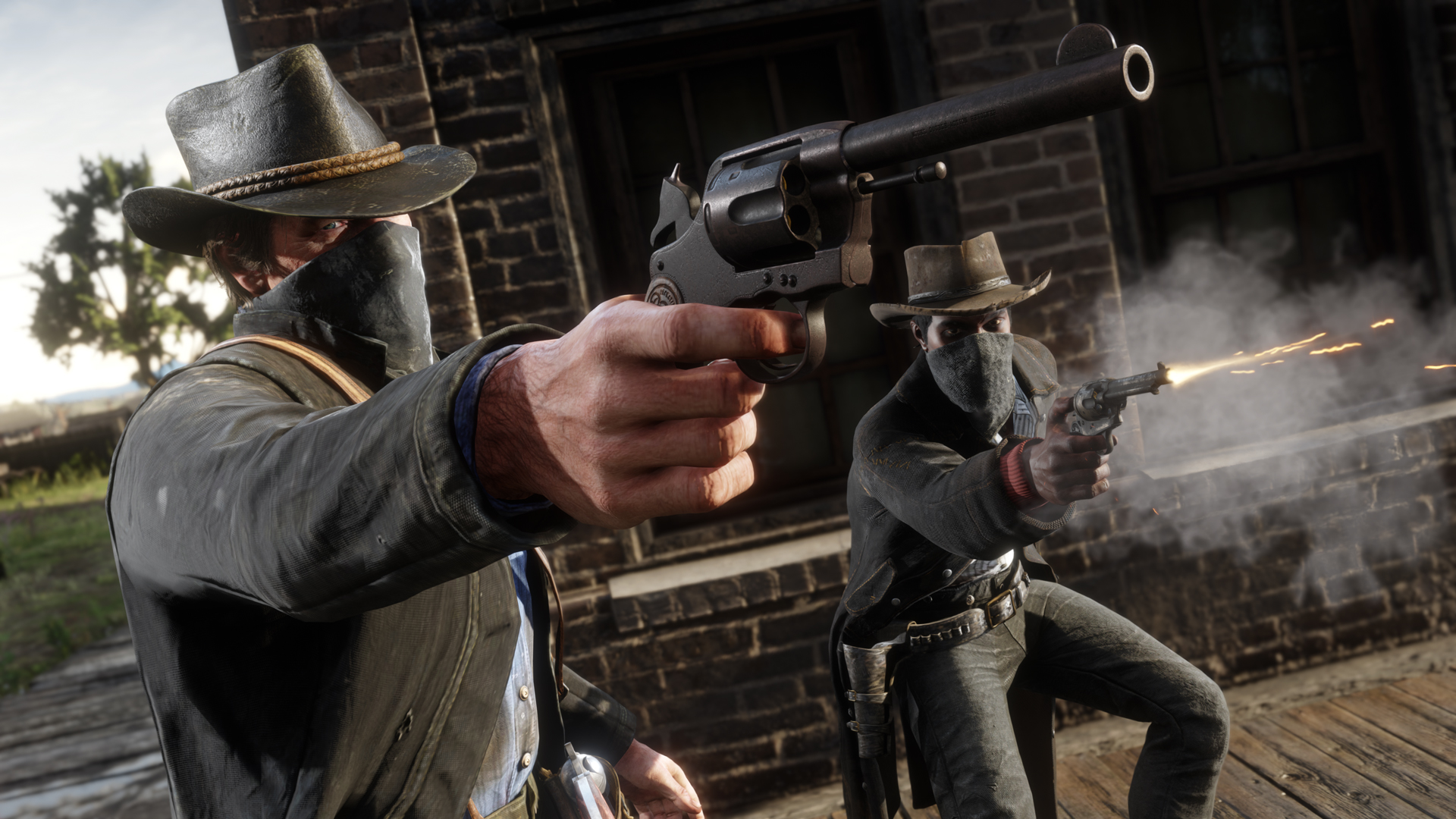
Perhaps, alongside balance in activity and creating environments which complement character mechanics, developers should trust players without feeling the need to hold their hand. Being taught every mechanic, being signposted to everywhere, ideas on what to do hidden in sub-menus, overbearing UI – Elden Ring, Red Dead Redemption 2, Outer Wilds; these games prove players can be trusted to explore without these constant distractions, and they’re intensely immersive as a result. Ultimately, being shown everything drags otherwise decent open world games to tedium. The time is now for these tropes to dissipate else the open world genre will stagnate beyond redemption.
Note: The views expressed in this article are those of the author and do not necessarily represent the views of, and should not be attributed to, GamingBolt as an organization.
/origin-imgresizer.eurosport.com/2024/03/28/3938266-79998028-2560-1440.jpg?w=150&resize=150,150&ssl=1)


