




In the summer of 2024, an entertainment project went more spectacularly wrong than possibly any entertainment project in human history. A venture that cost an approximated $400 million, and is thought to have made back only $1 million, representing a flop that dwarfs the likes of movie disasters Joker: Folie à Deux and Borderlands. Yet, if you don’t read the specialist gaming press, there’s a really good chance you’ve never even heard of it.
Why this enormous story remains so obscure taps into a deeply peculiar issue with the broad mainstream press and its decades-long refusal to accept a reality in which video games are a normal part of everyday life.
Concord was a multiplayer shooter game, in development for eight years by one of the biggest entertainment companies in the world, Sony. Released into a very crowded market of what’s become known as “hero shooters”—games in which players pick from predesigned heroic characters and team up for online battles—it felt generic, derivative, and, in its character designs, narrative concepts, and use of color, outrageously reminiscent of Marvel’s Guardians of the Galaxy.

However, even with all those factors, no one could possibly have predicted the scale of its failure. This game, released on August 23 to the PlayStation 5 console and PC, sold an estimated 25,000 copies, and never saw more than 700 people playing at once on PC. It was such a colossal disaster that Sony took the entire game offline some 14 days later, then deleted all evidence of it ever having existed from their websites and online stores. This erasure even extended to removing the purchased game from PS5 owners’ gaming catalogs.
A $399 Million Loss
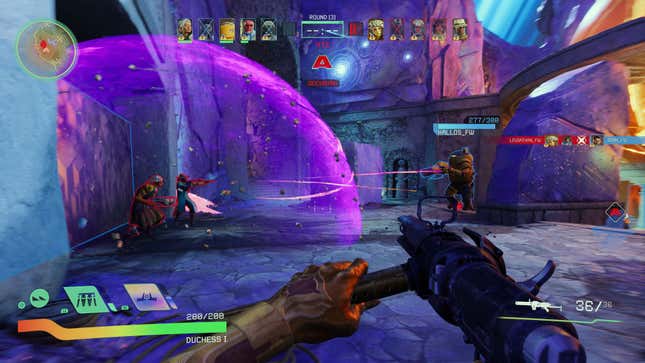
If all the estimated figures from industry experts are correct—and Sony has never rushed forward to say they’re not—this is a project that made $1 million and lost $399 million. For comparison, the biggest movie box office loss of all time was Disney’s 2012 film, John Carter, which grossed $284.1 million, while losing $255 million.
Yet, if you search the website of the New York Times for the word “concord,” you will not find a single result mentioning the game. Search for “Folie à Deux and you’ll find a handful of pieces, including one reporting its significant box office losses.
The chances are, if you’re watching Good Morning America or reading a piece in your chosen business magazine, when the topic of gaming come up it’ll begin something like this:
“Video games have come a long way since the days of Pong!”
It’s wince-inducing cringe, spoken as if from another dimension where video gaming wasn’t an international industry that dwarfs movies, television, publishing, a part of daily life for the last half of a century.
Imagine if, when your chosen breakfast television programming turned to the news that a major movie had flopped at the box office, it began with the words,
“Films have come a long way since The Horse in Motion!”
The Impenetrable Wall
The colossal failure of Joker 2 has received blanket coverage across all mediums. It’s a good story, of course! The first film, 2019’s Joker, defied all expectations—an R-rated $70 million movie from the director of the Hangover films, that went on to gross over $1 bn. So here comes this sequel five years on, but now instead of a Taxi Driver homage, it’s improbably a courtroom drama musical starring Lady Gaga. Could director Todd Phillips repeat his unlikely alchemy a second time? No, and how.
So of course that’s a juicy tale to tell, a piece of entertainment schadenfreude, a car crash we can all rubberneck for days. So, you know, it seems plausible you could also write such stories about Concord. You could make an editorial pitch for “The Biggest Entertainment Disaster Of All Time.” That’s a headline, right? That’s oh-so clicky.
And yet, this separation between the wider news media and video gaming is so solid, so impenetrable, that Concord has received negligible coverage at best. Gaming specialists at major outlets have picked it up, of course. Gene Park neatly covered it for The Washington Post, but as an opinion column, rather than a news story, beginning with a personal anecdote about theme parks. But trying to find an actual mainstream news piece about this epic entertainment story has left me bewildered.
I searched ABC News’s site, then CNN’s, looking for cursory stories I could usefully critique, before wondering if I was using the wrong search terms. Perhaps I was listing the results incorrectly. No matter how I looked, however, I could not find a single mention of the game or its failure on either. Then again, CNN’s Entertainment section only has subcategories for “Movies,” “Television,” and “Celebrity.”
The BBC did have a news story on the subject! Except this was filed under a “Newsbeat” byline, the BBC’s youth-based news outlet primarily broadcast on its youth-aimed music radio stations. Because, of course, this story of a business losing nearly half a billion dollars is for the kids!
This is indicative of that ever-more inexplicable separation, this imaginary wall that the press has built around itself to—for some reason—keep gaming out.
Fifty Years Later
This made more sense in the 1990s. Video games became mainstream in the 1980s, and despite the reality that a huge number of games were primarily aimed at adults, the penetrative aspects were the cartoony images of Mario and Pac-Man. Nevermind the outstanding successes of franchises like Elite and Ultima, and so many more besides. Nor indeed the popularity of those cartoon-like games among adults. Instead, those video game things—they were just for kids. They were a children’s thing, a frippery, and covering them would be like reviewing Saturday morning cartoons, right?
So even by the late ‘90s, when gaming was an established pursuit, where best-selling titles like Grand Theft Auto were being released with adult-only certification and enormous multi-billion dollar industries had been built up around the hardware, software, and coverage of the medium, in the minds of the mainstream it still somehow only existed as this peculiarity, an inexplicable distraction of the Other, the geeks and the nerds and the losers and the kids. They’d sure come a long way since Pong, but not far enough to be taken at all seriously.
It was long-assumed that this was a result of the age of the people running the newsrooms. These people, they were born in the ‘50s, the ‘60s, and gaming was anathema to them. But eventually they’d grow old, retire, and a new generation would arrive who were born in the ‘70s and ‘80s, people for whom gaming had at least been present in their childhood. At this point, as the establishment re-established itself, we could escape this anachronism. And yet, it didn’t happen. At the end of the ‘90s, when the astonishing success of the PlayStation 2 saw the pursuit rapidly become a core part of mainstream entertainment, the media remained utterly detached from the phenomena.
Surely, by the 2010s, as 40-somethings who’d spent their teenage years playing Tomb Raider and Diablo arrived on the floors of the newspapers and TV networks, gaming would finally escape its news purgatory? No, even as gaming moved ahead of movies to become by far the larger industry, the non-gaming media just continued to ignore it. Cut to today, and we’ve got a story on the scale of Concord, and for so many outlets, it doesn’t even merit a mention. Not even as the frivolous, “fun” story at the end of a local news broadcast.
Obviously there’s no easy answer to “Why?” but it’s very likely due to the incompatible nature of games and non-interactive media. You can show a clip of a movie on your TV channel, and publish an excerpt from a book in your newspaper pages. The very nature that defines gaming, however, is untransferable, and the last 50 years are littered with disastrous attempts to portray gaming on TV. This incompatibility, the conflicting nature of the mediums, likely helps maintain this wedge.
We’re All Playing Games
It’s so tempting, even in a third decade of working as a games journalist, to protest my own argument with, “But not everyone plays games, yet everyone goes to the movie theater!” But it’s simply not true. (Ask anyone who owns a movie theater, for instance.) Gaming has a mainstream ubiquity that even the readers of specialist gaming sites don’t really want to believe it has, mostly out of snobbery, because that success largely comes down to things like the multi-billion dollar Call of Duty franchise and the monolithic success of mobile games like Candy Crush—excellent games that have broad appeal, and so are perceived by some as undermining the niche details they might love about their lesser-known games. It’s blandly normal to own a PlayStation or an Xbox, and utterly abnormal not to have a few games installed on a smartphone.
There is, at this point, no rational reason for the CNNs and Boston Globes of the world not to cover a story as massive, as cataclysmic, as the $400 million entertainment failure Sony suffered this year. Hell, on its face it’s a juicy tale to tell, a piece of entertainment schadenfreude, a car crash we can all rubberneck for days. In the end, as much as we might try to excuse, explain, or justify such a blindspot, it simply comes down to a failure.
Not covering the extraordinary story of Concord reveals a deep failure in the mainstream press, and one born of a silly prejudice against a medium that towers over the films and television that such outlets are willing to understand.
It no longer makes sense to believe it will soon have to change. Surely, we might want to think, surely the next generation of editors and journalists will recognize the reality in which they exist? But the evidence suggests they simply won’t, instead continuing to just assume that gaming is a niche interest in which their readers are not involved, despite likely having played a game of Zen Word or Block Blast on their phone during the subway ride to work that morning themselves. And they’ll leave a blockbuster story like that of Concord aside entirely.
.


