




Summary created by Smart Answers AI
In summary:
- Tech Advisor compares the Xiaomi 17 and Xiaomi 17 Ultra flagship smartphones, highlighting three key advantages of choosing the standard model over its premium counterpart.
- The Xiaomi 17 offers superior battery performance with a larger 6330mAh battery achieving 35+ hours video playback and faster 100W wired charging compared to the Ultra’s specifications.
- At £899 versus £1,299, the Xiaomi 17 delivers nearly identical Snapdragon 8 Gen 5 performance while providing a more compact 6.3-inch design for comfortable one-handed use.
Xiaomi has seriously stepped up its flagship smartphone game, and the Xiaomi 17 lineup proves it. If you compare these phones with almost anything else on the market right now, it’s genuinely hard to find much to complain about.
I’ve been using the recently-launched Xiaomi 17 for a while now, and it’s impressed me more than I expected. Alex Walker-Todd did our full review, but the time I’ve spent with it shows just how far ahead of the competition it is – and that includes its more expensive sibling, the Xiaomi 17 Ultra.
Over the past few weeks, I’ve been comparing the Xiaomi 17 and the Xiaomi 17 Ultra to see which one makes more sense for most people. The result is a little surprising – the Xiaomi 17 actually comes out ahead. It delivers almost everything you’d want from a flagship, while saving you a lot of money: it starts at £899 versus £1,299 for the Xiaomi 17 Ultra.

On top of that, it’s compact, and genuinely compact flagship phones are increasingly rare. The Xiaomi 17 features a 6.3-inch display, a size that’s becoming less common as most modern flagships push toward 6.8 or even 6.9-inch displays. It’s not tiny, like the iPhone mini or smaller phones from a decade ago, but it still feels comfortably compact and easy to use one-handed.
So does the Xiaomi 17 actually strike the right balance compared to the Xiaomi 17 Ultra, or are you better off spending more on the bigger flagship? Let’s break it down.
1. You get the same performance
One of the key reasons to choose the Xiaomi 17 over the Xiaomi 17 Ultra is performance. Both phones run on the Snapdragon 8 Gen 5 processor, Qualcomm’s latest flagship chip built on a 3 nm manufacturing process. Since the chipset is identical, there’s no noticeable difference in real-world performance, only in price.
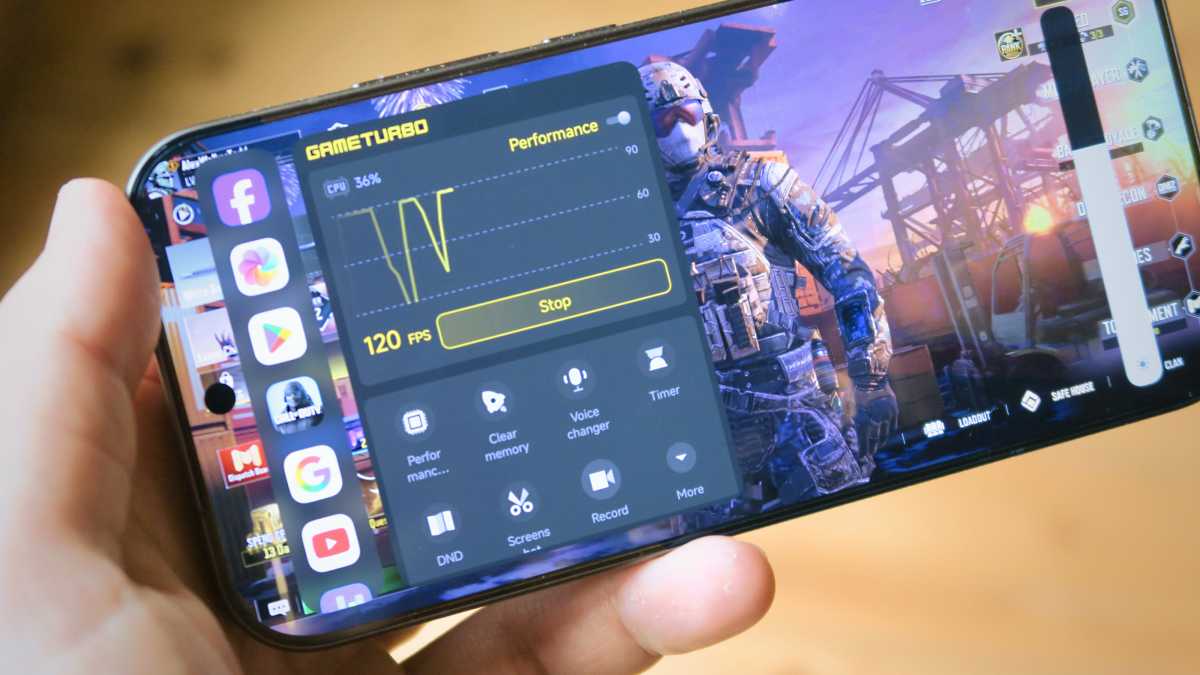
I tested both phones with demanding mobile games to see if there was any gap. I spent a good amount of time playing Genshin Impact on both the Xiaomi 17 and the Xiaomi 17 Ultra, and neither phone showed any lag, stutter, or performance drops. Gameplay felt smooth and consistent on both devices. I also tested Call of Duty Mobile, and once again, the experience was identical.
Both phones use the same memory and storage technologies as well. You get LPDDR5X RAM and UFS 4.1 storage on both models, so app loading times, multitasking, and file transfers are equally fast.
Gameplay felt smooth and consistent on both devices
The main difference comes down to configuration options. The Xiaomi 17 is available with 12GB RAM and either 256GB or 512GB of storage, while the Xiaomi 17 Ultra goes up to 16GB RAM and 1TB storage.
If you specifically want the highest RAM and storage combination, the Ultra makes sense. For most people, though, the Xiaomi 17 delivers the same performance experience.
2. The form factor is better
I will admit that I’m biased toward smaller phones. For the longest time, my main device was the smaller Samsung Galaxy S23, and I also spent a fair amount of time using the Galaxy S21 FE. Phones with displays around 6.2- or 6.3-inches tend to feel ideal to me.
Foundry | Alex Walker-Todd
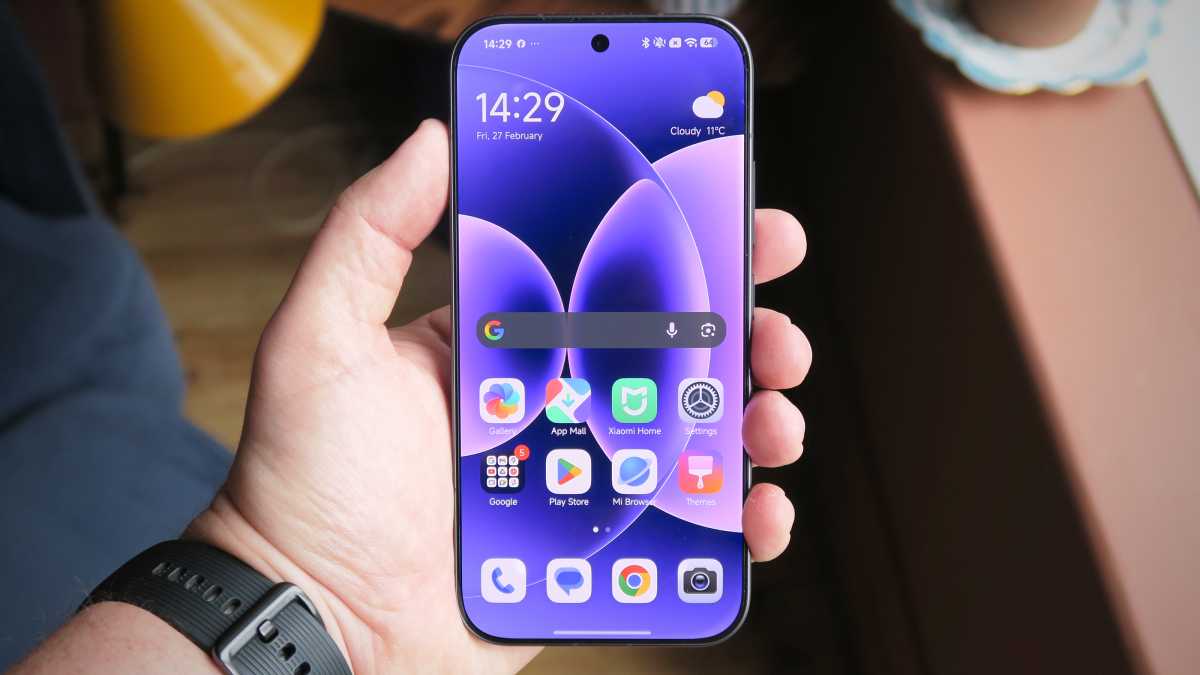
The Xiaomi 17 fits right into that category with its 6.3-inch display. Despite the compact body, it still delivers a flagship display experience.
You get an OLED panel protected by Xiaomi Shield Glass, which is Xiaomi’s alternative to Gorilla Glass. I’ve been using the phone for about a month without a case or screen protector to test durability and, so far, I haven’t noticed any scratches.
The display supports a 120Hz LTPO refresh rate that can dynamically scale between 1Hz and 120Hz, depending on what you’re doing. You’ll notice this while gaming, scrolling through social media apps, or navigating menus.
Peak brightness reaches 3500 nits, which is more than enough for outdoor visibility in bright sunlight. Other display features include HDR10+, Dolby Vision, and DC dimming.
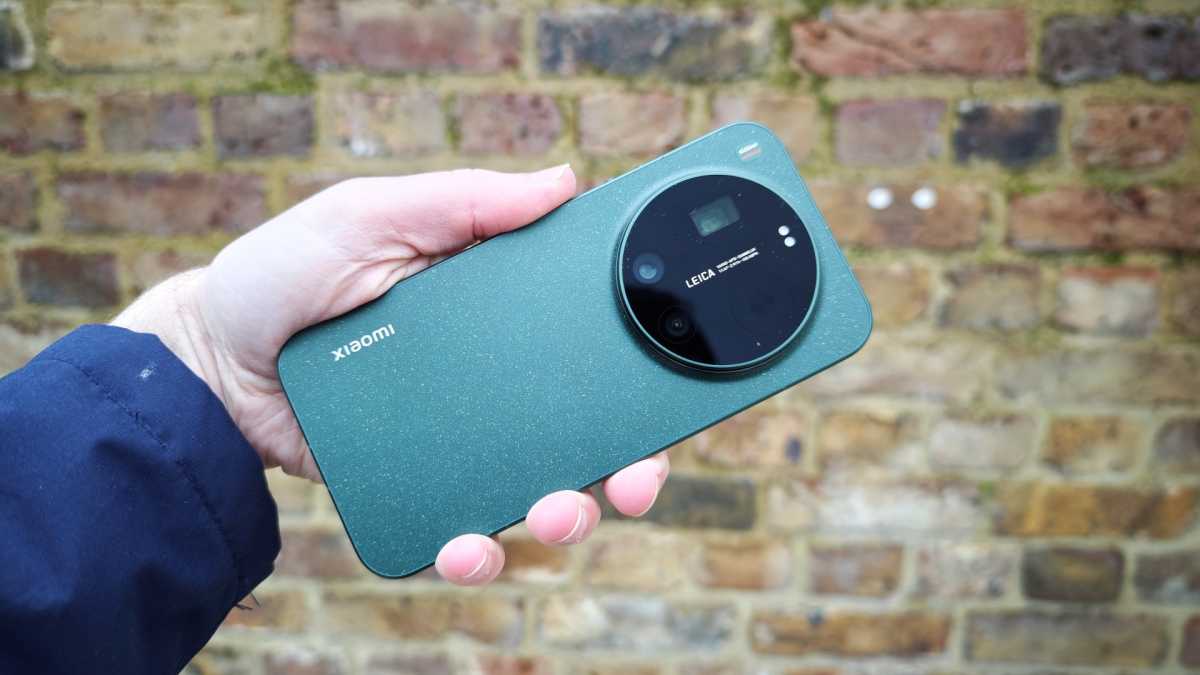
The Xiaomi 17 Ultra feels top-heavy because of the massive camera island
Because of the size and balance of the Xiaomi 17, I can comfortably use the phone with one hand – scrolling, typing messages, taking photos and recording videos easily.
With larger phones, that’s rarely possible. The Xiaomi 17 Ultra feels top-heavy because of the massive camera island on the back. When you try to use it with one hand, even pulling down the notification shade can feel awkward. You often have to shift the phone in your hand and stretch your thumb to reach the top of the display.
Chris Martin / Foundry
Another issue I noticed is the grip. On Xiaomi 17, the camera module sits in the upper-left corner, which leaves plenty of space for your fingers on the back. On the Xiaomi 17 Ultra, the camera island is huge and positioned closer to the centre, so your index finger often ends up resting awkwardly somewhere in the middle of the phone.
3. The battery and charging are better
You might assume the more expensive Xiaomi 17 Ultra would offer better battery life and faster charging, but that’s not actually the case.
The Xiaomi 17 Ultra packs a 6000mAh battery, which is impressive. However, the Xiaomi 17 manages to include a slightly larger 6330mAh battery, despite its smaller body.
Charging speeds also favour the Xiaomi 17. The phone supports 100W wired charging and 50W wireless charging, while the Xiaomi 17 Ultra supports 90W wired charging and only 15W wireless charging.
The Xiaomi 17 manages to include a slightly larger 6330mAh battery
During my testing, the Xiaomi 17 achieved more than 35 hours in a looping video playback test. In regular daily use, the phone consistently lasted through a full day, which included Wi-Fi browsing, video streaming, using multiple apps, recording videos, and even an hour or two of gaming.
Foundry | Alex Walker-Todd
Charging performance is equally impressive. In my testing, the Xiaomi 17 crossed the 50 percent mark in about 22 minutes, which means a short charging session can easily get you through the rest of the day.
The Xiaomi 17 Ultra takes closer to 30 minutes to reach around 60 percent. While that’s fast, it is not quite as quick as the Xiaomi 17. The Ultra’s larger display also consumes more power, which impacts battery life.
Xiaomi 17 is ideal for most people
Unless you want a phone that can rival a DSLR, you’re better off with the Xiaomi 17. It’s compact, packs a fantastic display, and delivers excellent performance. You’re not sacrificing much on the camera side either.
The phone comes with a respectable triple-camera system with a 50+50+50Mp setup, which is more than capable in most scenarios.
And one of the three reasons isn’t even that it’s a lot cheaper!


