




Why crypto transfers can fail and what you must check before sending
Crypto transfers fail more often than most people realize, but user attentiveness can stop most losses.
What’s often marketed as a seamless, borderless system can become frustrating when transfers fail, with no customer service hotline to call and no easy recourse to reverse mistakes. In the crypto universe, the burden of getting it right falls squarely on the shoulders of the user.
But here’s the encouraging part: Most failures are preventable. Understanding why crypto transfers fail can help users avoid costly missteps, navigate the quirks of different networks and send funds with far greater confidence. With a little preparation, you can sidestep common pitfalls and take control of your crypto experience.
Did you know? According to a recent survey, 37% of people cite security risks as the most significant barrier to adopting crypto for payments, a reminder of how crucial it is to prioritize security at every step.

Common crypto transfer mistakes
A single slip — wrong address, wrong network or underpaid fee — tops the list of costly crypto-transfer mistakes.
Here’s a quick look at common crypto transfer mistakes:
- Sending crypto to the wrong address: Blockchain transactions are irreversible. A single wrong character in the recipient’s wallet address can send funds into the void, or worse, into a stranger’s wallet.
- Choosing the wrong network: Sending Tether USDt (USDT) over Ethereum instead of Tron? That’s a classic mistake. Always match the network to your recipient’s supported network.
- Underpaying gas or fees: Lowballing crypto gas fees, also known as blockchain transaction fees, can leave your transaction stuck or pending indefinitely.
- Not double-checking wallet compatibility: Some wallets can’t handle certain tokens or blockchains. Always verify.
Sending tokens on the wrong network — like Ethereum instead of BNB Chain — can result in permanent loss. One user learned this the hard way (as shown in the image above) after transferring crypto to Coinbase from Binance using an unsupported network.

Failed crypto transaction explained
Even perfect-looking transactions can crumble if gas is too low, a smart contract glitches or network congestion spikes.
A failed crypto transaction can happen even if all the input details seem right. One major reason is insufficient gas fees. If the gas you set is too low, blockchain validators may ignore your transaction entirely. In some cases, this causes the transaction to fail outright; in others, it remains stuck in a pending state for hours or even days.
Smart contract hiccups are another hidden landmine, especially in the decentralized finance (DeFi) world. If the contract’s code has flaws or can’t handle your input, your transaction can bounce back. Add in network congestion — especially on high-traffic chains like Ethereum, where every block is a battle for space — and even well-planned transfers can stall or fail without warning.
Did You Know? A study analyzing over 1.5 billion failed transactions on the Solana blockchain found that bot spamming and network congestion were significant contributors to transaction failures.
Crypto transfer troubleshooting guide
A quick five-point checklist (address, network, explorer status, wallet queue, asset support) usually reveals why funds haven’t landed.
If your crypto transfer isn’t received, don’t panic. Check these first:
If you catch an issue early, some platforms allow you to speed up or cancel a stuck transaction by paying a higher gas fee.
What to check before sending crypto
Prevention is your best friend.
Before sending any crypto, take a few moments to verify all the critical details. Always double-check the recipient’s wallet address. The safest method is copy-paste; never type it out manually. Ensure that the address belongs to the correct network and is compatible with the token you’re sending.
Make sure the address matches the right network and can handle the token you’re sending. And don’t forget the fees. On Ethereum, for example, you’ll need some ETH in your wallet to cover gas or that transfer’s going nowhere. Also, confirm the receiving wallet can accept the token and that you’re not hitting any daily or regional transfer limits imposed by the platform.
Did You Know? A single copy-paste mistake cost one crypto trader $26 million in Renzo Restaked ETH (ezETH). The tokens were sent to the wrong wallet address, and recovery was impossible, even with white hat hackers trying to help.
Crypto transfer speed and networks
Different blockchains clear at various speeds, so match your urgency to a network’s typical confirmation time.
Chains like Solana, Avalanche and Tron blaze through transactions in seconds, leaving older titans like Bitcoin and Ethereum catching their breath, especially when network traffic spikes and block space gets tight.
And they’re not alone. Newer players like Aptos and Sui are also pushing the limits of scale and throughput, signaling a fierce race for speed across the crypto ecosystem.
That’s why knowing the average speed of the network you’re using matters. Sending Bitcoin (BTC)? Expect to wait around 10 minutes per confirmation, there are 6 of them. Moving USDT on Solana? It should arrive almost instantly.
Being aware of these differences helps set realistic expectations and avoid unnecessary panic when a transfer lags. And when every second counts — whether you’re racing to secure a trade or make a payment — choosing a fast crypto network can save you time and stress.

How the crypto Travel Rule can cause transfer failures
Regulatory hurdles like the Travel Rule can freeze transfers if sender or recipient data doesn’t line up across jurisdictions.
The crypto Travel Rule requires virtual asset service providers (VASPs) to share key details about the sender and recipient when handling transfers above set limits.
If that information is missing, incomplete, or doesn’t match up, your transaction can hit a wall, often getting delayed or blocked entirely. This issue pops up frequently in cross-border transfers or when moving funds to exchanges.
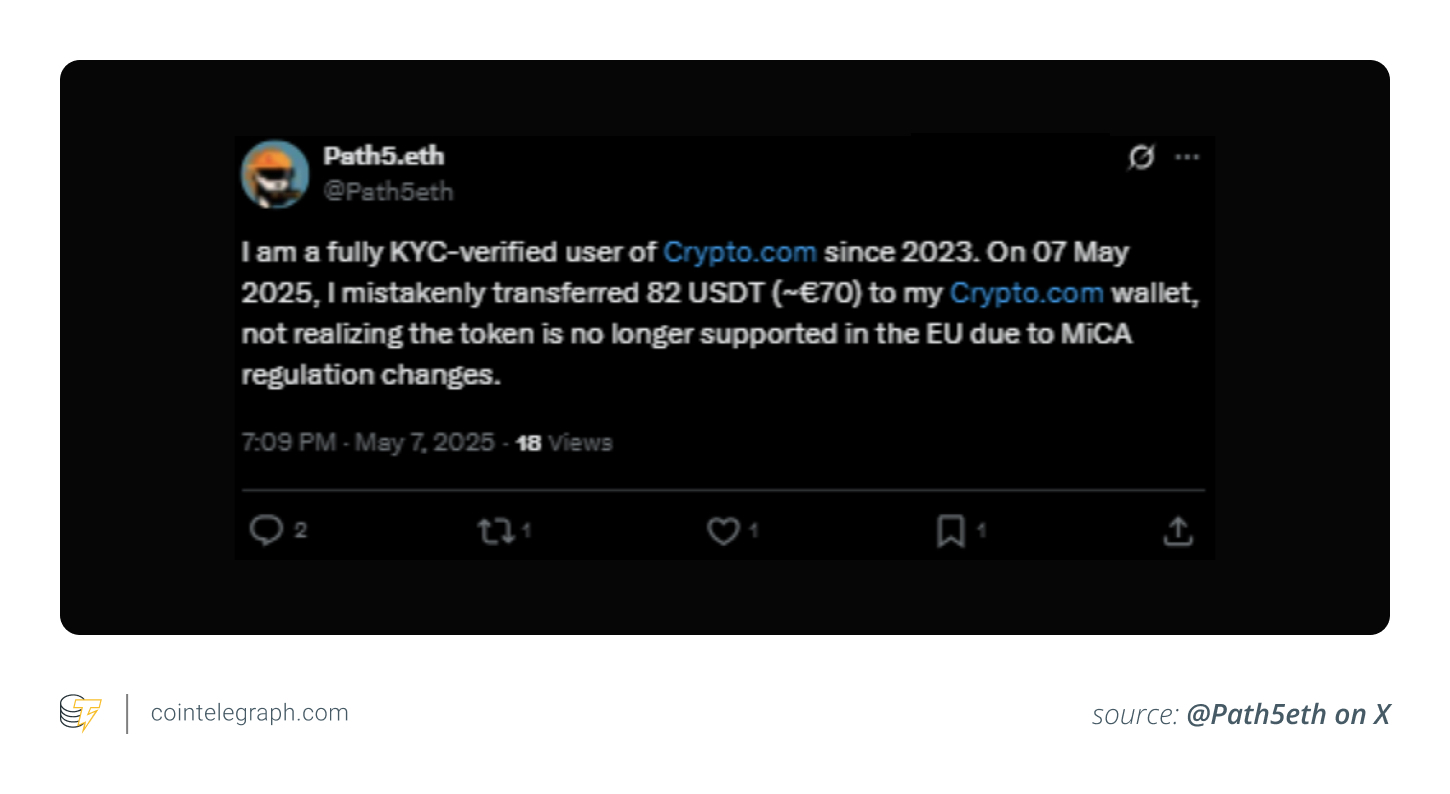
Other problems arise from the “sunrise issue,” where some countries have adopted the Travel Rule and others haven’t. This mismatch can lead to compliance conflicts and blocked transactions.
Self-hosted wallets also present a challenge: Some VASPs won’t process transfers to wallets they can’t verify. As regulations tighten, expect more of these friction points in crypto transfers.
Did you know? A report by Cointelegraph Research and Onramper found that 50% of fiat-to-crypto transactions fail, even when users have completed Know Your Customer (KYC) checks. User location, banking restrictions and local regulations all play a role in whether those transactions succeed or collapse.
How to avoid failed crypto transactions
Send a test amount, watch live gas trackers and never rush. Slow, informed moves keep transactions from failing.
Avoiding failed transactions comes down to awareness and caution. First, always test with a small amount before transferring large sums. This gives you a chance to catch mistakes without losing much.
Second, always monitor current gas fees, especially on volatile networks like Ethereum. Tools like Etherscan Gas Tracker and Blocknative Gas Estimator give live Ethereum gas prices. Many wallets (like MetaMask) also show gas estimates in the app. Using a reputable crypto wallet that offers real-time fee suggestions and transaction previews helps immensely.
Finally, take your time. Many failed transactions happen simply because users are in a rush or feeling pressured to act fast. In crypto, speed can kill your funds.
Did you know? One user paid $200 in gas fees on Ethereum for a failed transaction that returned nothing. The cause? Slippage settings were off, and the network still charged full fees.
How to verify a crypto transfer
Plug the transaction hash into a block explorer for an instant verdict on whether your transfer is pending, confirmed or failed.
Once you send crypto, the transaction hash becomes your receipt. Paste it into a block explorer of the chain you used, like Etherscan, Solscan or Tronscan, to get live updates. This will tell you if the transaction is pending, confirmed or failed, along with timestamps, block numbers and fee details.
Some wallets and exchanges now offer built-in tracking tools that integrate directly with explorers. These make it easier for beginners to stay informed without needing to navigate third-party websites. If a transfer seems stuck, checking the status this way should always be your first move.
Mastering crypto transfers: Confidence over chaos
Triple-checking details, monitoring fees and staying curious turns crypto transfers from a gamble into a confident routine.
One wrong digit, one wrong network, and your funds could vanish into the void. This isn’t just about saving your wallet; it’s about owning your peace of mind.
As blockchains scale and regulations tighten, the winners are those who move smart, not just fast. So here’s the vibe: Slow down to level up. Triple-check that address. Know the platform you’re using. Watch those fees. Stay cool when networks get jammed.
The pros don’t rush; they prepare. Back up your keys. Keep your tools sharp. Stay curious and keep learning, because the crypto game rewards those who respect it.
Master the flow, and you trade chaos for confidence. That’s when crypto becomes your playground.


