




AI image generators have gotten insanely good over the past year — almost too good. What used to be obvious (bad hands, melting faces, bizarre artifacts) has turned into hyper-polished, photorealistic outputs that can easily fool people who aren’t paying attention.
So naturally, AI image detectors have become just as important as the models they’re trying to police.
Two of the biggest names people often bring up are TruthScan and AI or Not. Both claim to detect whether an image is AI-generated, both claim high accuracy, and both present themselves as tools built for a world where synthetic media is everywhere.
What is AI Or Not?
AI or Not is one of the earliest “popular” AI image detectors that went viral across social media. It exploded online because it offered something extremely simple at a time when people were still learning how to identify AI content manually:

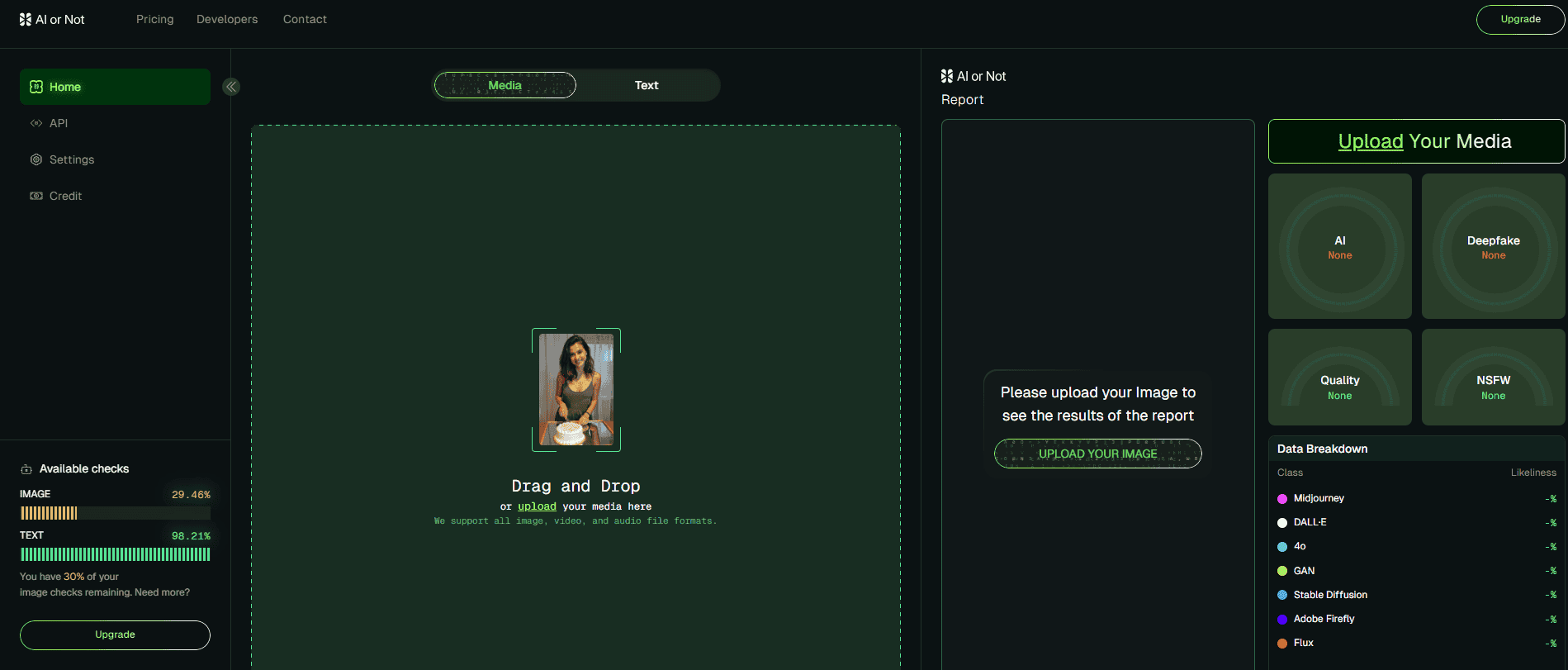
Upload an image, then get a yes/no answer. It’s that simple.
AI or Not uses a classification model trained on a mix of real photos and AI-generated images. It scans patterns, textures, inconsistencies, and other “digital footprints” common in synthetic images — things the human eye often misses.
It’s not very customizable. It’s not very technical. But it’s fast, simple, and accessible — which is why it’s still widely used.
What is TruthScan?
TruthScan is basically on the opposite end of the spectrum. If AI or Not is the “quick check,” TruthScan is the heavyweight detection suite.

Instead of being a single-purpose classifier, TruthScan is part of a full security platform that includes:
- AI image detection
- AI text detection
- Deepfake detection
- Voice cloning detection
- Real-time monitoring
- Email scam detection
- Enterprise-grade forensics
Translation: It’s built for companies, researchers, institutions, and anyone who needs accuracy that actually holds up in 2025.
But for this article, we’re focusing purely on TruthScan’s AI image detection — and this is the part where it really stands out.
TruthScan vs. AI or Not: What’s More Accurate?
Test #1
TruthScan: Correctly classified image as AI-generated.
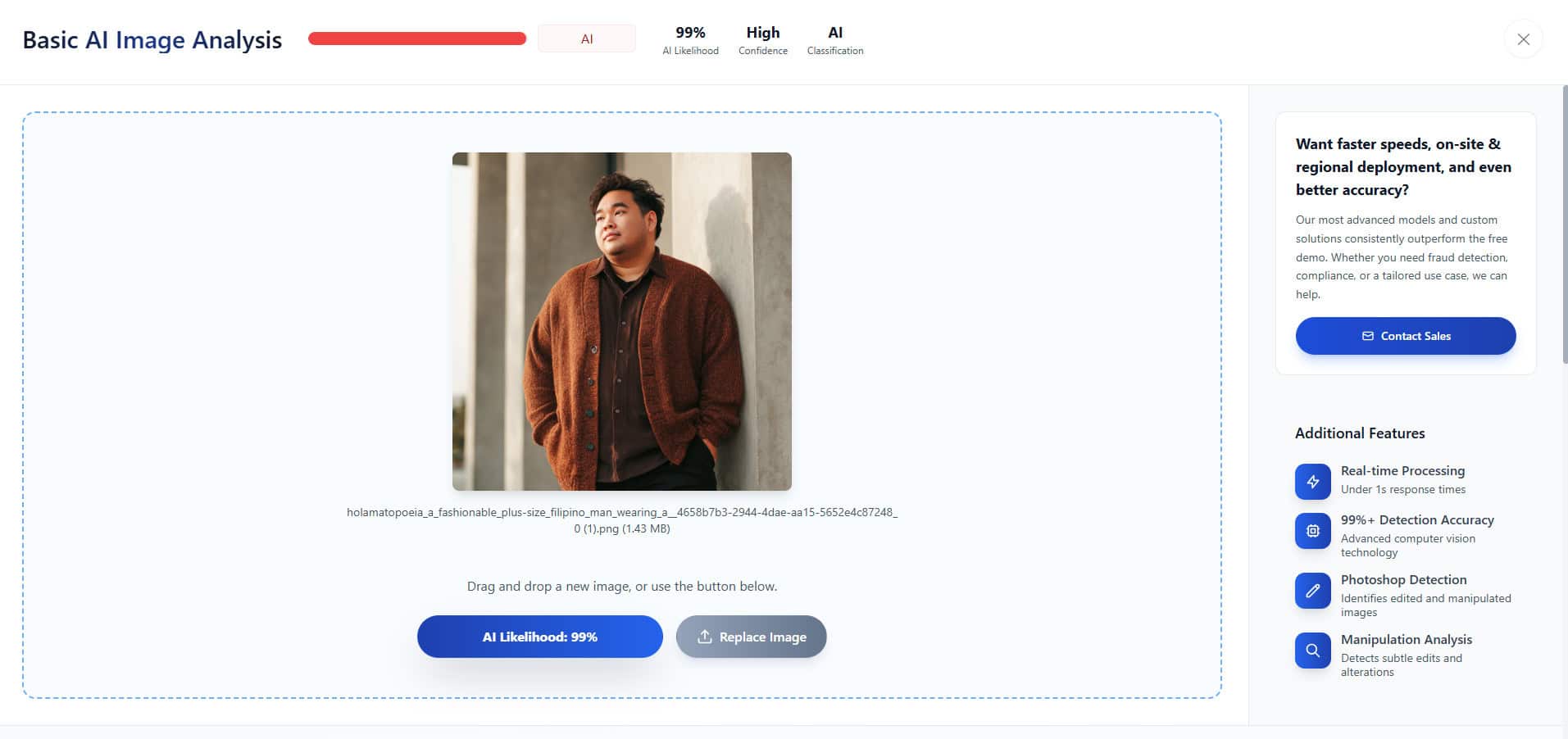
AI Or Not: Correctly classified image as AI-generated.
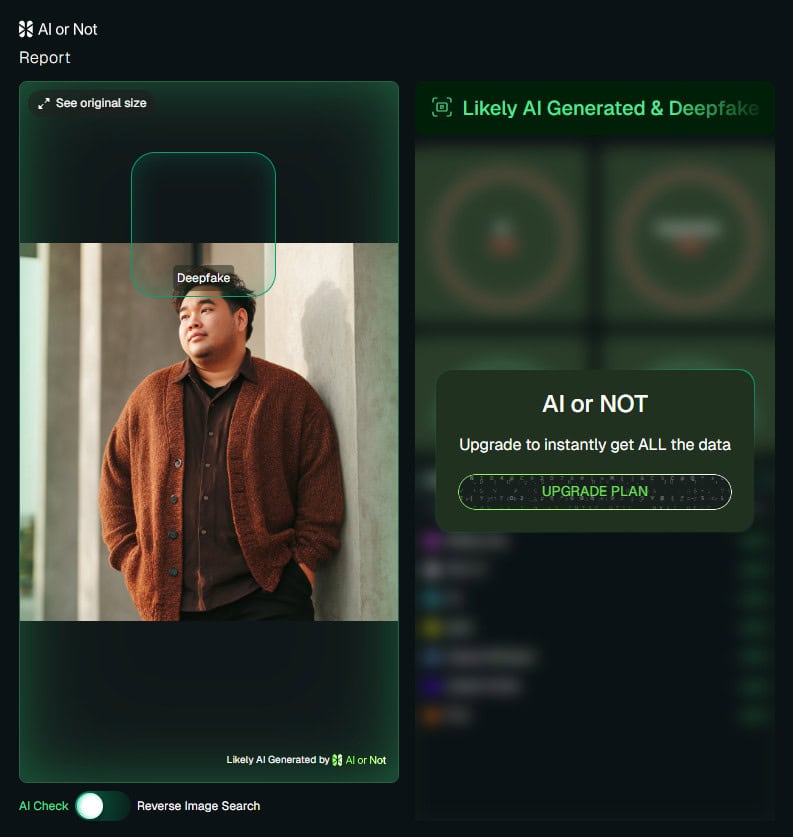
Test #2
TruthScan: Correctly classified image as AI-generated.
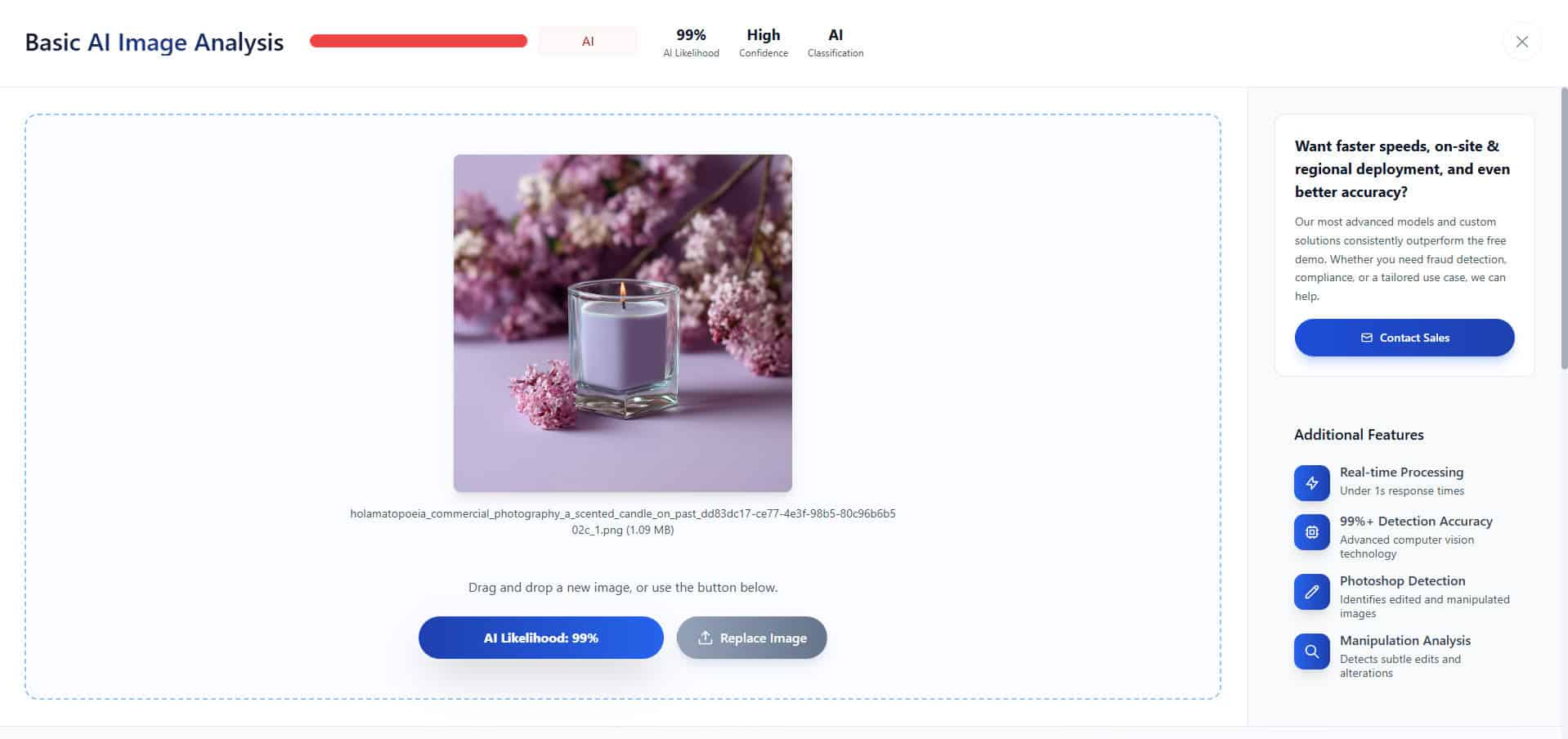
AI Or Not: Correctly classified image as AI-generated.
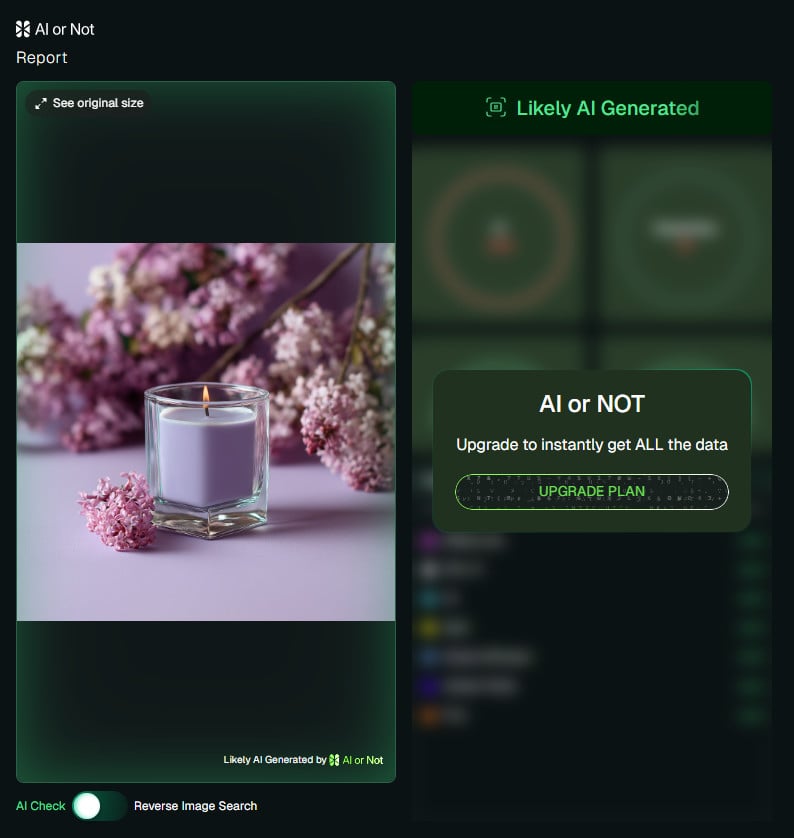
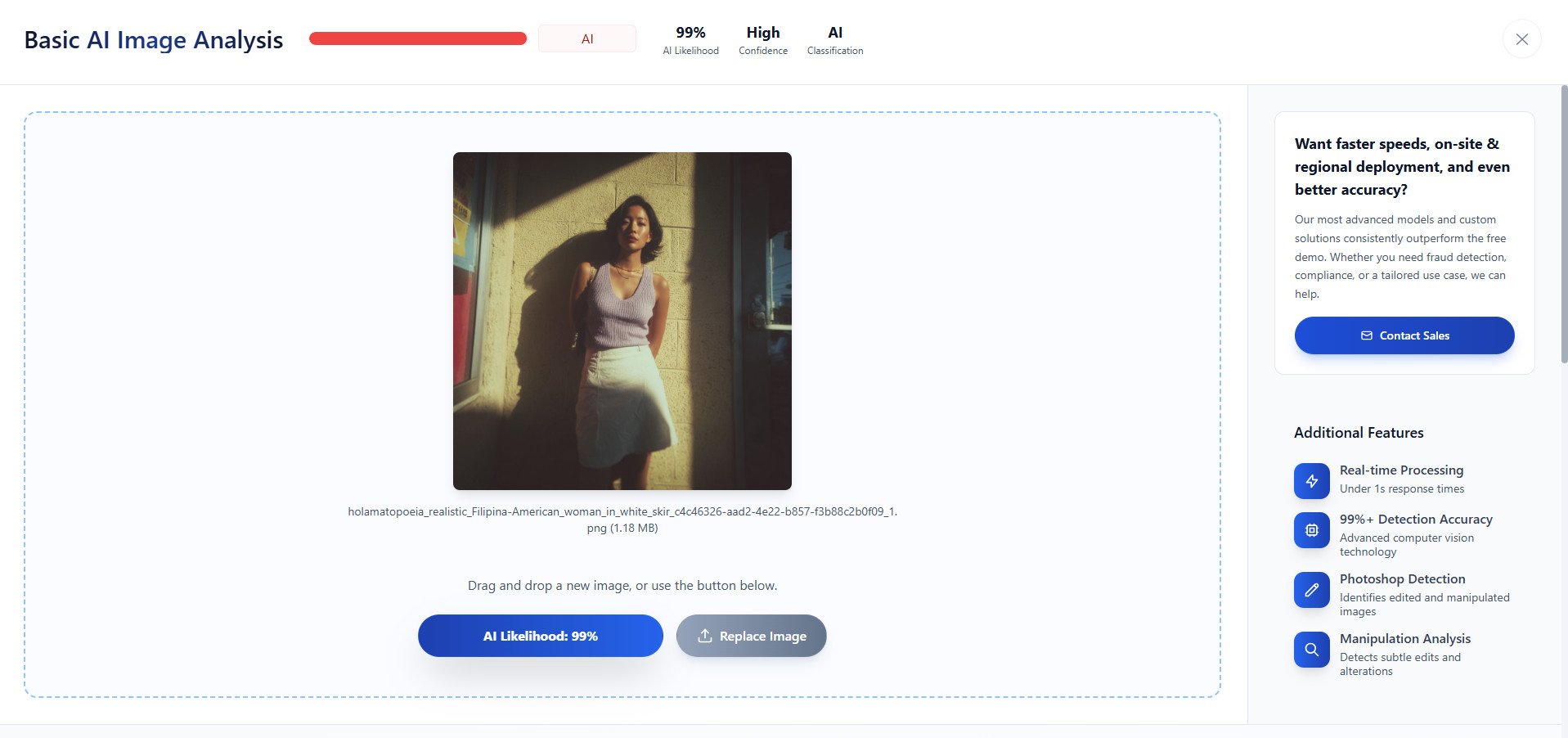
Test #3
TruthScan: Correctly classified image as AI-generated.
AI Or Not: Correctly classified image as AI-generated.
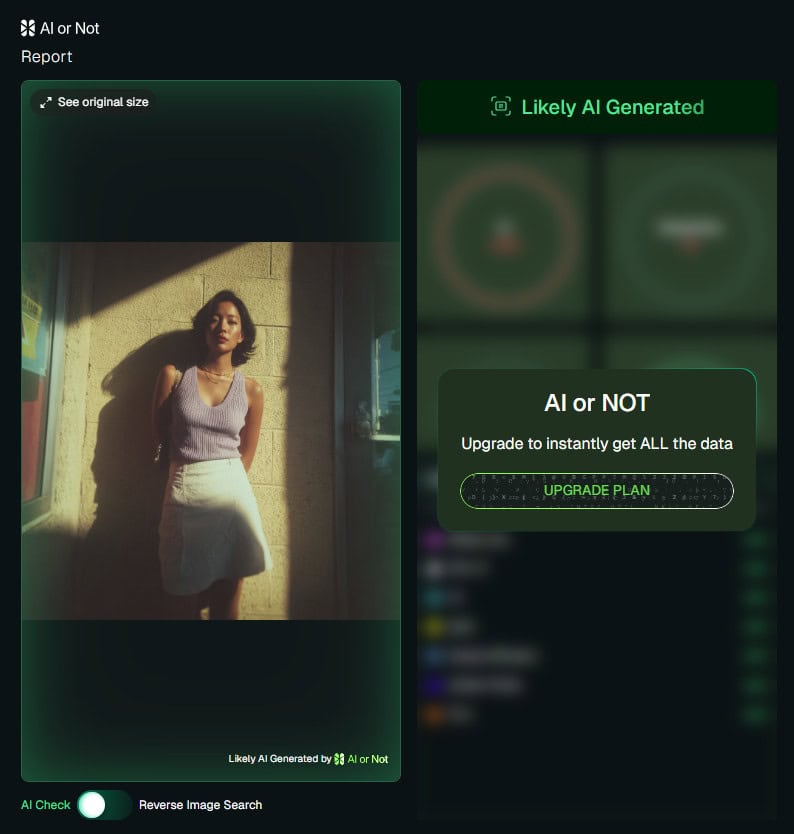
Test #4
TruthScan: Correctly classified image as AI-generated.
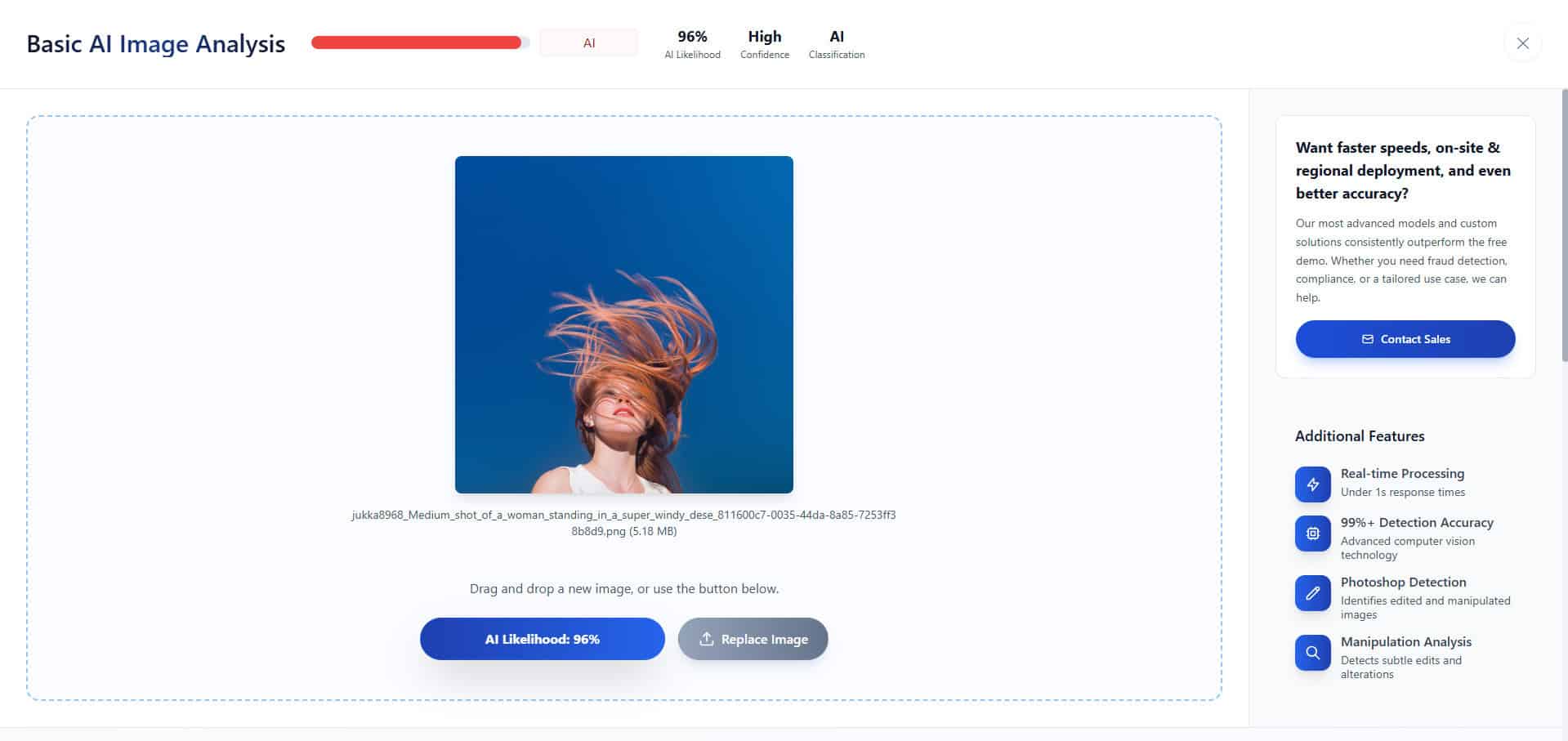
AI Or Not: Incorrectly classified image as real.
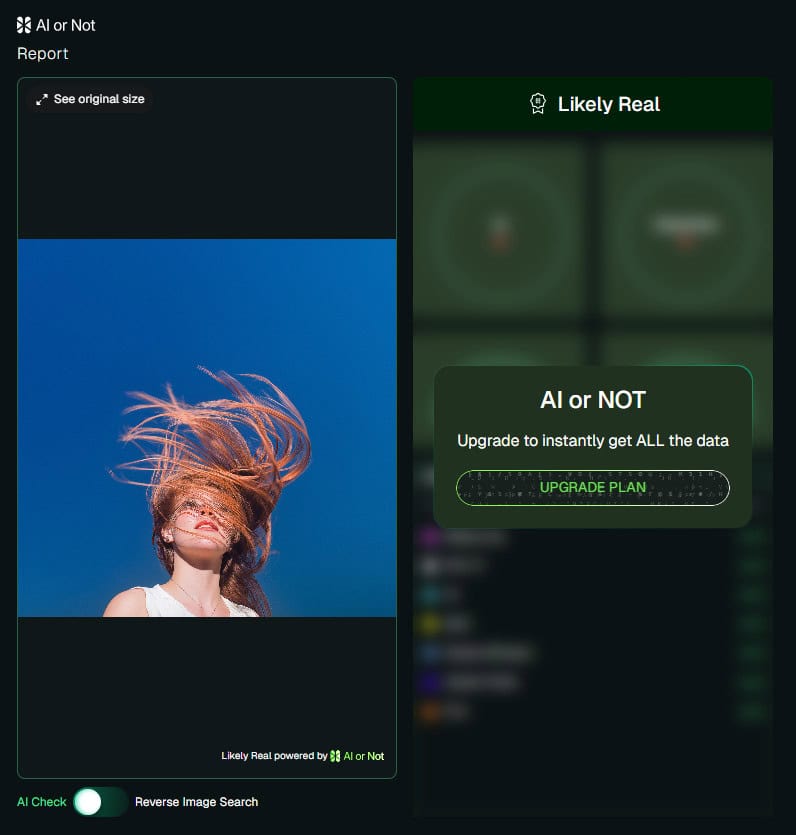
Test #5
TruthScan: Correctly classified image as AI-generated.
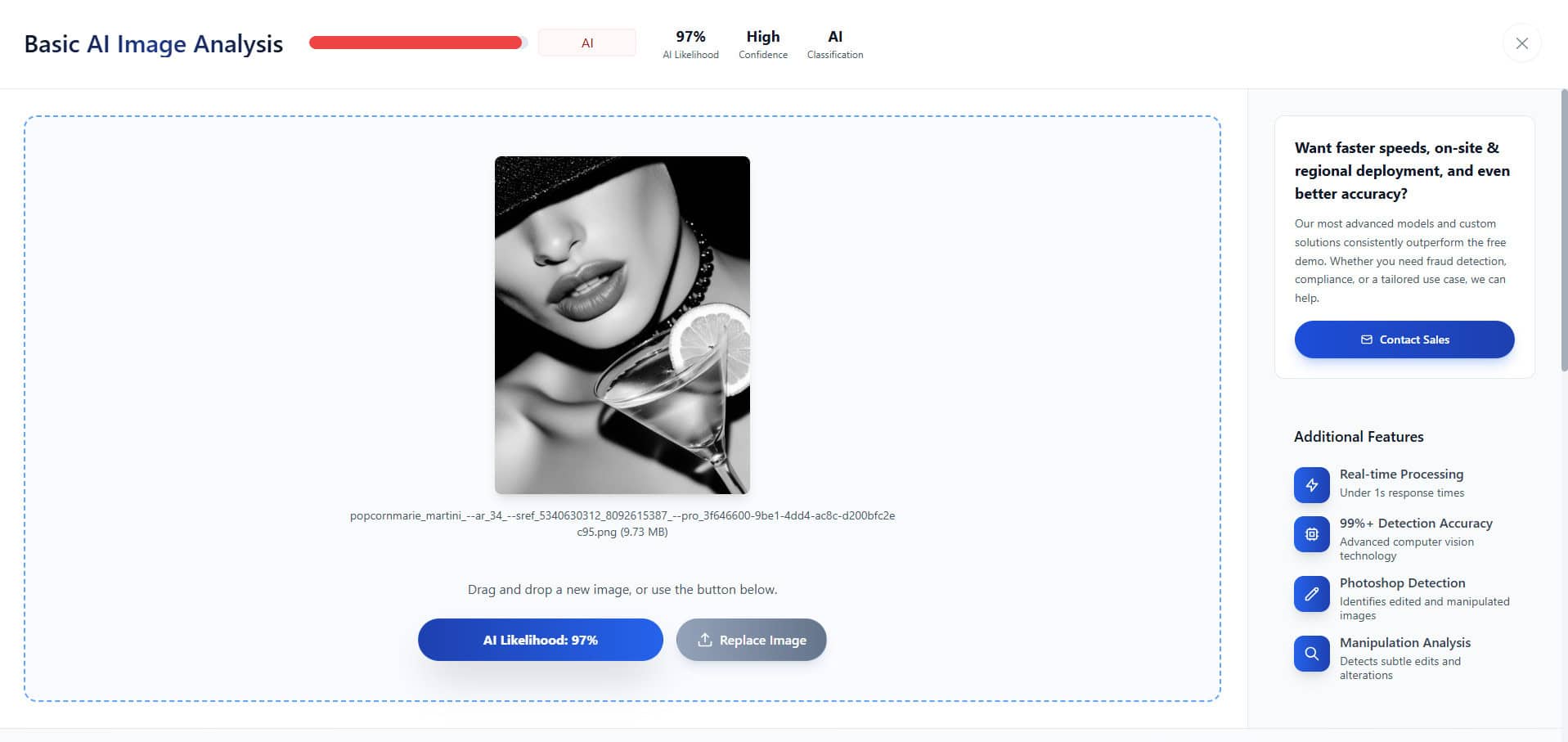
AI Or Not: Correctly classified image as AI-generated.
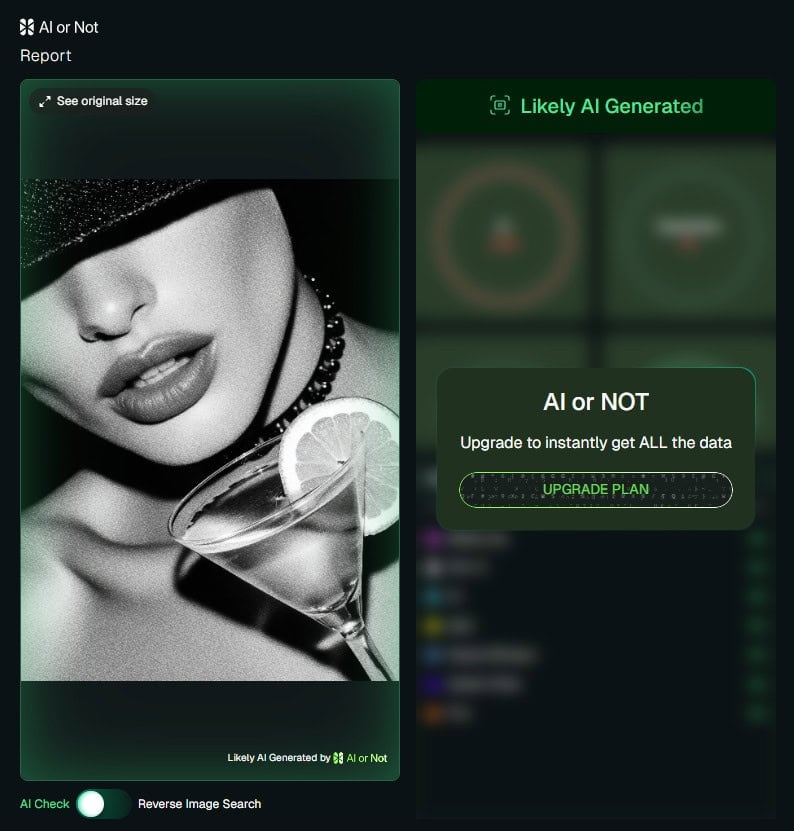
Test #6
TruthScan: Correctly classified image as AI-generated.
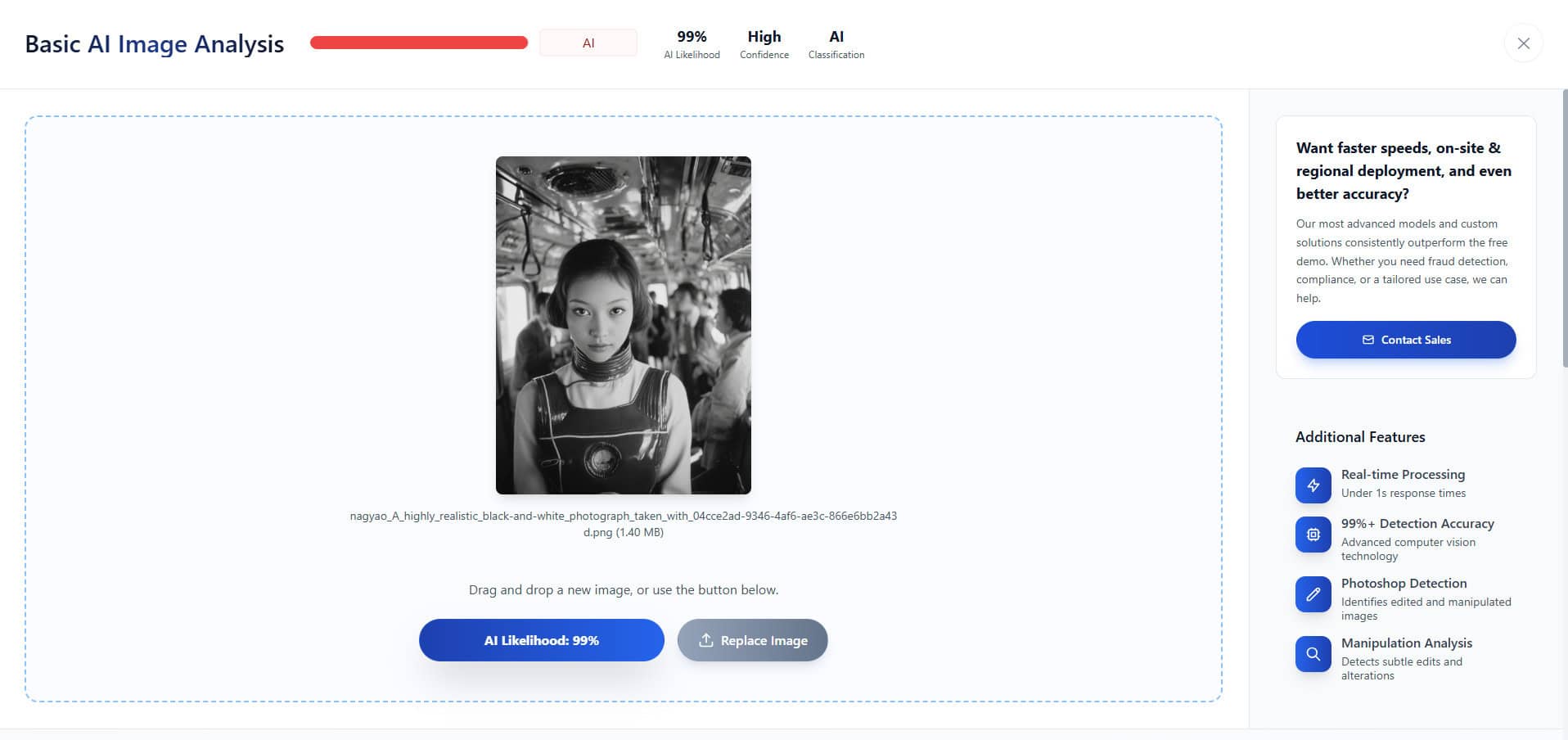
AI Or Not: Correctly classified image as AI-generated.
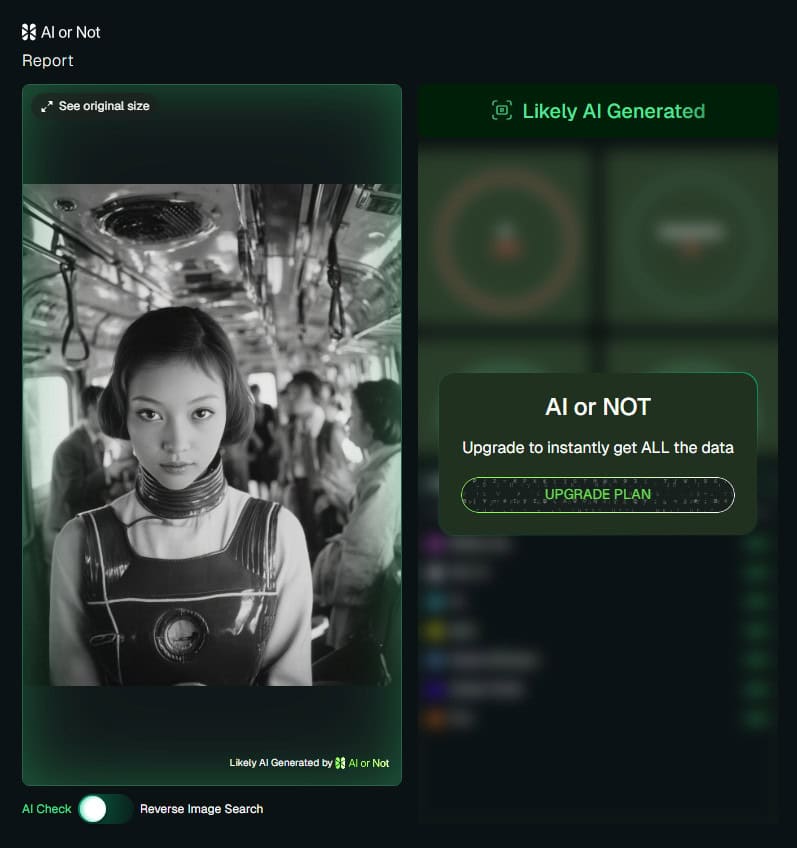
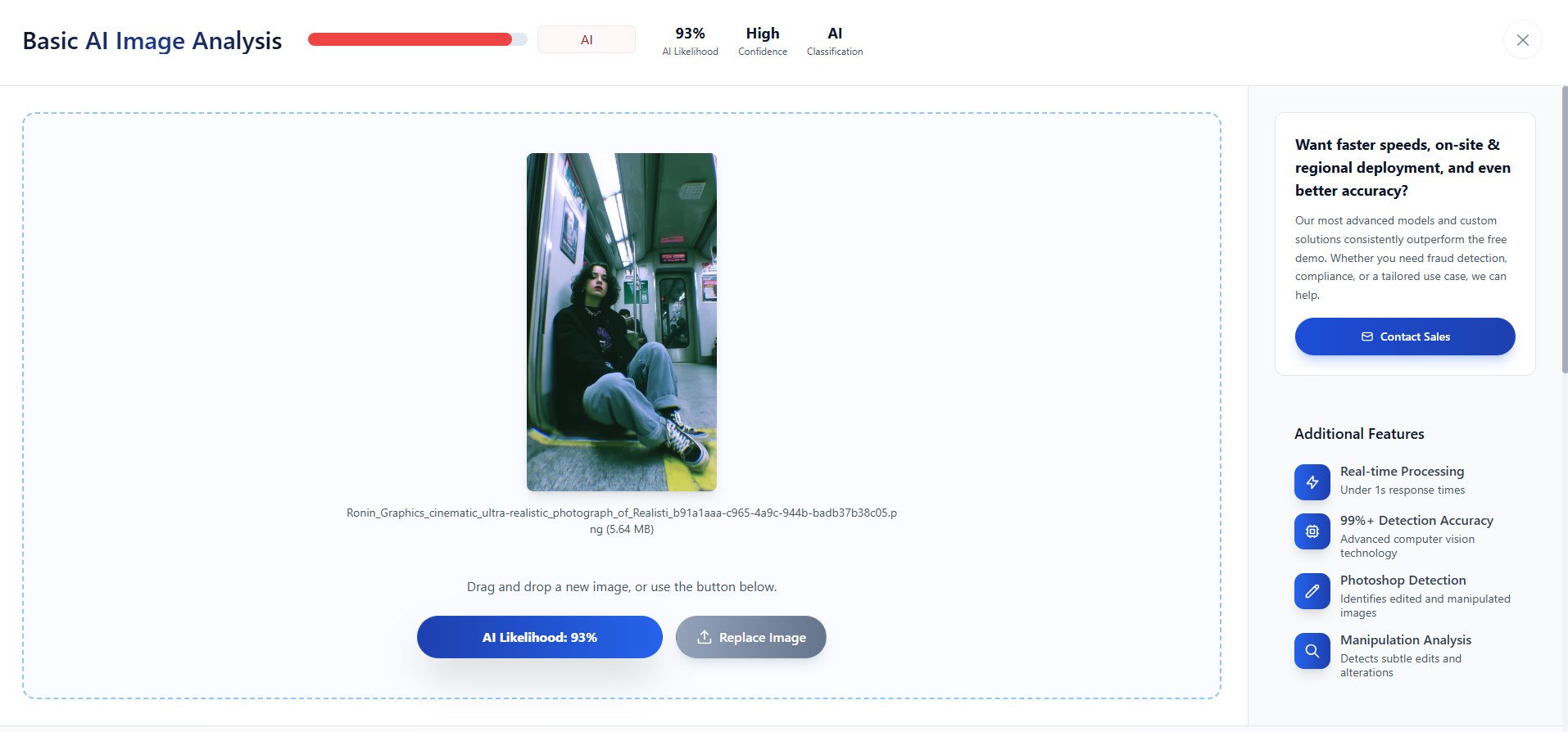
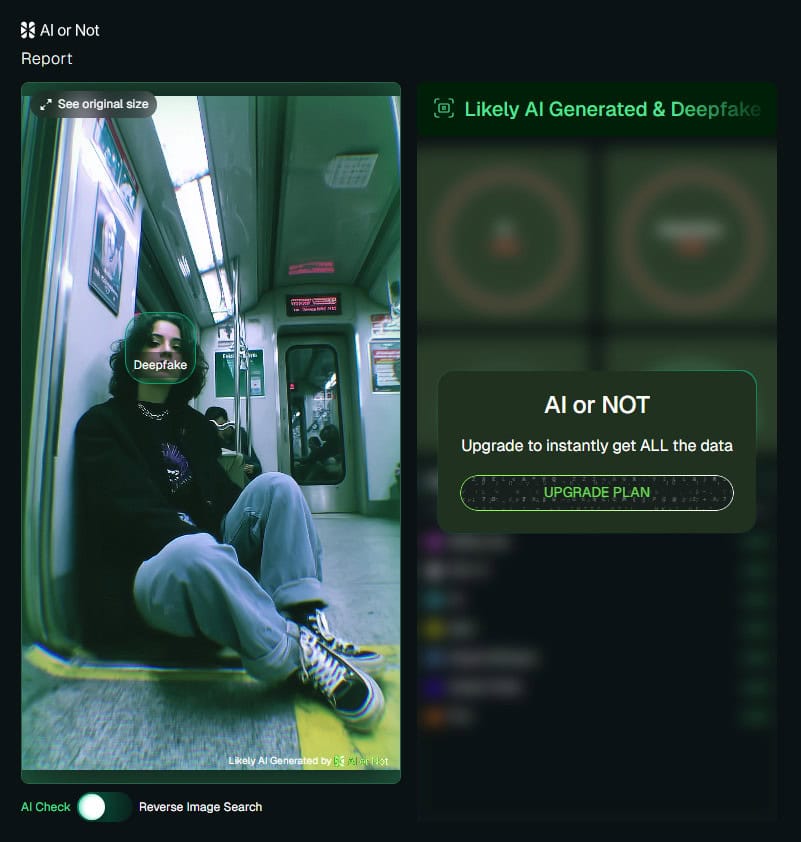
Test #7
TruthScan: Correctly classified image as AI-generated.
AI Or Not: Correctly classified image as AI-generated.
Average Score
Wrapping Up
After running the tests, the difference between the two tools became a lot clearer — and honestly, a lot sharper — than I expected.
TruthScan landed a perfect 100% accuracy score.
Not “close to perfect,” not “nearly there.” A full, clean 100%. Every AI image I threw at it, it identified correctly. Every real photo, same thing. No hesitation, no weird misreads, nothing that made me second-guess the output. It felt like using a tool that’s already calibrated for the next generation of AI images, not just the current ones.
AI or Not scored 85.71% — which is actually pretty solid, especially for a tool that’s older, simpler, and not designed with the same forensic depth. It still catches a good chunk of AI images, and for casual checks, it absolutely works. I don’t want to undersell that. There’s real value in a tool that’s quick, free, and good enough for everyday use.
But the gap between good enough and flawless matters — especially in 2025, when AI image models evolve faster than most detectors can keep up.
AI or Not is useful. TruthScan is reliable.
And reliability wins.


