




 Getty Images
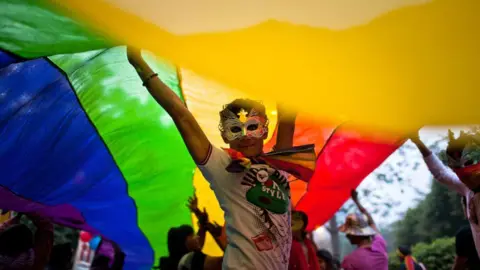
In 2018, India’s top court legalised gay sex in a landmark ruling – but the country still doesn’t allow transgender people and gay and bisexual men to donate blood.
People from the LGBT community say the decades-old ban is “discriminatory” and have gone to court to challenge it.
When Vyjayanti Vasanta Mogli’s mother was on her deathbed battling advanced Parkinson’s, she needed regular blood transfusions.

But Ms Mogli, a trans woman based in the southern city of Hyderabad, couldn’t donate blood despite being her mother’s sole caregiver.
“I had to keep posting [requests for blood donors] on WhatsApp and Facebook groups,” she said, describing the process as “traumatising”.
Ms Mogli was fortunate to find donors for her mum but many others aren’t.
Beoncy Laisharam – a doctor in the north-eastern state of Manipur – recounted the experience of one of her patients, whose transgender daughter was unable to give blood for his treatment.
“The father needed two to three units of blood daily. They were unable to find blood from other sources,” she said.
“He died two days after being brought in.”
It was such stories that pushed Sharif Ragnerka, a 55-year-old writer and activist, to file a petition in India’s Supreme Court against the ban on blood donation by LGBT people.
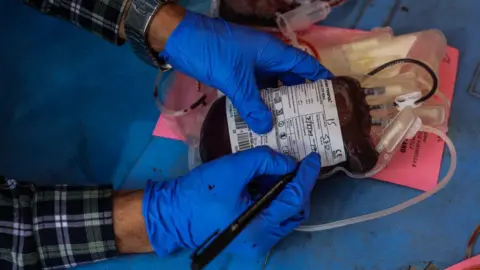
Indian laws prohibit LGBT people from donating blood on the ground that they are high-risk groups for HIV-Aids – it is compulsory for donors to be free from diseases that are transmissible by blood transfusion.
The policy dates back to the 1980s, when several countries imposed similar bans to reign in an HIV-Aids epidemic raging across the world, which killed thousands.
Despite change in attitudes, subsequent policies have kept the ban in place, including the latest rule drafted in 2017.
Filed in July, the plea argues that the existing blood donation policies are “highly prejudicial and presumptive” and violate the fundamental rights of “equality, dignity and life” of the LGBT community.
The court has asked the federal government to respond to Mr Ragnerka’s plea and tagged it with two similar court cases filed in 2021 and 2023 that are pending before it.

 Getty Images
In an earlier hearing, the government had defended the ban by citing a 2021 health ministry report which stated that transgender people, gay and bisexual men were “six to 13 times” more at the risk of contracting HIV than the general population.
“The government’s policy is for mitigating risk with no moral judgement [attached to] it,” said Dr Joy Mammen, an expert in blood transfusion.
But critics say the policy is discriminatory, rooted in stigma and makes them feel “excluded and insignificant”.
“Other genders also have HIV positive people but their entire community is not banned [from donating blood],” Dr Beoncy said, adding that the ban reinforces existing stereotypes.
India is is home to an estimated tens of millions of LGBT people. In 2012, the Indian government put their population at 2.5 million, but global estimates suggest the true figure could be over 135 million.
Many of them face discrimination and are forced to leave their families.
Campaigners say the ban hampers their access to crucial medical care as it bars them from taking blood from their partners or “chosen families”.
“If there’s a blanket ban on blood donation by LGBT people, how do you expect community members to receive help in emergency situations?” asked Sahil Choudhary, an LGBT activist.
In many instances, donors might also feel compelled to lie about their sexuality while filling a mandatory form for making blood donations, to save the life of a loved one.
Activists argue that apart from it being discriminatory, the ban is also irrational because of the high demand for blood transfusions in the country.
A study published by the Public Library of Science in 2022 estimated that India faced an annual deficit of around one million units of blood.
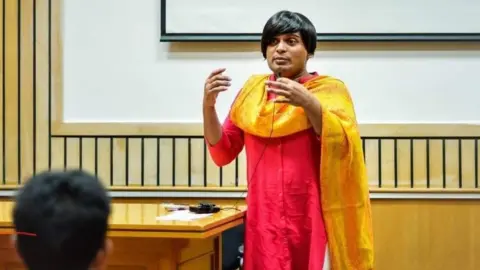
Thangjam Santa Singh, a transgender rights activist who petitioned the court against the ban last year, said the current Indian laws are outdated as several countries have moved away from restrictions on LGBT blood donors in recent years.
Last year, the US lifted all restrictions on gay and bisexual men donating blood. Now instead of sexual orientation, donors are screened on the basis of whether they have engaged in “high-risk sexual behaviour”.
All prospective donors have to answer a questionnaire about their recent sexual histories. Those who have had a new sexual partner, multiple sexual partners and have engaged in anal sex in the last three months are asked to wait for three months before donating blood.
The rationale is that new testing technology allows faster detection of HIV cases, so prospective donors can safely give blood based on an individual risk assessment.
The UK set in place similar guidelines in 2021. Other countries that have lifted bans or eased restrictions, include Brazil, the Republic of Ireland, Canada, France and Greece.
Petitioners argue that India should also have an individual-centric system for blood donation that is based on “actual risk” and not “perceived risk”.
 Getty Images
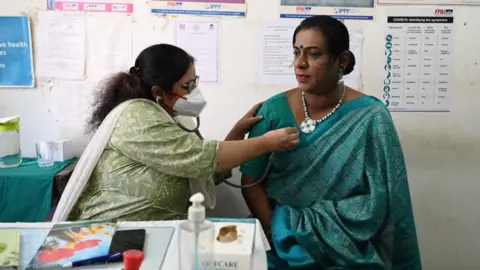
Ms Singh said that the Indian government can consider having a deferral period based on the donor’s recent sexual history, instead of denying the entire LGBT community the opportunity to donate altogether.
“This makes me feel like I am not human,” she said.
The Indian government has opposed this, saying that the country’s healthcare system is not ready for the change.
In its response to the earlier petitions filed before the Supreme Court, the federal government had said that advanced blood testing technologies, such as nucleic-acid testing which is widely used in other countries, were only available at a “small fraction” of blood banks in India.
“In India, the systems are not rigorous enough,” said Dr Mammen.
This applies not just “to testing” but also in “ensuring an environment where there is privacy and confidentiality so that people feel comfortable in answering questions about their sexual history”, he added.
But members of the community are not convinced – and say they would continue their fight against the “prejudiced ban”.
“I keep thinking how I wouldn’t be able to donate blood to my family in case of urgent need,” Mr Ragnerka said.
“I do not want to spend the rest of my life trying to find ways around these obstacles.”


