




Grammarly’s been around for over a decade — long before the AI boom reshaped how we write and detect writing. It started as a simple grammar checker and slowly evolved into an all-in-one writing assistant. And now, like almost every major writing tool out there, it’s got an AI detector baked in.
Meanwhile, TruthScan isn’t trying to be a writing assistant. It’s an AI detection suite — built specifically to identify AI-generated content across text, images, audio, and video. It doesn’t help you write better; it helps you verify what’s real.
So when you put these two side by side — a traditional editing tool versus a full-scale AI detection platform — you get a clear picture of where the industry is heading. But does Grammarly’s detector actually hold its own against a dedicated system like TruthScan? Let’s find out.
What is TruthScan?
TruthScan is a comprehensive AI detection suite, designed to spot synthetic content across every major medium. It’s not just for text — it detects AI images, videos, voice clones, and even deepfakes.


But for this comparison, we’ll focus on its AI Text Detector, which boasts over 99% accuracy and a sub-100 millisecond detection speed. It’s built for scale — used by publishers, educators, and businesses to ensure authenticity and transparency in a world where AI-generated writing is everywhere.
What sets TruthScan apart isn’t just accuracy — it’s context. It doesn’t rely on a single signal (like predictability or perplexity). Instead, it cross-analyzes linguistic rhythm, sentence variation, and coherence patterns to identify whether something was likely written by a human or a model.
In short: TruthScan is forensic, fast, and built for truth verification.
What is Grammarly?
Grammarly doesn’t need much of an introduction — it’s one of the most widely used writing tools in the world. What started as a grammar and clarity checker is now an AI-powered writing assistant that helps you write, edit, and optimize text for tone, style, and professionalism.
Its AI detector is one of its newest additions. It was launched in response to the explosion of AI-generated writing from tools like ChatGPT, Claude, and Gemini. Grammarly’s detector scans for telltale signs of AI — uniform phrasing, lack of rhythm, and over-structured sentence flow.
It’s simple to use: paste text, click “detect,” and it provides a probability score (e.g., “likely AI-written” or “likely human-written”). It’s clearly built for casual users — students, professionals, and everyday writers who just want to double-check if something sounds too AI-like.
But unlike TruthScan, Grammarly’s AI detector feels more like an add-on feature than a dedicated product. It’s fast, yes, but limited. You don’t get sentence-by-sentence analysis, breakdowns, or advanced reporting. It’s AI detection in its simplest form — surface-level, but accessible.
TruthScan vs. Grammarly: AI Detection
Test #1
AI-Generated Text:
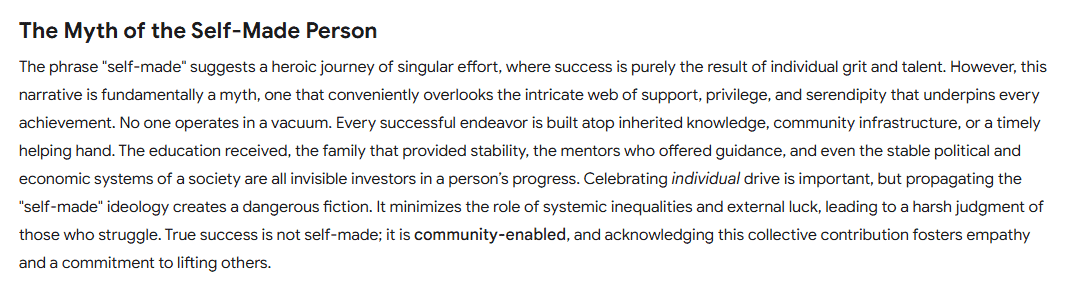
TruthScan: Correctly identified text as machine-generated.
AI Likelihood: 89%
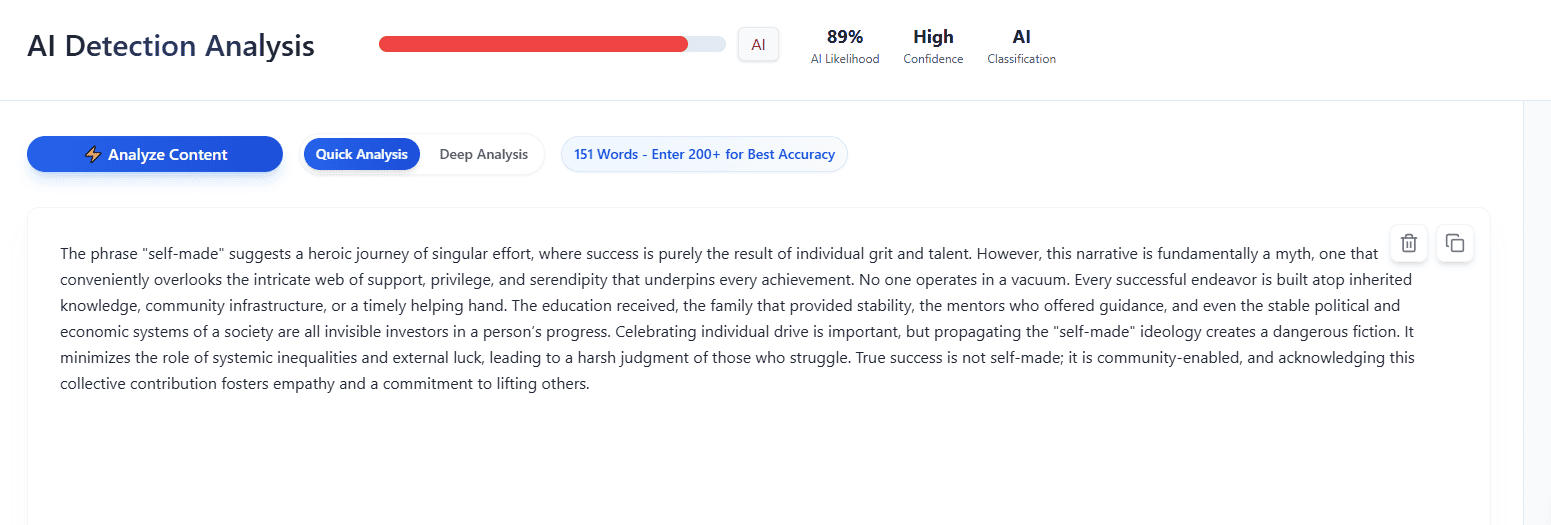
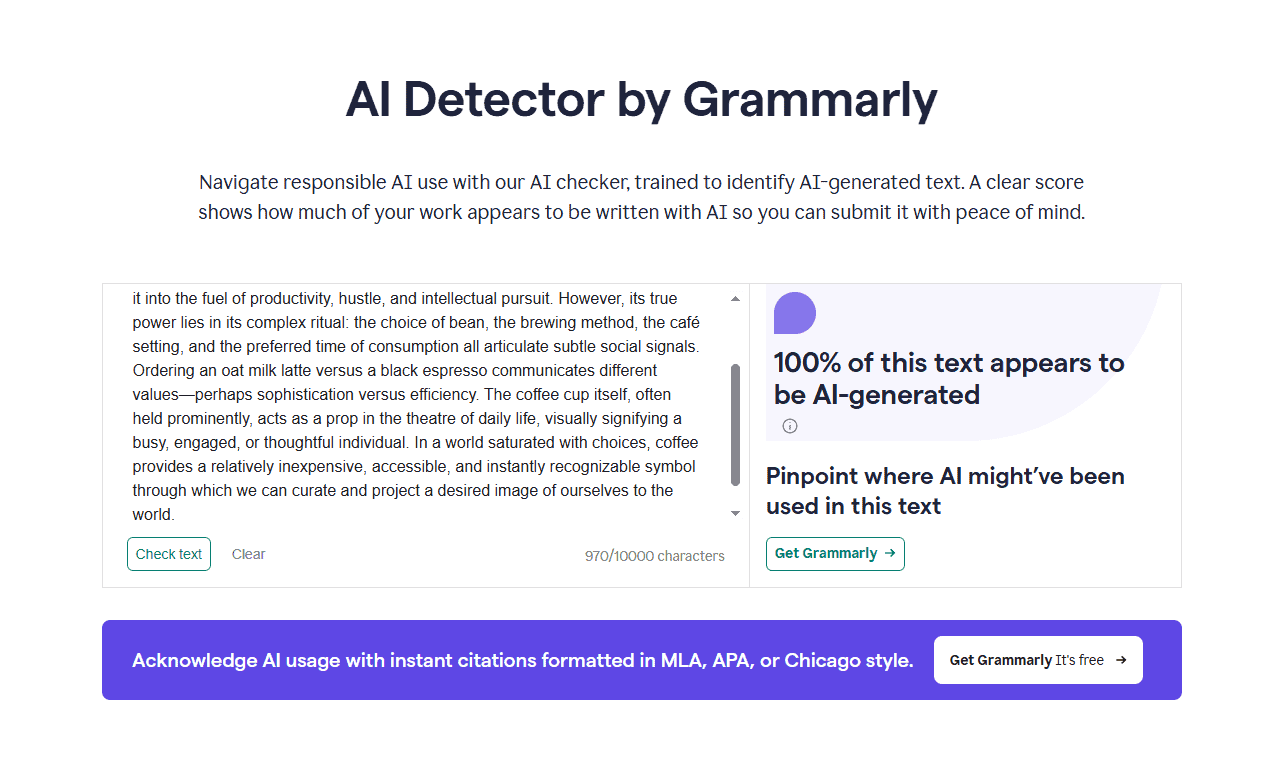
Grammarly: Correctly identified text as machine-generated.
AI Likelihood: 100%
Test #2
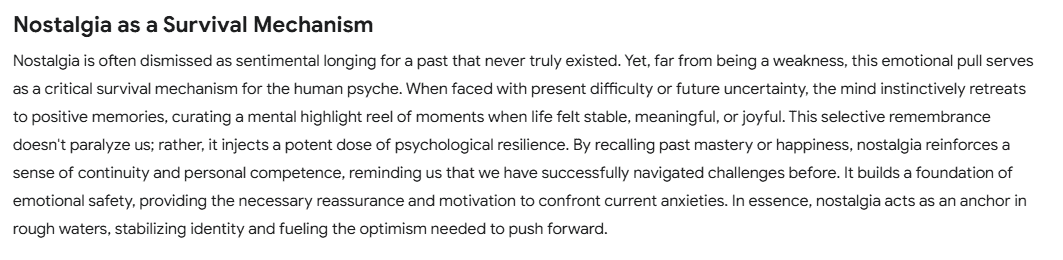
AI-Generated Text:
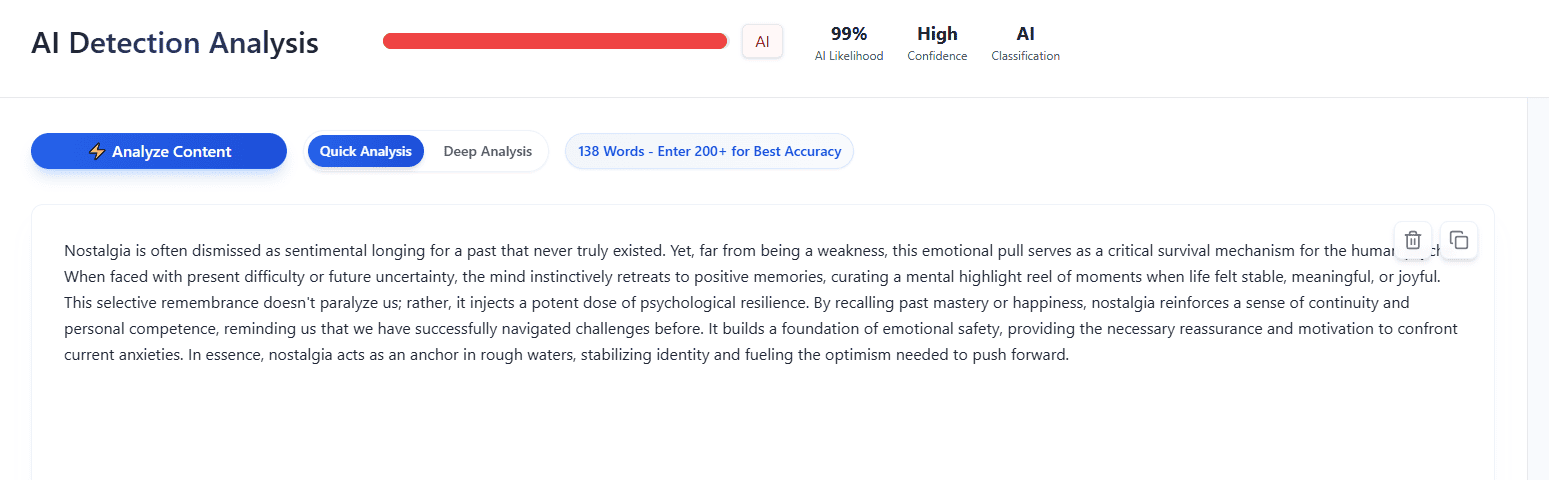
TruthScan: Correctly identified text as machine-generated.
AI Likelihood: 99%
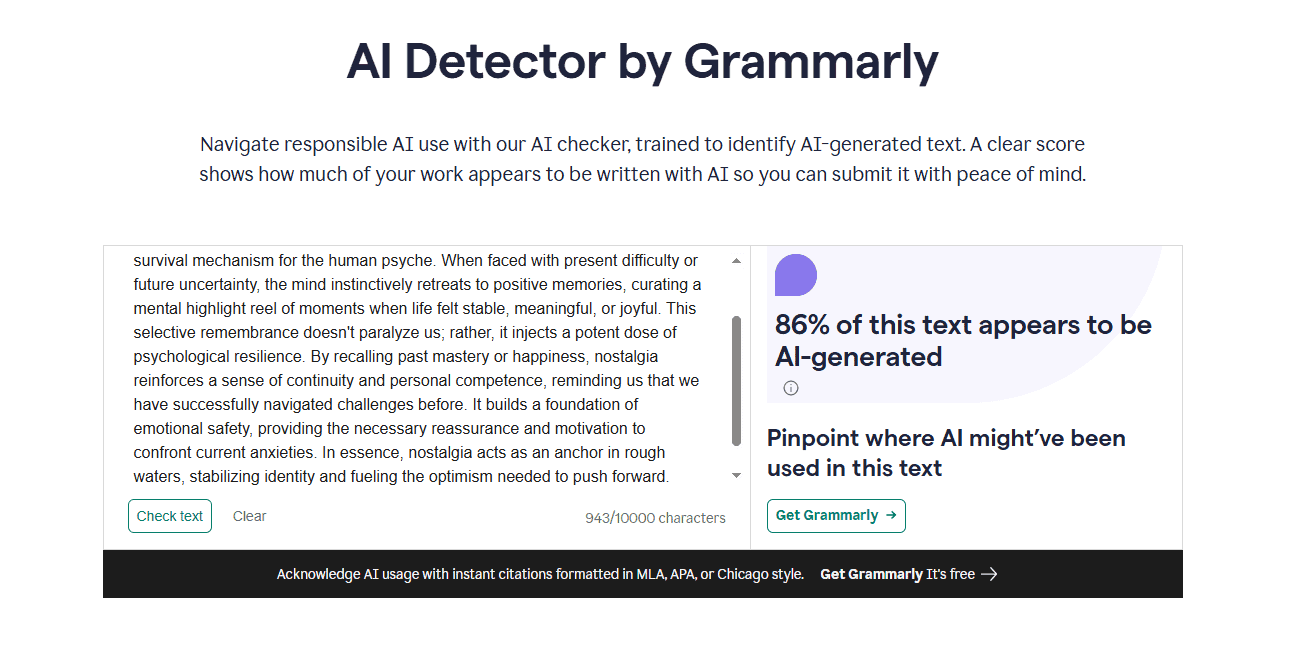
Grammarly: Correctly identified text as machine-generated.
AI Likelihood: 86%
Test #3
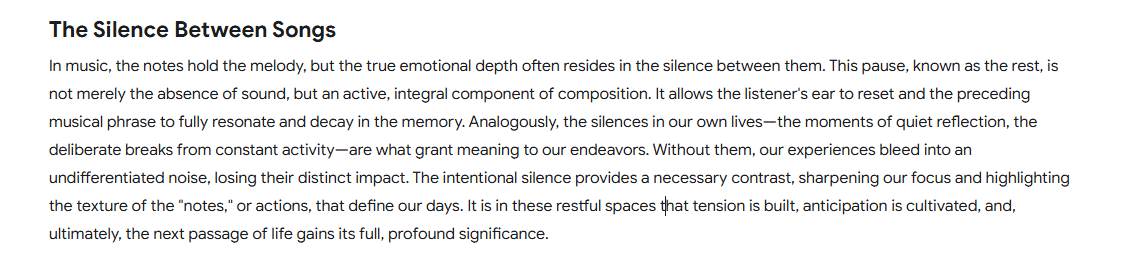
AI-Generated Text:
TruthScan: Correctly identified text as machine-generated.
AI Likelihood: 90%

Grammarly: Correctly identified text as machine-generated.
AI Likelihood: 100%
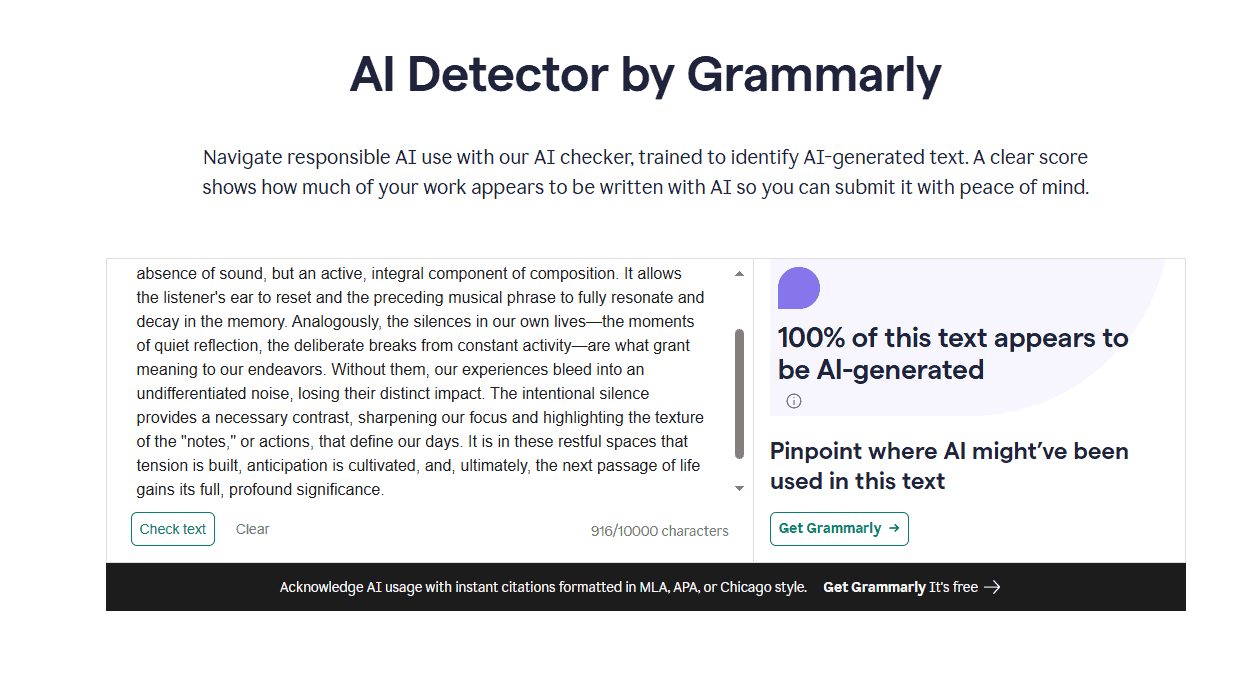
Test #4
AI-Generated Text:
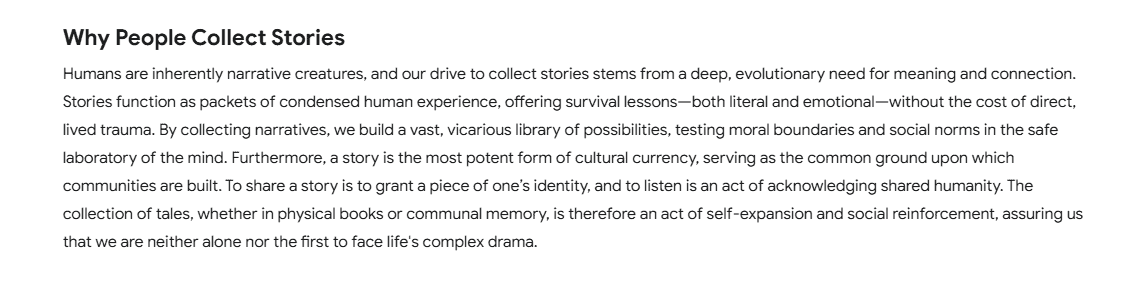
TruthScan: Correctly identified text as machine-generated.
AI Likelihood: 99%
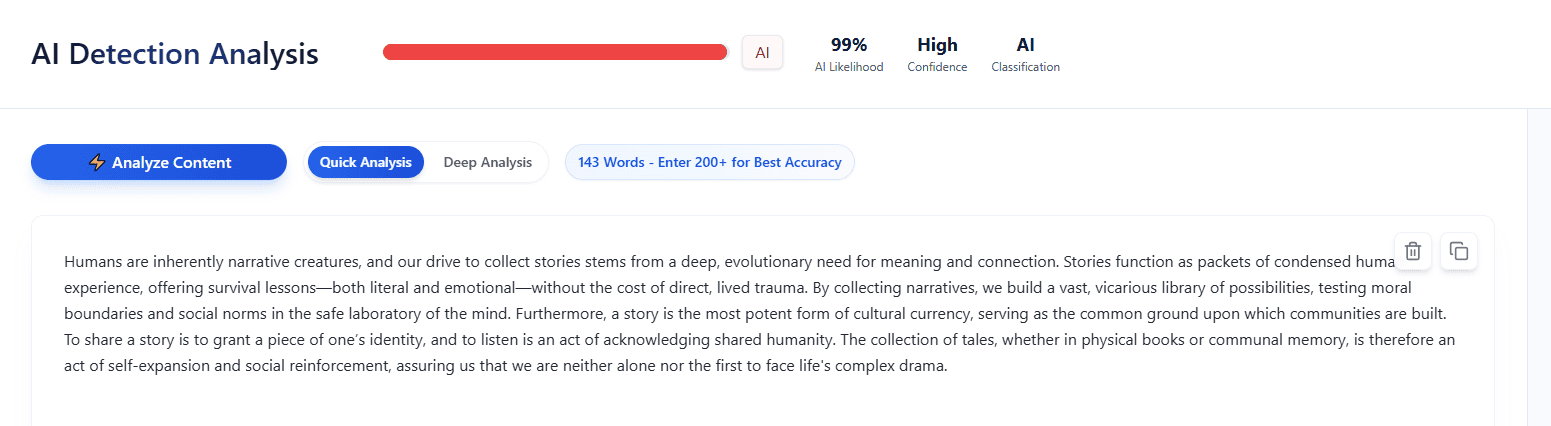
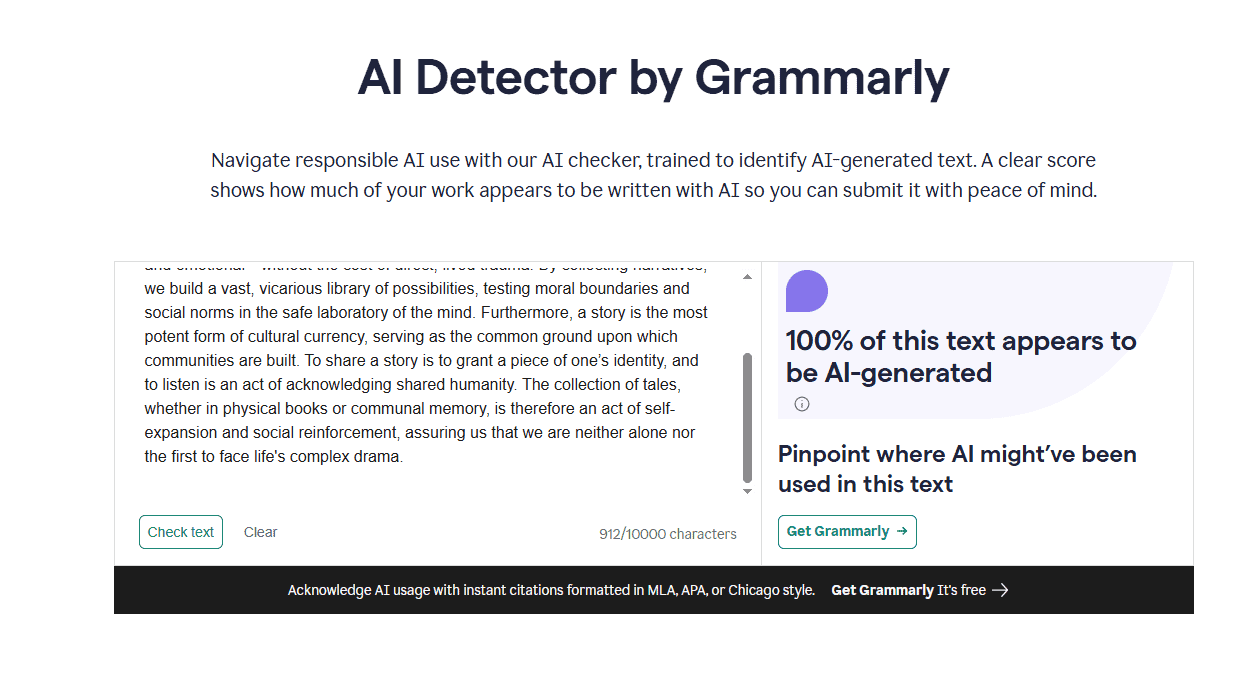
Grammarly: Correctly identified text as machine-generated.
AI Likelihood: 100%
Test #5
AI-Generated Text:

TruthScan: Correctly identified text as machine-generated.
AI Likelihood: 93%
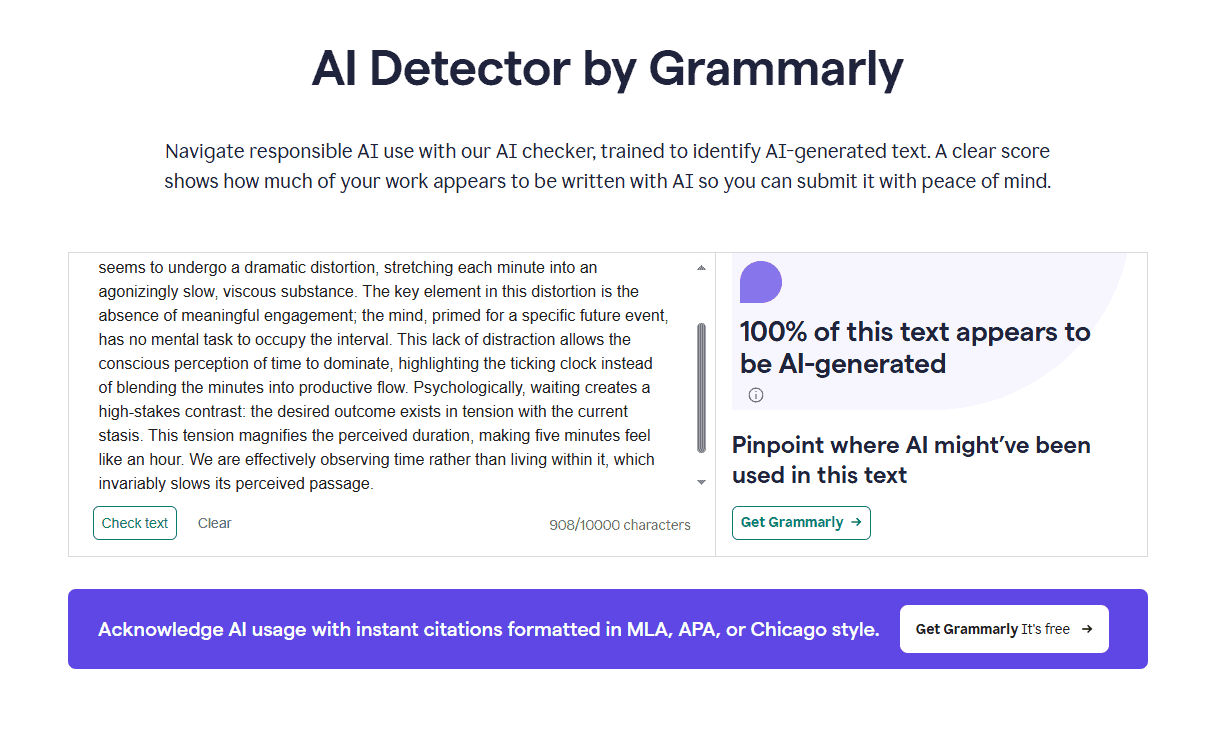
Grammarly: Correctly identified text as machine-generated.
AI Likelihood: 100%
Test #6
AI-Generated Text:
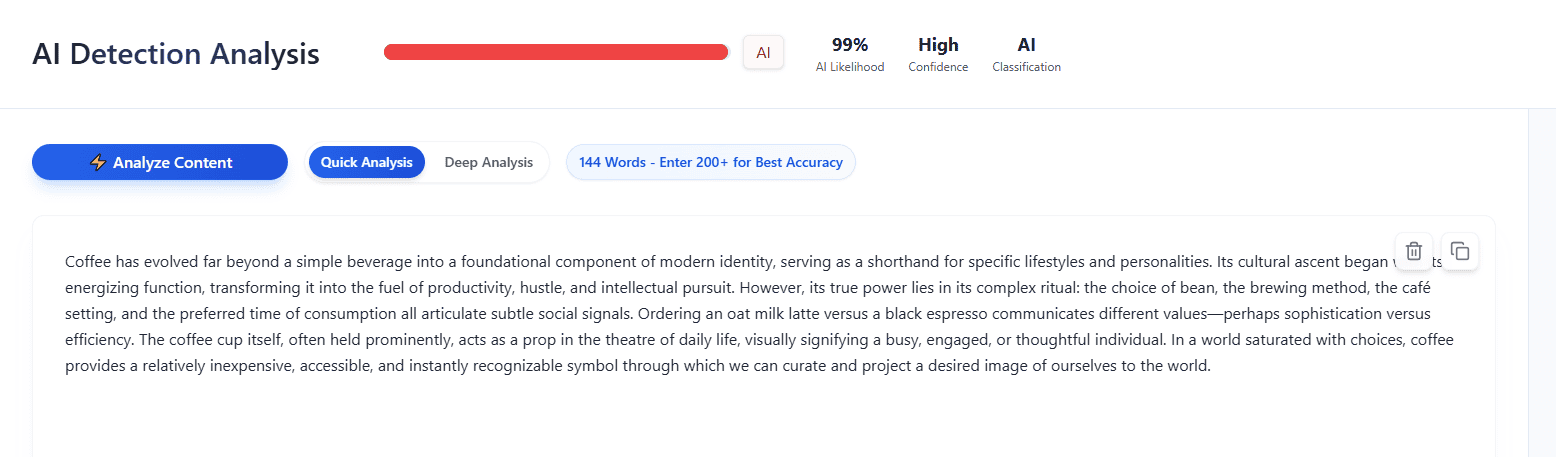
TruthScan: Correctly identified text as machine-generated.
AI Likelihood: 99%
Grammarly: Correctly identified text as machine-generated.
AI Likelihood: 100%
Average Score
The Bottom Line
After putting both detectors through the same set of AI-generated writing samples, the results were surprisingly close — and, honestly, impressive for both sides.
Grammarly’s AI Detector came out slightly ahead, scoring 97.67% correctness, while TruthScan followed closely at 94.83%. But what really stood out wasn’t the small gap — it’s that both tools correctly identified every single test case as AI-generated. That kind of consistency is rare.
Grammarly continues to prove that it’s more than just a grammar checker. Its AI detection has quietly evolved into something genuinely reliable — simple to use, fast, and impressively accurate for an integrated feature.
TruthScan, meanwhile, lives up to its name. It might not have edged out Grammarly in the raw score this time, but it matched it in dependability. It’s forensic, transparent, and clearly built for professional verification — the kind of tool that scales beyond everyday use.
At the end of the day, both detectors got the job done — efficiently, accurately, and without false positives. If you’re checking essays, articles, or professional documents, you can’t really go wrong with either.
But taken together?
TruthScan and Grammarly show that AI detection in 2025 is finally catching up to AI writing — and that’s a win for everyone.


